Khanuï River
Khanuï River
The Khanui River flows through northwestern Mongolia, traversing the provinces of Arkhangaï and Zavkhan through remote valleys.
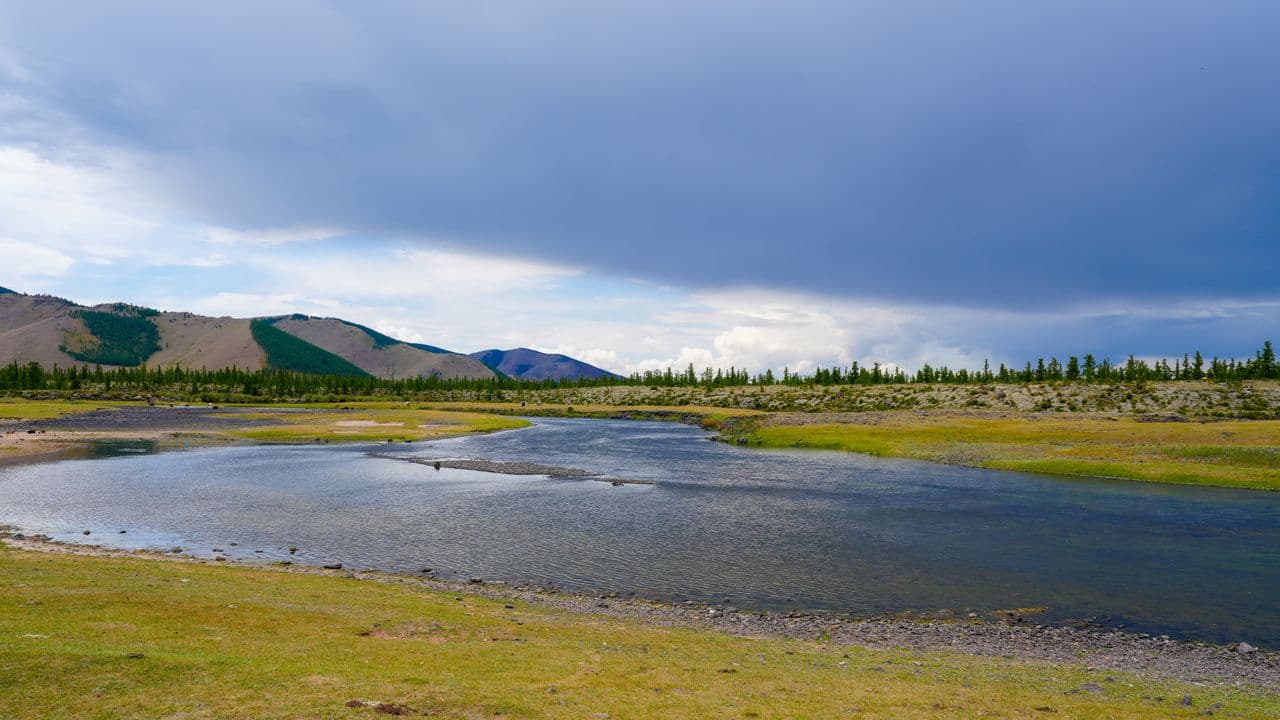
The Khanui River flows through northwestern Mongolia, traversing the provinces of Arkhangaï and Zavkhan through remote valleys. A tributary of the Selenge, it is renowned among anglers for its populations of taimen, the world's largest freshwater salmonid. The landscape alternates between rolling steppes, birch forests and wild riverbanks, in a region where nomadic encampments remain the norm.
What you'll see
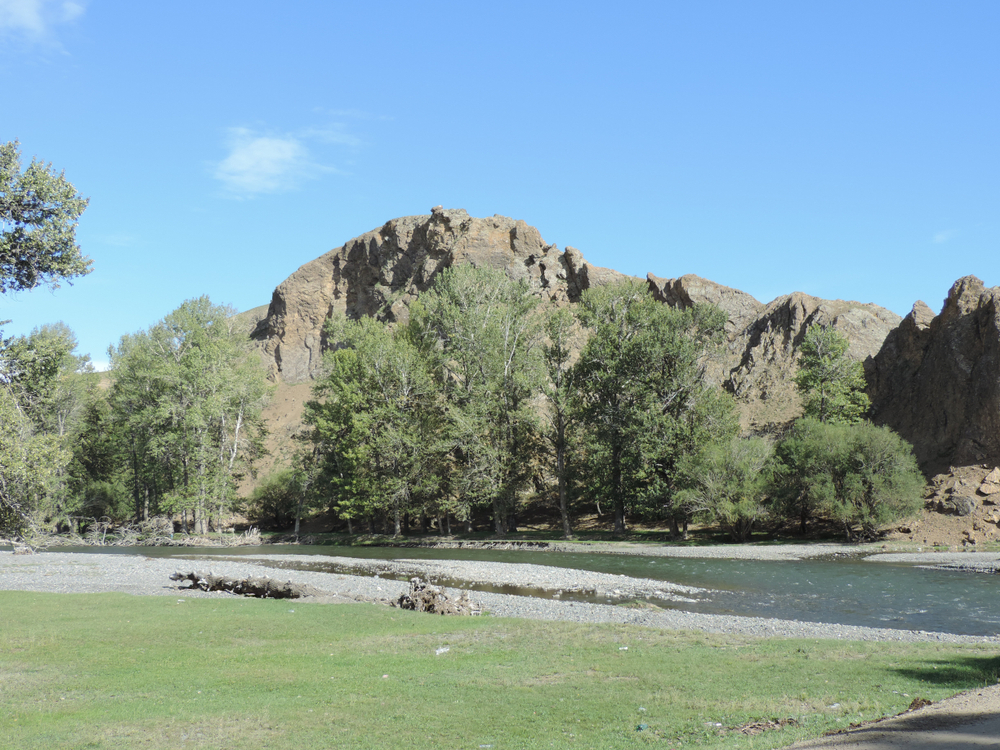
The Khanui offers an almost intact natural corridor. The riverbanks host varied wildlife: eagles, cranes, deer and, depending on the season, wolves at the forest's edge. The water, clear and fast-flowing in places, slows in wide meanders ideal for observation. Yurts of nomadic families dot the banks, offering a direct glimpse of Mongolian pastoral life.
History and context
The Khanui valley is known for the presence of deer stones, Bronze Age funeral monuments carved with stylized animal silhouettes. These stelae, dated between 1000 and 700 BC, bear witness to ancient human occupation and an already-structured nomadic culture in this region of inner Mongolia.
Highlights of a visit
Taimen fishing
The Khanui is one of Mongolia's most sought-after rivers for sport fishing of taimen (Hucho taimen). This protected species requires strict no-kill practice. Specialized operators organize fishing camp stays on the riverbanks, typically between June and September.
Deer stones of the valley
Several deer stone sites are accessible along the river. These carved stelae, often grouped in clusters, constitute rare archaeological heritage. Most of these sites lack tourist infrastructure: discretion and respect for the sites are essential.
Nomadic life and hospitality
Herding families settled in the valley still practice seasonal transhumance. With a local guide, it is possible to share a meal in a yurt and observe the management of herds of horses and yaks.
Photography tips
Raking light in early morning and evening reveals the texture of riverbanks and steppe. Deer stones photograph best in side lighting, which highlights the carvings. Avoid using flash on the stelae. For wildlife, a telephoto lens is essential: animals keep their distance.
Location and access
The Khanui River is remote from any major urban center. Access is typically from Tsetserleg (capital of Arkhangaï) or from Uliastai (Zavkhan), by 4×4 track. Distances are substantial and roads are unpaved: expect several hours of travel depending on your starting point. A guide and all-terrain vehicle are essential. There is no public transport serving the valley.
Accessibility for people with reduced mobility is very limited due to the natural terrain and lack of infrastructure.
In the surrounding area
Terkhiin Tsagaan Lake — a volcanic alpine lake in Khorgo-Terkhiin Tsagaan Nuur national park, accessible from Arkhangaï.
Khorgo Volcano — an extinct crater overlooking Terkhiin Tsagaan Lake, a short hike from the lakeside.
Tsetserleg — a waypoint town with a provincial museum housed in a former monastery, a supply point before heading to the Khanui.
Frequently asked questions
Frequently asked questions
The summer season, from June to September, offers the best conditions: mild temperatures, passable tracks and accessible river. Taimen fishing is also open during this period.
Yes. The lack of signage, unmapped tracks and remote location make a local guide essential. A 4×4 vehicle with an experienced driver is also necessary.
No. Taimen is a protected species in Mongolia. Fishing is regulated by permits and practiced exclusively on a no-kill basis. Work with an accredited operator to obtain the necessary authorizations.
The sites are in the open air and unfenced, but their precise location is difficult without local knowledge. A guide familiar with the valley will help you find them and understand their historical context.
Accommodation is primarily in yurt camps or tents. Some fishing operators offer equipped camps on the riverbanks. There is no hotel in the immediate vicinity of the river.
Interested in this visit?
We can include it in your personalised itinerary.