Kharkhiraa Mountains
Kharkhiraa Mountains
The Kharkhiraa massif, in Uvs province in northwestern Mongolia, combines glaciers, wild fauna, and Kazakh nomadic culture in one of the country's least-visited territories.
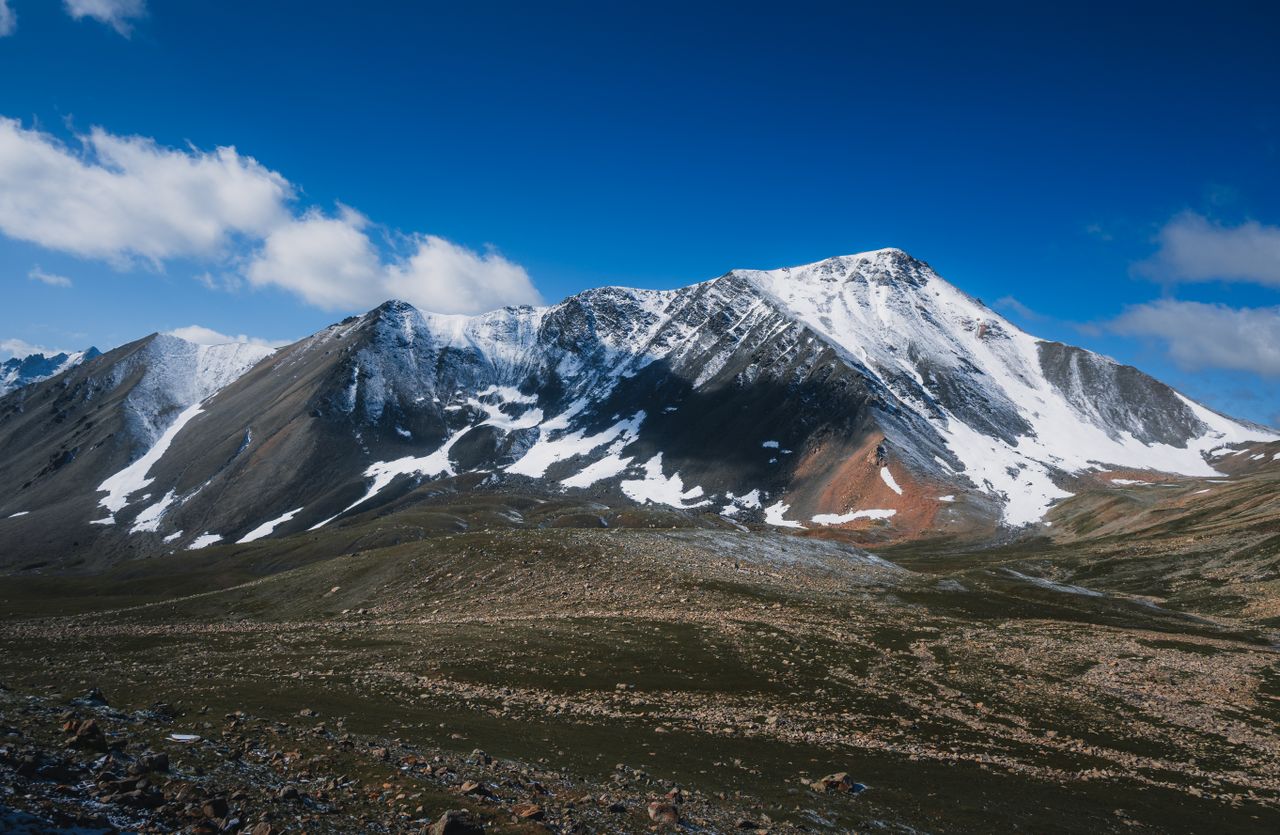
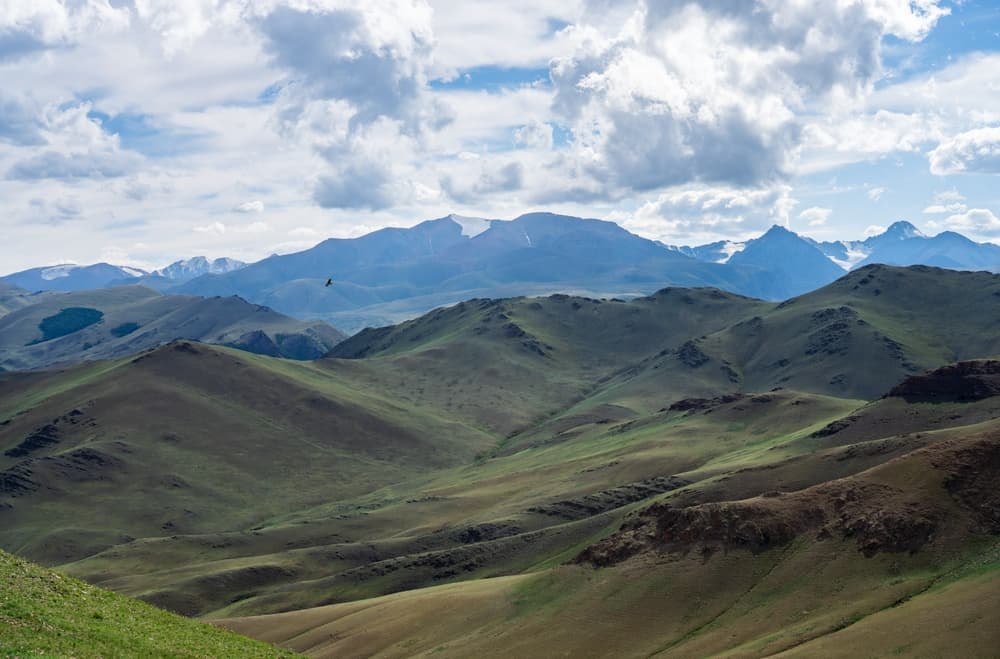
The Kharkhiraa massif rises in Uvs province, at the far northwestern tip of Mongolia, not far from the Russian border. Its snow-capped peaks dominate the steppe and salt lakes of the Uvs basin, a UNESCO World Heritage site. This territory remains little visited by foreign travellers, making it authentic exploration terrain for trekking and wilderness enthusiasts.
Quick practical essentials
Access: from Ulaangom, capital of Uvs province, by 4×4 all-terrain vehicle — roads are unpaved.
Clothing: mountain equipment is essential; temperatures drop sharply at altitude, even in summer.
Recommended duration: 3 to 7 days for a complete trek through the massif.
Best season: June to September; outside this period, access is difficult or impossible.
Accessibility for people with reduced mobility: not suitable — mountainous terrain and unimproved trails.
What to see
The Kharkhiraa-Türgen massif comprises two main peaks exceeding 4,000 metres. Glaciers feed clear rivers that flow through valleys carpeted with larch and alpine meadows. Wildlife is remarkable: argali (Central Asian wild sheep), mountain ibex, golden eagles, and—more rarely—snow leopards. Yurts of Kazakh and Tuvan families dot the lower valleys.
History and context
The Uvs region has been inhabited by nomadic peoples for millennia. Kazakhs and Tuvans still practice transhumant herding and eagle hunting there. The Uvs lake basin, of which the massif is an integral part, was inscribed as a UNESCO World Heritage site in 2003 for the exceptional diversity of its ecosystems—from sand deserts to high-mountain glaciers.
Highlights of the visit
Ascent toward the glaciers
The northern flanks of Kharkhiraa retain permanent glaciers. Experienced trekkers can approach them via unmarked routes, accompanied by a local guide. The views over the Uvs steppe from the ridges are breathtaking.
Encounters with nomadic families
In summer, Kazakh families pitch their yurts in high-altitude valleys. It is common, with a guide, to be invited to share salted milk tea or dried cheese. These exchanges often become the strongest memory of the journey.
Wildlife observation
The argali, the world's largest wild sheep, frequents rocky slopes. Early mornings, with binoculars, offer the best viewing chances. A local guide knows the usual grazing areas of wild herds.
Photography tips
Raking light in early morning and evening highlights relief and glaciers. Reflections of peaks in valley lakes are particularly photogenic in July–August. Always ask nomadic families for permission before photographing them—a gesture of respect systemic in Mongolian culture.
Location and access
The massif lies at a significant distance by road from Ulaangom, accessible only by 4×4. Ulaangom is connected to Ulan Bator by domestic flights (Hunnu Air or MIAT depending on season) and by a long road. No public transport serves the massif itself. An experienced guide and driver are essential. Local agencies can organize all logistics from Ulaangom.
Nearby attractions
Uvs Nuur Lake — Mongolia's largest lake by surface area, UNESCO site, near Ulaangom.
Türgen Massif — peak neighbouring Kharkhiraa, often visited in combination during the same trek.
Ulaangom — provincial capital, logistical departure point for all exploration of the Uvs region.
Frequently asked questions
June to September. In July and August, the valleys are verdant and rivers are passable. Before June and after September, snow and cold make access very difficult.
Yes, absolutely. Trails are unmarked, weather changes rapidly, and communication is impossible without knowledge of local Mongolian or Kazakh. A guide-driver is essential.
Warm and waterproof clothing, mountain hiking boots, a sleeping bag rated for negative temperatures at altitude, first-aid kit. There are no shelters or infrastructure on-site.
Yes, it's even recommended. Uvs Nuur Lake lies in the same province and makes a natural stop before or after the massif, accessible from Ulaangom.
No hotel or fixed tourist camp in the massif. Camping under canvas is the norm. Some local agencies organize mobile yurt camps for their groups.
Interested in this visit?
We can include it in your personalised itinerary.