Oyu Tolgoi
Oyu Tolgoi
Oyu Tolgoi, 'turquoise hill', is one of the world's largest copper and gold deposits, located in the heart of the Gobi Desert.
Oyu Tolgoi — literally 'turquoise hill' in Mongolian — is one of the world's largest copper and gold deposits, situated in the Gobi Desert in Ömnögovi Province, approximately 550 km south of Ulaanbaatar. This massive industrial site, operated through a partnership between the Mongolian government and Rio Tinto, symbolizes both Mongolia's economic growth and the tensions between mining development and nomadic life. It is not a conventional tourist attraction, but rather an emblematic site for understanding contemporary Mongolia.
What You'll See
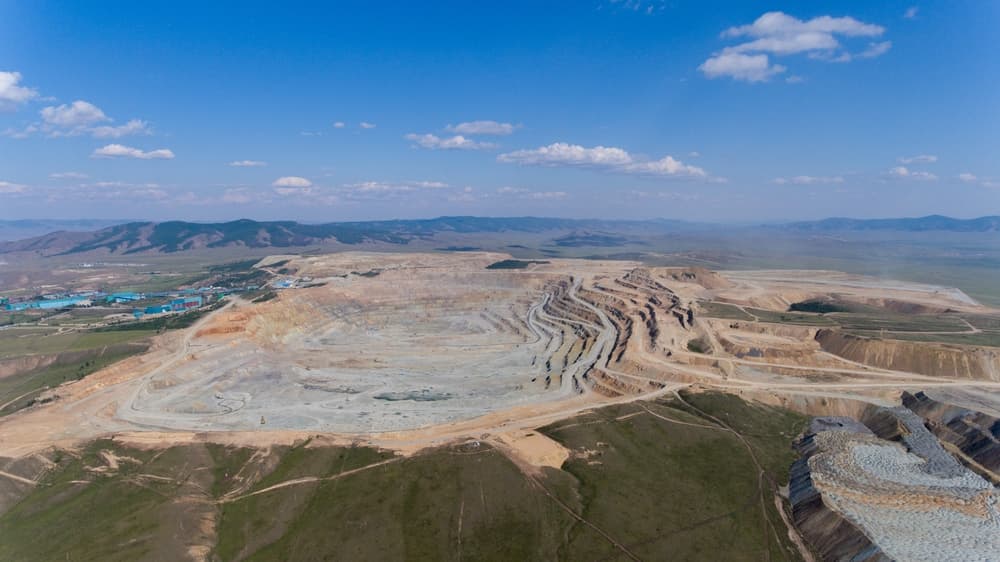
Oyu Tolgoi is foremost an industrial mining complex with both open-pit and underground operations. The open pit, ore processing infrastructure and worker camp facilities convey the staggering scale of the operation. The surrounding landscape is quintessential Gobi: arid plains, sweeping horizons, and the raking light characteristic of desert regions.
Open-pit mine: one of Central Asia's largest, visible from surrounding heights.
Industrial infrastructure: concentration plants, haul roads, power lines crossing the desert.
Gobi landscape: desert steppe, scattered dunes and endless sky around the site.
History and Context
The deposit was discovered in the 1990s during geological surveys. Investment agreements between Mongolia and Ivanhoe Mines (later acquired by Rio Tinto) were signed in the early 2000s. Commercial production began in 2013. The project has sparked ongoing debates over revenue sharing, environmental impact and the displacement of nomadic herding families. The underground mine, deeper and richer, entered advanced development phases in the 2020s.
Highlights of the Experience
The Gobi–Industry Contrast
Witnessing industrial installations of this magnitude rise from the Gobi Desert is a visually striking experience. The contrast between the desert's silent immensity and the site's relentless activity illustrates Mongolia's rapid transformation.
Khanbogd District
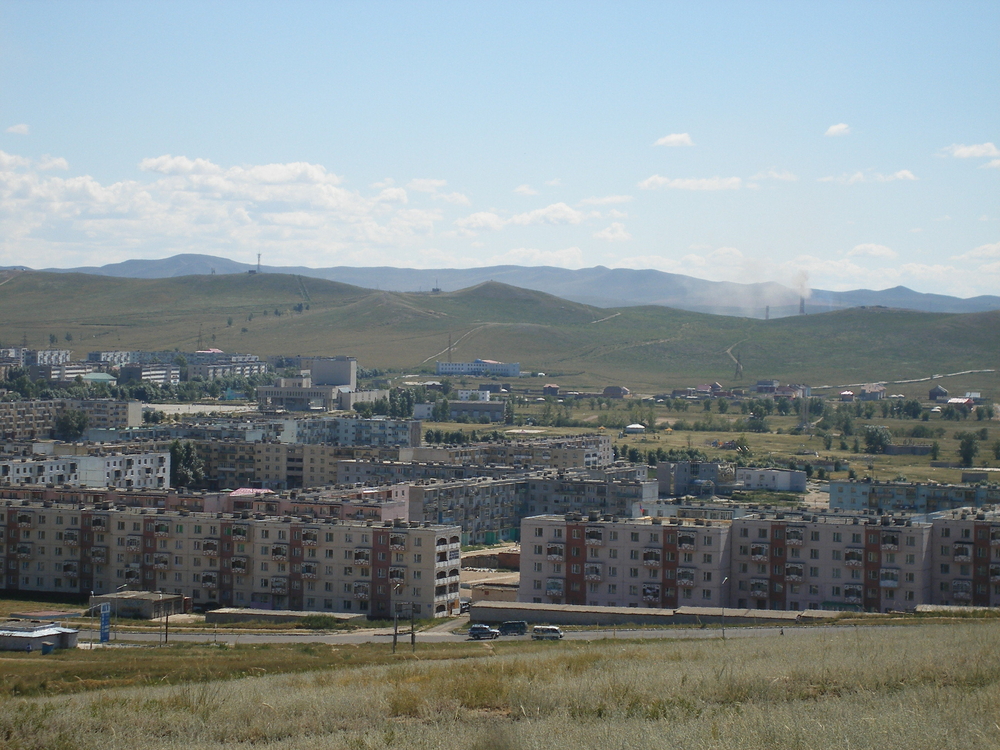
The town of Khanbogd, the closest settlement to the site, has experienced rapid growth linked to the mine. It offers concrete insight into the social and economic changes the project has brought to local communities.
Photography Tips
Access to the mining site itself is strictly regulated and reserved for authorized personnel. Photography from public areas or surrounding elevations captures the scale of the pit. Morning and evening light across the Gobi is particularly striking for photographing the surrounding desert landscape.
Location and Access
Oyu Tolgoi sits approximately 80 km north of the Chinese border in Ömnögovi Province. The nearest town is Khanbogd. From Ulaanbaatar, roads traverse the Gobi across several hundred kilometers; domestic flights serve Dalanzadgad, the provincial capital, from which several more hours of rough track remain. Access to the industrial site is prohibited to the public without prior authorization from Rio Tinto or the Mongolian government.
Nearby
Gobi Desert — dunes, rocky plains and canyons to explore throughout the region.
Khongoryn Els Dunes — Mongolia's largest sand dunes, accessible from Dalanzadgad.
Yolyn Am Canyon — a narrow gorge in the Gurvan Saikhan mountains, known for its persistent ice.
Dalanzadgad — capital of Ömnögovi Province and the logistical gateway to the region.
Frequently asked questions
No. Access to the industrial site is strictly reserved for authorized personnel. No public tours are organized. It is possible to observe the site from external viewpoints.
The site illustrates Mongolia's economic and social transformation. For travelers interested in development issues, mining extraction and nomadic lifeways, it represents a tangible symbol of these shifts.
Spring (May–June) and autumn (September) offer bearable temperatures in the Gobi. Summer can be very hot; winter is extremely cold with temperatures well below freezing.
A circuit through the Gobi from Dalanzadgad allows you to pass through Khanbogd, then continue to the Khongoryn Els dunes and Yolyn Am canyon. Most travelers work with a local English-speaking agency to arrange 4x4 transport along the tracks.
Khanbogd has basic accommodations. Travelers often prefer ger camps in the surrounding Gobi, which are more comfortable and better integrated into a regional tour circuit.
Interested in this visit?
We can include it in your personalised itinerary.