Monts tsambagarav
Monts tsambagarav
The Tsambagarav Mountains rise in the far west of Mongolia, at the border between Bayan-Ölgii and Khovd provinces.
The Tsambagarav Mountains rise in the far west of Mongolia, at the border between Bayan-Ölgii and Khovd provinces. This glaciated massif, protected by a national park, peaks above 4,000 metres and shelters permanent glaciers, alpine valleys, and remarkable wildlife. It is Kazakh nomad territory, where the golden eagle remains a living hunting companion.
Quick Facts at a Glance
Access: from Ölgii, capital of Bayan-Ölgii, by 4×4 vehicle — the track crosses steppes and mountain passes with no paved roads.
Entrance: the national park requires an entry fee (permit to be arranged with the park administration).
Gear: mountain hiking equipment is essential; temperatures can drop below freezing even in summer at altitude.
Recommended duration: minimum 2 to 4 days to explore the glaciers and valleys.
Best season: June to September, before the tracks freeze.
What to See
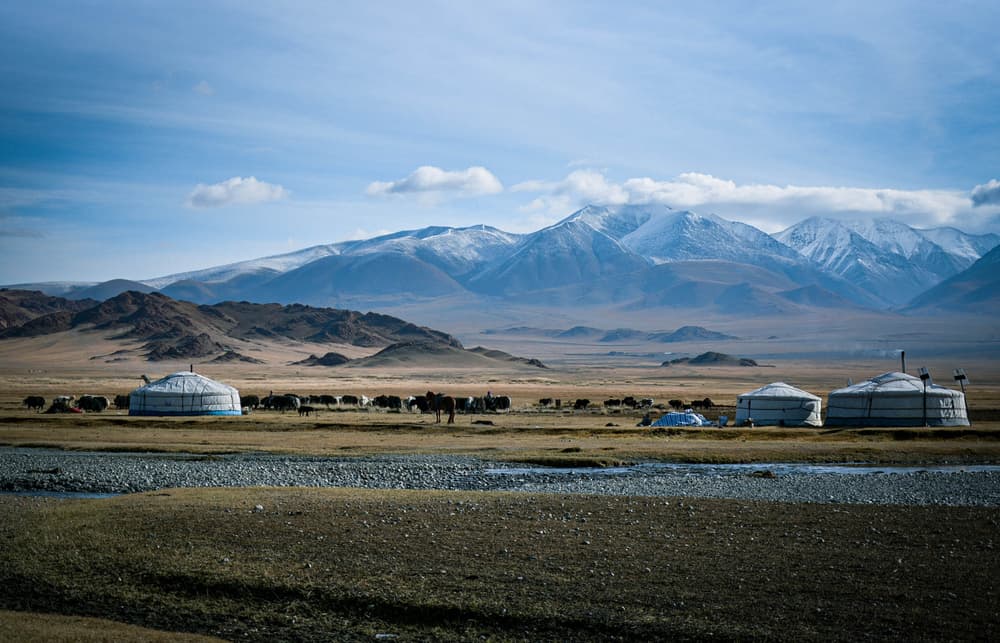
The massif features glaciers visible to the naked eye from lower valleys, turquoise alpine lakes, and alpine meadows where yaks and horses graze. The slopes shelter argali (wild mountain sheep), ibex, and, more rarely, snow leopards. Kazakh yurts dot the summer pastures.
History and Context
Tsambagarav Uul National Park was established in 2000 to protect this glacial ecosystem threatened by glacier retreat. The region has been inhabited for centuries by Kazakh nomads, whose golden eagle hunting tradition — passed from father to son — has been inscribed on UNESCO's Intangible Cultural Heritage list since 2016 (a practice shared with neighbouring Kazakhstan).
Highlights of Your Visit
The North-Facing Glaciers
Glacial tongues descend to relatively accessible altitudes, reachable on foot from base camps. The contrast between blue ice and ochre steppe is striking. The visible glacier retreat also serves as tangible testimony to climate change in Central Asia.
Meeting the Eagle Hunters
Kazakh families in the region practise golden eagle falconry (berkutchi). Some local guides arrange yurt visits and demonstrations. This experience, authentic and not staged outside the tourist season, remains one of the most powerful in western Mongolia.
Alpine Lakes and Valleys
Several glacial lakes nestle within the massif's cirques. Reaching them requires several hours of hiking from the drivable tracks, but the solitude and landscape quality reward the effort.
Photography Tips
Low-angle morning and evening light reveals the texture of glaciers and rocky ridges. White yurts set against eternal snow create a powerful composition. Always ask permission before photographing people or eagles — this is an elementary courtesy in Kazakh communities.
Location and Access
The massif lies roughly 100 km south-east of Ölgii, the main town of Bayan-Ölgii. Ölgii is connected to Ulaanbaatar by regular domestic flights (MIAT and Hunnu Air). From Ölgii, only a 4×4 vehicle with English-speaking driver-guide can reach the park — no paved roads exist in this region. Local agencies based in Ölgii organise complete expeditions with yurts, Kazakh guides, and pack horses.
Nearby Attractions
Ölgii — Kazakh capital of Mongolia, an essential starting point for any trip to the Mongolian Altai.
Tolbo Lake (Tolbo Nuur) — large steppe lake on the route between Ölgii and Khovd, a stop for observing migratory birds.
Tavan Bogd — border massif peaking above 4,300 m, home to Mongolia's most extensive glaciers, in the far north-west of Bayan-Ölgii.
Golden Eagle Festival — annual eagle hunting competition held in Ölgii each October, a showcase of Kazakh culture.
Frequently Asked Questions
Frequently asked questions
June to September, when the tracks are passable and glaciers accessible. July and August offer the mildest valley temperatures, though nights at altitude can freeze year-round.
An English-speaking local guide is highly recommended: tracks are unmarked, navigation across steppe and mountains is complex, and a Kazakh guide facilitates contact with nomadic families.
Yes, both massifs can be visited from Ölgii and fit naturally into a 10 to 14-day circuit through the Mongolian Altai. Tavan Bogd is further north-west, Tsambagarav more to the south-east.
Landscape photography is unrestricted. To photograph people, eagles, or the interior of yurts, always request permission from residents — a gesture of respect expected in Kazakh culture.
Waterproof hiking boots, warm layered clothing, windproof jacket, high-protection sunscreen (altitude amplifies UV exposure), and a first-aid kit. No shelters or supplies exist along mountain routes.
Accommodation is primarily in yurts — either with nomadic families (arranged in advance via a guide) or in tourist yurt camps run by Ölgii-based agencies. No hotels exist within the park.
Want to discover this destination?
Our local advisors design your tailor-made trip.