Murun
Murun
Mörön — often transliterated as Murun — is the capital of Khövsgöl Province, in northern Mongolia.
Mörön — often transliterated as Murun — is the capital of Khövsgöl Province, in northern Mongolia. Situated on the Delger Mörön river, this modest-sized city serves as the essential departure point for Lake Khövsgöl and the territories of Tsaatan herders. It concentrates essential services (airport, market, banks) before diving into one of the country's most pristine regions.
Practical Information at a Glance
Access: Regular flights from Ulaanbaatar (Mörön airport); road from the capital (approximately 670 km, partly on dirt track).
Recommended duration: half a day to a full day, to organize yourself before heading to the lake or taiga.
Currency: Mongolian tugrik; ATMs available in town.
Clothing: No particular restrictions in town; bring warm clothes, nights are cool even in summer.
What to See
Mörön is a functional city rather than a tourist attraction. Its central market brings together local craftspeople, herders, and merchants — a great place to observe daily life and buy supplies. The Danzandarjaa monastery, rebuilt after Soviet-era destruction, offers insight into Tibetan Buddhism that still structures life in the region.
History and Context
Like most Mongolian provincial centers, Mörön developed during the Soviet era as an administrative hub. Khövsgöl Province, bordering Siberia, was long inhabited by Turco-Mongol peoples and the Tsaatans (Dukha), reindeer herders whose camps lie further north. The city takes its name from the river that runs through it.
Highlights of Your Visit
The Central Market
Mörön's market reflects the region's pastoral economy: fermented dairy products, dried meat, saddles and harnesses, woolen clothing. It's the liveliest spot in town, particularly bustling in the morning.
Danzandarjaa Monastery
Rebuilt after the Communist era, this active monastery welcomes monks and local worshippers. The architecture is modest; the atmosphere, contemplative. Morning ceremonies are open to respectful visitors.
The Delger Mörön River
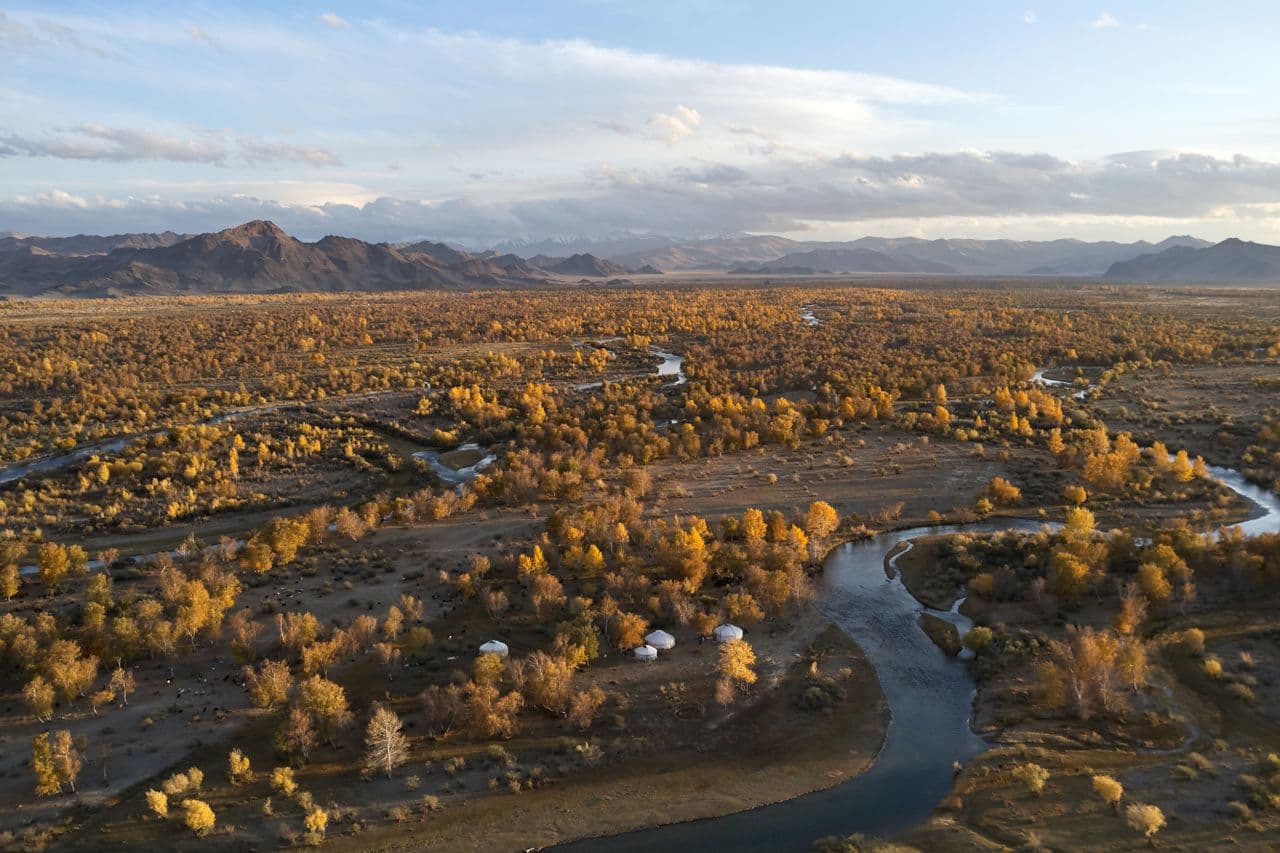
The riverbanks offer a peaceful evening stroll. The river originates near Lake Khövsgöl and flows east to join the Selenge.
Etiquette and Visit Guidelines
At the monastery: remove your shoes before entering prayer halls.
Ask permission before photographing monks or ceremonies.
Circulate clockwise around stupas and sacred buildings.
Photography Tips
Morning light is ideal at the market, before crowds build up. For the monastery, golden late-afternoon light illuminates the facade beautifully. Avoid photographing people without their explicit consent.
Location and Access
Mörön lies in northern Mongolia, approximately 100 km south of Lake Khövsgöl by road. The airport receives flights from Ulaanbaatar several times weekly depending on the season. Shared minivans (furgon) connect Mörön to Khatgal, gateway to Lake Khövsgöl. The city is accessible by car from the capital, but the track is long and requires a suitable vehicle.
Nearby
Lake Khövsgöl — one of Central Asia's great freshwater lakes, surrounded by coniferous forests and mountains.
Tsaatan (Dukha) camps — reindeer herders living in the taiga north of the province, accessible via Tsagaannuur.
Khövsgöl National Park — vast protected area encompassing the lake and surroundings, ideal for hiking and horseback riding.
Frequently Asked Questions
Frequently asked questions
From June to September, temperatures are mild and roads passable. Winter is harsh (very low temperatures) and certain tracks become difficult to access.
If you arrive by plane in the late afternoon, one night in town is often necessary before heading to Lake Khövsgöl. Guesthouses and a few basic hotels are available in the city.
Shared minivans depart regularly for Khatgal, a village at the lake's southern end. The journey takes approximately two to three hours depending on track conditions.
Yes, banks and ATMs are present in town. Beyond Mörön, toward the lake or taiga, banking services disappear: plan to have enough tugrik in cash.
The city is accessible independently, but to explore the province (Tsaatans, remote areas), a local guide or regional English-speaking agency greatly facilitates logistics and contacts with nomadic communities.
Want to discover this destination?
Our local advisors design your tailor-made trip.