Tamir River
Tamir River
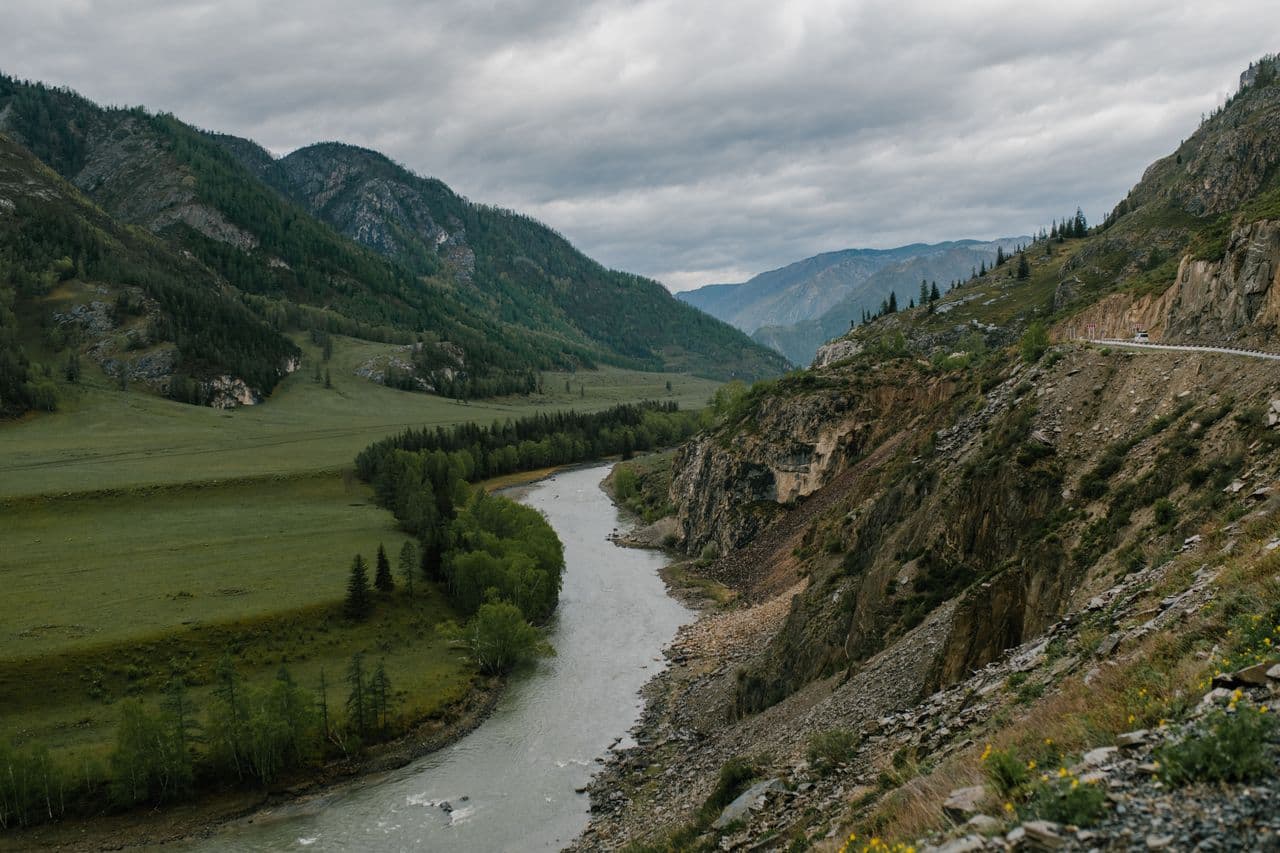
The Tamir River flows through Arkhangai Province, in the heart of central Mongolia. A tributary of the Orkhon, it winds through grassy valleys bordered by larch forests and gentle hills.
The Tamir River flows through Arkhangai Province, in the heart of central Mongolia. A tributary of the Orkhon, it winds through grassy valleys bordered by larch forests and gentle hills. Nomads have pitched their gers here for centuries; today, anglers, hikers and travellers seeking authentic steppe landscapes converge here, away from crowded tourist circuits.
What you'll see
The landscape alternates between open grasslands, calm meanders and forested riverbanks. Herds of horses, yaks and sheep graze freely along the shores. Birdlife is rich: cranes, ducks and raptors frequent the river corridor. In summer, the white gers of herders dot the green slopes, offering a quintessential tableau of nomadic life in Arkhangai.
History and context
The Tamir valley has been inhabited since antiquity. Remnants of the Uyghur Empire (8th–9th centuries) have been identified in the Arkhangai region. The river long served as a thoroughfare for nomadic tribes moving between the Khangai massif and the Orkhon plains. Today it remains a territory of largely unchanged traditional herding.
Highlights of a visit
Arctic grayling fishing
The Tamir is renowned for its populations of Arctic grayling (Thymallus arcticus). Fly fishing is practised here, particularly in summer. A Mongolian fishing permit is required; check with your local operator before departure.
Staying in a ger with a local family
Nomadic families along the valley welcome travellers. It's an opportunity to taste airag (fermented mare's milk) and observe animal herding at sunrise. No standardized accommodation exists on-site; arrangements are made through a local operator.
Hiking in the Khangai foothills
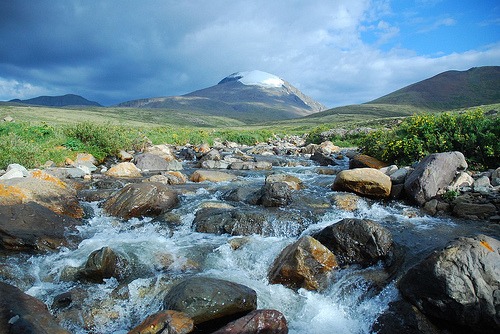
Heights overlooking the valley offer sweeping views of the Tamir's meanders and snow-capped Khangai peaks. Trails are unmarked; a local guide is strongly recommended.
Photography tips
Golden light at dawn and dusk is ideal for photographing gers against hillside backdrops. Sky reflections in the meanders are particularly crisp early in the day, before wind disturbs the surface. No known photography restrictions exist in the valley; always ask nomadic families' permission before photographing them.
Location and access
The Tamir River lies in Arkhangai Province. The nearest town is Tsetserleg, the provincial capital, reachable from Ulaanbaatar by partially paved road. The 4x4 journey from the capital takes roughly a day depending on conditions. No regular public transport runs to the Tamir's banks; a four-wheel-drive vehicle with driver is essential. Accessibility for people with reduced mobility is severely limited due to unimproved natural terrain.
Nearby attractions
Tsetserleg — Arkhangai's main town, home to its provincial museum housed in a former monastery.
Zayain Khüree Monastery (Tsetserleg) — a partially preserved Buddhist complex, best visited from town.
Orkhon Valley — a UNESCO World Heritage site, accessible by continuing southeast.
Terkhiin Tsagaan Lake — a high-altitude volcanic lake in northern Arkhangai, a spectacular backdrop for camping.
Frequently asked questions
Frequently asked questions
From June to September, the valley is lush and nomadic families occupy the pastures. July and August are the warmest months but also the busiest. Outside this window, temperatures drop sharply and tracks can become impassable.
Yes. Trails are unmarked and weather changes rapidly. A local guide familiar with nomadic families also facilitates encounters and ger accommodation.
No. Fishing in Mongolia requires a permit. Some zones are also protected. Arrange the necessary permits before departure through a specialist operator.
No hotel exists on the Tamir's banks. Accommodation is in a ger with nomadic families (arranged through an operator) or by camping. Tsetserleg has a few guesthouses for a more comfortable base.
Yes. The Tamir valley integrates naturally into an Arkhangai circuit that includes Tsetserleg, Terkhiin Tsagaan Lake and the Orkhon Valley. Plan for a minimum of five to seven days for this 4x4 circuit.
Want to discover this destination?
Our local advisors design your tailor-made trip.