Tsaatan Camp
Tsaatan Camp
In northern Mongolia, at the edge of the Siberian taiga, the Tsaatan — also known as Dukha — live as nomads with their reindeer.
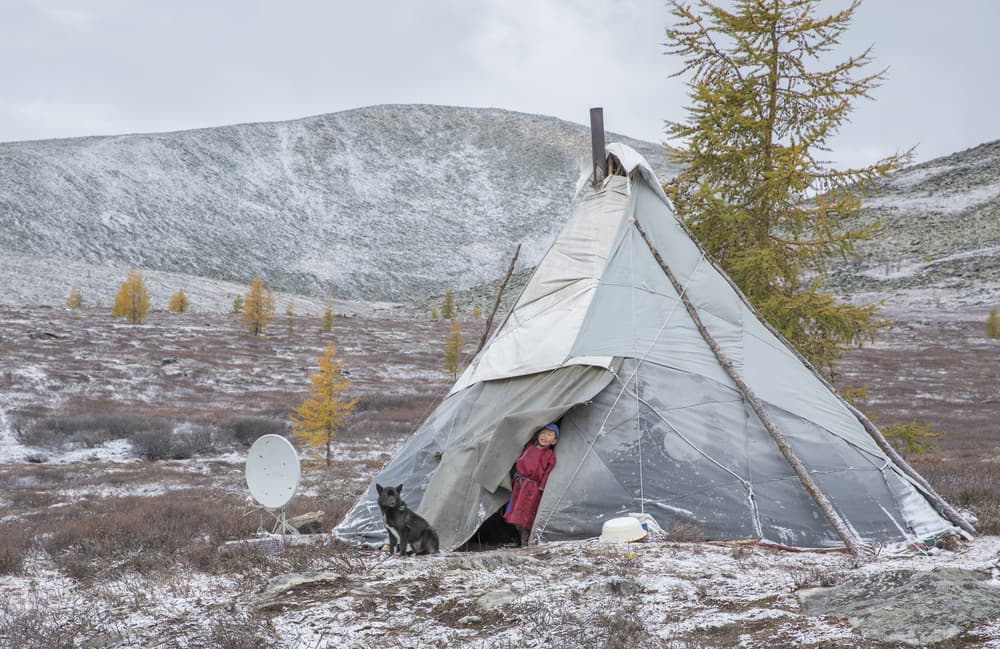
In northern Mongolia, at the edge of the Siberian taiga, the Tsaatan — also known as Dukha — live as nomads with their reindeer. This people of reindeer herders, among the last in the world, move their encampments with the seasons through forested mountains near the Russian border. Visiting their conical yurts (ortz) is a rare immersion into a millennia-old way of life, far removed from any standardized tourist circuit.
Practical Information at a Glance
Access: from Mörön (capital of Khövsgöl), 4×4 vehicle journey to Tsagaannuur, then several hours on horseback or on foot depending on season and campement location.
Recommended duration: minimum 2 to 3 nights for an authentic encounter; a single day is insufficient.
Best time to visit: June to September for summer access; winter is possible but involves extreme conditions.
Guide mandatory: a local guide or specialized agency is essential — encampments move regularly and no fixed addresses exist.
Accommodation: overnight stay in an ortz (conical canvas tent) with a family, subject to prior agreement.
Accessibility for people with reduced mobility: not accessible — mountainous terrain, access only by horseback or on foot.
What You'll See
The encampment consists of several ortz, conical tents covered in canvas or hides, surrounded by semi-domesticated reindeer. The Tsaatan use these animals for transport, milk, and sometimes meat. You'll observe reindeer milking, cheese-making, and the crafting of leather and wooden equipment. Children grow up riding reindeer from an early age.
History and Context
The Tsaatan are a Turkic-speaking group of Tuvan origin, established in the Mongolian taiga for centuries. Their numbers are very small — a few hundred people spread across several families. During the Soviet era, pressures were exerted to settle them; most resisted and maintained their nomadic way of life. Their culture is now fragile due to youth migration and declining reindeer herds.
Highlights of Your Visit
Life with the Reindeer
Participating in morning milking or accompanying herders into the forest to gather the herd is the heart of the experience. Tsaatan reindeer are smaller than their Siberian cousins and remarkably docile.
A Night in the Ortz
Sleeping in the family tent around the central fire gives you insight into the spatial organization, hierarchy of placement, and daily rituals. The cold at night, even in summer, is real at this altitude.
Shamanism
Some Tsaatan families still have shamans (böö). A ceremony cannot be arranged on demand, but should the opportunity arise, it will be an intensely moving moment. Never photograph without explicit permission.
Etiquette and Visiting Rules
Always ask permission before photographing people, reindeer, or the interior of the tent.
Bring practical gifts (tea, flour, sugar) rather than giving money directly to children.
Do not touch the reindeer without an invitation from the owner.
Respect sacred spaces marked by ribbons or offerings — do not cross them.
Adopt discreet behavior during shamanic rituals should you witness them.
Photography Tips
The golden morning light, when reindeer are gathered near the encampment, offers the best conditions. The taiga in the background adds depth. Avoid using flash indoors — it is often poorly received. Prioritize portraits with clear verbal consent, ideally through your guide.
Location and Access
The Tsaatan encampments are located in the taiga of northern Khövsgöl province, beyond the village of Tsagaannuur. The usual starting point is Mörön, accessible by air from Ulaanbaatar. From Mörön, a 4×4 reaches Tsagaannuur, then access to the encampment is by horseback or on foot depending on season and the exact location of the families. No encampment is fixed: your guide will contact families in advance.
Nearby Attractions
Lake Khövsgöl — Mongolia's largest freshwater lake, a few hours south, surrounded by forests and mountains.
Mörön — provincial capital, an essential logistics hub before heading into the taiga.
Tsagaannuur — the last village before the Tsaatan zone, where settled families live and where the control post is located.
Frequently Asked Questions
Frequently asked questions
Summer (June-September) offers the most practical access. Trails are open, reindeer are present near encampments, and nights remain manageable. Winter is possible but requires a serious expedition with appropriate equipment.
Yes, it is essential. The encampments move regularly and no signage exists. A local guide knows the families, speaks Tsaatan or Mongolian, and facilitates respectful welcome.
Yes, with the prior agreement of your host family, arranged by your agency or guide. The night is spent in an ortz, on hides or blankets. Bring a warm sleeping bag even in summer.
Black tea, flour, sugar, salt, or sweets for children are appreciated. Avoid distributing money directly — work through your guide for any fair financial contribution.
No. Always request permission before each photograph, through your guide if necessary. Shamanic ceremonies are often off-limits for photography.
Plan for a minimum of 2 to 3 nights on site, plus travel time from Mörön. A full week allows you to combine your visit with Lake Khövsgöl.
Want to discover this destination?
Our local advisors design your tailor-made trip.