Sükhbaatar
Sükhbaatar
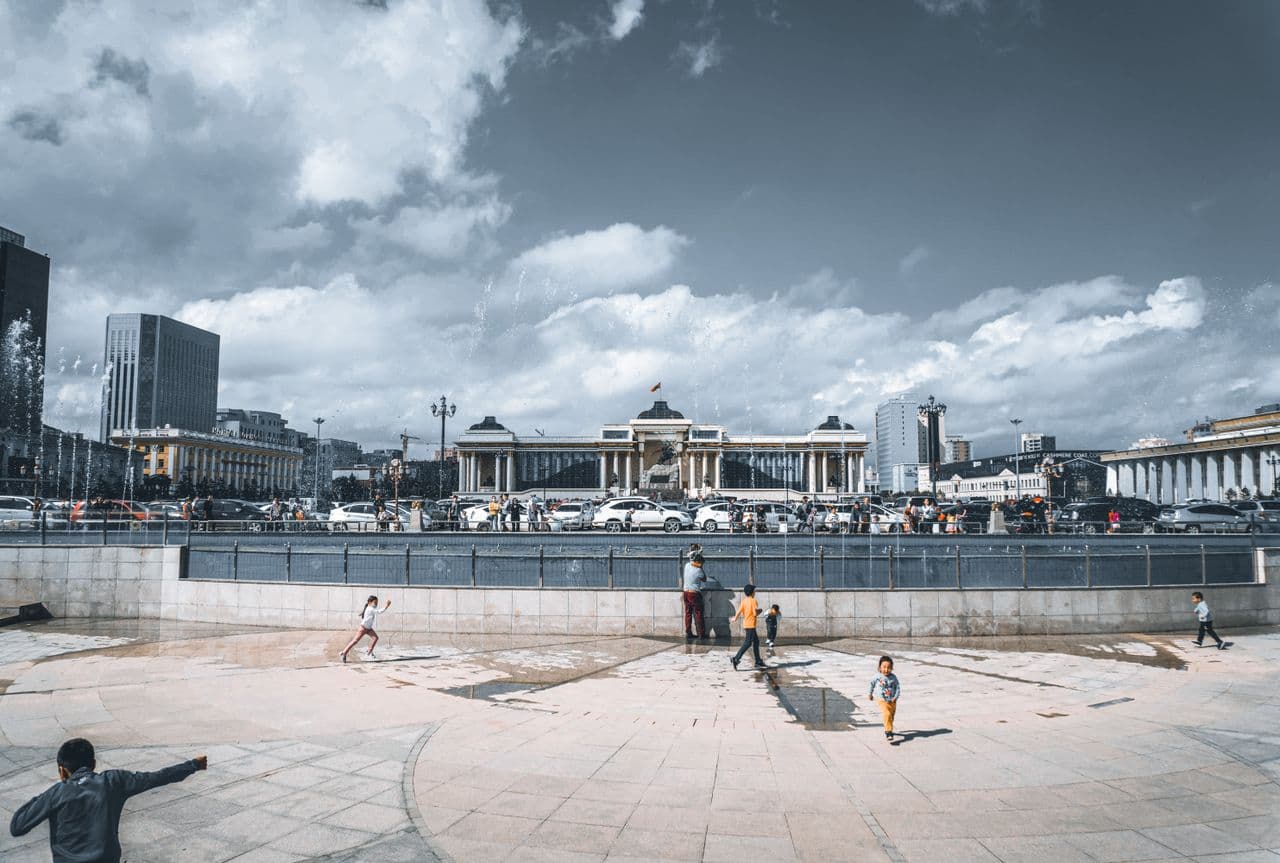
At the heart of Ulan Bator, Sukhbaatar Square is the symbolic and civic center of Mongolia. This vast paved esplanade is bordered by Parliament, the Palace of Culture, and several government ministries.
At the heart of Ulan Bator, Sukhbaatar Square is the symbolic and civic center of Mongolia. This vast paved esplanade is bordered by Parliament, the Palace of Culture, and several government ministries. It is here that major national ceremonies, Naadam gatherings, and official commemorations take place. The equestrian statue of Genghis Khan that dominates the Parliament portico makes this an essential stop for understanding contemporary Mongolian identity.
Practical Information at a Glance
Access: in the city center, within walking distance of most downtown Ulan Bator hotels.
Admission: free, public square open year-round.
Recommended time: 30 to 60 minutes for the square itself; longer if visiting adjacent museums.
Dress code: no restrictions on the public square.
What to See
The square is dominated by an imposing parliamentary complex whose central portico houses a monumental equestrian statue of Genghis Khan, flanked by Ögedei and Kublai Khan. At the center of the esplanade stands the statue of Damdin Sukhbaatar, hero of the 1921 revolution, on horseback with outstretched arm. Around it, Soviet-era facades stand alongside more contemporary buildings.
History and Context
The square bears the name of Damdin Sukhbaatar, the military leader who proclaimed Mongolia's independence on July 11, 1921, from this very location. During the Soviet era, it hosted military parades and ideological rallies. In 2013, it was briefly renamed "Genghis Khan Square" before reverting to its original name. It remains the country's central place of memory.
Highlights of the Visit
The Sukhbaatar Statue
Erected in 1946, the bronze equestrian statue of the revolutionary occupies the geometric center of the square. It is Ulan Bator's absolute landmark and the backdrop for countless official Mongolian photographs.
The Genghis Khan Portico
The parliamentary complex, renovated in the 2000s, features a gallery of monumental statues. Genghis Khan presides at the center, commanding and gilded. The ensemble illustrates post-Soviet Mongolia's reclamation of its imperial heritage.
Naadam and National Ceremonies
Each year in early July, the square hosts the opening ceremony of Naadam, the national festival of the "three manly games" (wrestling, archery, and horsemanship). The atmosphere is unforgettable: traditional costumes, music, and dense crowds.
Photography Tips
Morning light (before 9 a.m.) is ideal: the square is less crowded and the sun illuminates the Parliament facade face-on. In the evening, artificial lighting on the portico creates dramatic shots. From the center of the square, a wide-angle lens captures both the Sukhbaatar statue and Parliament in the background.
Location and Access
Sukhbaatar Square lies at the heart of Ulan Bator, at the intersection of the city's main arteries. It is accessible on foot from most downtown hotels. Buses and minibuses (local shared vans) serve nearby stops. The National Museum of Mongolia is just a few minutes' walk to the northwest. The Zanabazar Museum of Fine Arts is also nearby.
In the Area
National Museum of Mongolia — traces the country's history from its origins to the present, with collections spanning the era of Genghis Khan.
Zanabazar Museum of Fine Arts — houses the largest collection of Mongolian Buddhist art, including ancient thangkas and bronzes.
Gandan Monastery — Ulan Bator's principal Buddhist monastery, approximately 15 minutes' walk to the west.
Winter Palace of the Bogd Khan — residence of Mongolia's last theocratic sovereign, in the southern part of the city.
Frequently Asked Questions
Frequently asked questions
The square is lively year-round. In early July, during Naadam, the atmosphere is especially festive. On weekday mornings, you'll find it quieter for photography.
No, the square is entirely public and free. Only the adjacent museums charge admission.
The Parliament building is an official government structure. Interior access is not open to casual visitors; only the outer portico and statues are accessible from the square.
The esplanade is paved and generally level, making it navigable by wheelchair, though some uneven stones may present difficulties.
Yes. The National Museum of Mongolia and the Zanabazar Museum are just minutes away on foot. Gandan Monastery requires a short trip but combines easily into a half-day itinerary.
Yes, photography is free throughout the public square. No restrictions apply to exterior shots of the statues and Parliament building.
Interested in this visit?
We can include it in your personalised itinerary.