Monasteries and temples in Mongolia: must-see buildings | The 10 main monasteries in Mongolia
A land of passion and adventure, Mongolia is an unmissable destination for travel in Asia. While known for its vast landscapes and grandiose scenery, it is also a country rich in tradition and Buddhist culture... Follow us as we take you to discover the 10 main monasteries in Mongolia - and the temples that deserve a stop...
Erdene Zuu Monastery
Built between 1585 and 1586, the Erdene Zuu Monastery is the oldest Buddhist monastery in Mongolia. It stands in Övörkhangai Province, approximately 2 km northeast of Karakorum's center. This sanctuary sits behind a grand wall featuring 108 stupas. Damaged in the 1680s, it was rebuilt during the 18th century and again in 1872. Today, it is listed as UNESCO World Heritage under the category "cultural landscape of the Orkhon Valley".
|
Practical information ● Address : 6R2R+F9Q, Kharkhorin, Övörkhangai, Mongolia ● Opening hours : Monday to Friday, 9am to 6pm ● Entrance fee : approximately $3 USD (10,000 ₮) ● To know : you must pay approximately $5.50 USD to be allowed to take photographs |
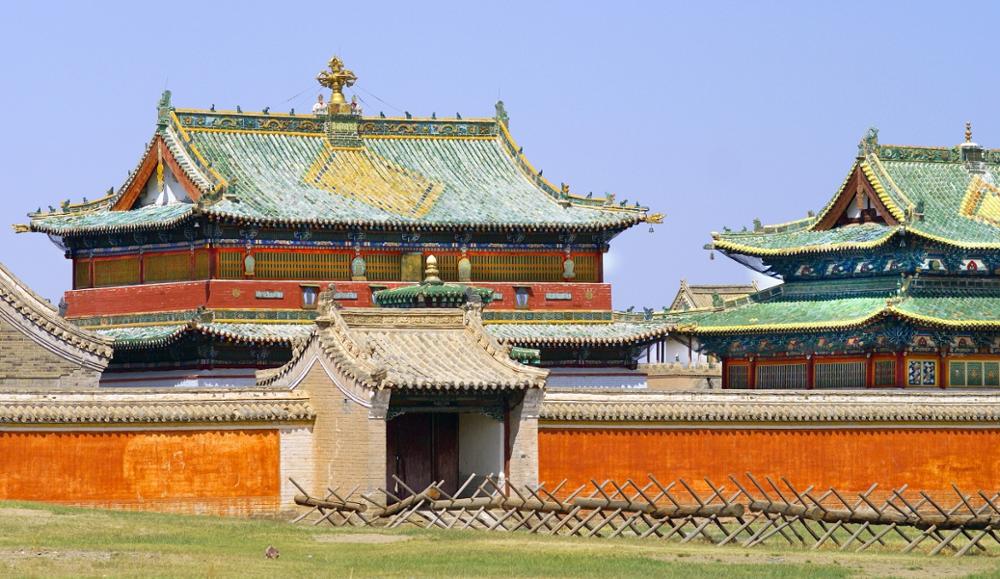
Gandantegchinlen Monastery
Also known as Gandan Monastery, Gandantegchinlen is a Tibetan-style Buddhist monastery located in Ulan Bator. Its name, of Tibetan origin, means "the great place of complete joy".
The monastery stands as an essential visit in the Mongolian capital, notably for its Megjid-Janraiseg statue that towers 26.5 meters high.
The entire complex, which comprises several temples, still hosts around one hundred monks.
|
Practical information ● Address : BGD - 16 khoroo, Ulaanbaatar, Ulan Bator 16040, Mongolia ● Opening hours : daily from 9am to 5pm ● Entrance fee : free |
Ongi Monastery
Nestled at the foot of the Saikhan Ovoo mountain, near Saikhan Ovoo village in Dundgovi region, Ongi Monastery was one of Mongolia's most important sanctuaries. At its construction in 1660, it consisted of two complexes spread across the north and south banks of the Ongi River. It once housed nearly 30 temples, 4 major Buddhist universities, and over 1,000 monks before being completely destroyed.
In 1990, three monks began constructing a temple. Today, the complex consists of one temple and two small museums among the ruins of the former monastery.
|
Practical information ● Address : 82Q3+WPF, Dundgovi, Mongolia ● Entrance fee : free ● To note : to fully understand the history of this ancestral site, it is recommended to visit with a local guide |
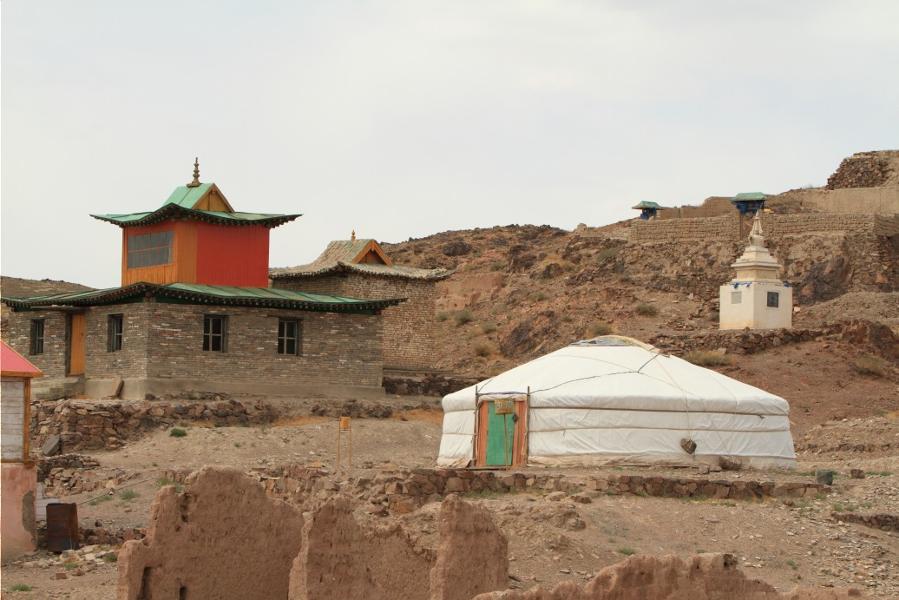
Tövkhön Monastery
Nestled at 2,312 meters elevation atop the sacred Shireet Ulaan mountain, the Tövkhön Monastery overlooks the Orkhon Valley.
Built in 1651 by Zanabazar, a renowned sculptor, painter, and musician, it was destroyed by the Oirat Mongols during their war against the Eastern Mongols. It was rebuilt in 1773, then demolished again in the late 1930s by Stalin's supporters. Today reconstructed, the monastery hosts several monks and holds a place on the UNESCO World Heritage List since 1996.
|
Practical information ● Address : 2774+45X, Övörkhangai, Mongolia ● Entrance fee : approximately $1 USD (3,000 ₮) ● To know : guided visits are organized with local guides. Budget approximately $14 USD per person (round trip from Khujirt town + monastery visit). Part of the trail to reach the monument is quite steep – and requires some climbing. |
Amarbayasgalant Monastery
Located near the Selenga River in the Iven Valley, at the foot of Buren-Khaan Mountain in the north-central region of the country, Amarbayasgalant Monastery is one of three largest Buddhist centers of the Tibetan Gelugpa school in Mongolia.
Built between 1727 and 1737, it is the only monastery to have escaped destruction by communists.
Although the monastery is Chinese in style, it features Mongolian and Tibetan influences in its architecture, making it a magnificent sanctuary.
|
Practical information ● Address : Дархан 1, Дархан, Selenge, Mongolia ● Opening hours : daily from 9am to 7pm ● To know : the monastery temples are opened to visitors by a resident monk living within the religious building. ● Access to the monument : located in the Bürengiyn Nuruu mountains, the building requires either a hike of approximately 35 km, renting a jeep driver's services ($28 USD), or boarding a tourist van ($4 USD/person) – provided you reach 10 people in the vehicle (or pay for vacant seats...). |
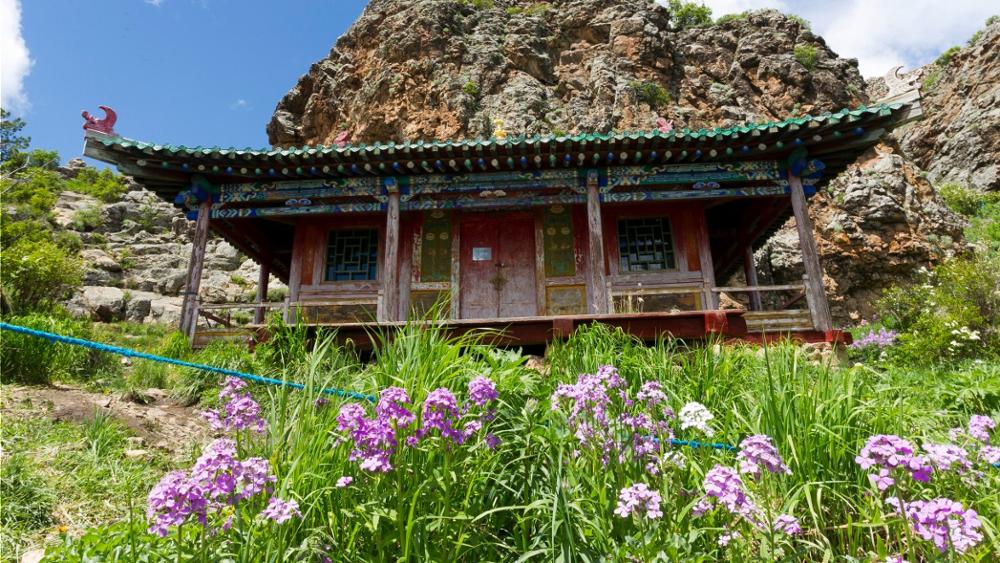
Shankh Monastery
Built in 1647, the Shankh Monastery is one of Mongolia's oldest monasteries. It is located in Övörkhangai Province, 25 km southeast of Karakorum. This monastery owes part of its reputation to its connections with Zanabazar, who spent his childhood here. It also ranks among the rare monasteries that survived the purges of the 1930s.
|
Practical information Address : 3X23+GFG Shankh Rd, Shankh Monastery, Övörkhangai, Mongolia Opening hours : daily from 9am to 7pm in summer; daily from 11am to 2pm in winter Entrance fee : approximately $1 USD (3,000 ₮) |
Zayan Gegeen Monastery
The Zayan Gegeen Monastery was built in 1616 by the monk of the same name. Under communist rule, the monastery served as a warehouse before being converted into an ethnographic museum. The museum houses historical artifacts, an exhibition on the region's modern history, as well as a room devoted to local fauna and flora. On the first floor, in the former library, ancient objects of worship are displayed.
|
Practical information Address : town of Tsetserleg (Arkhangai Province) |
Khamar Monastery
Built in 1821 on the initiative of Danzan Rabjar, the Khamar Monastery was one of the most important centers of the so-called "Red Hat" school of Mongolia. The complex included a school, a library, and a temple-museum where many objects were displayed. It was destroyed during the purges of the 1930s. Its reconstruction was not completed until 2006.
|
Practical information Address : H7WF+W9R, Hamariin Hural, Dornogovi Gobi desert) |
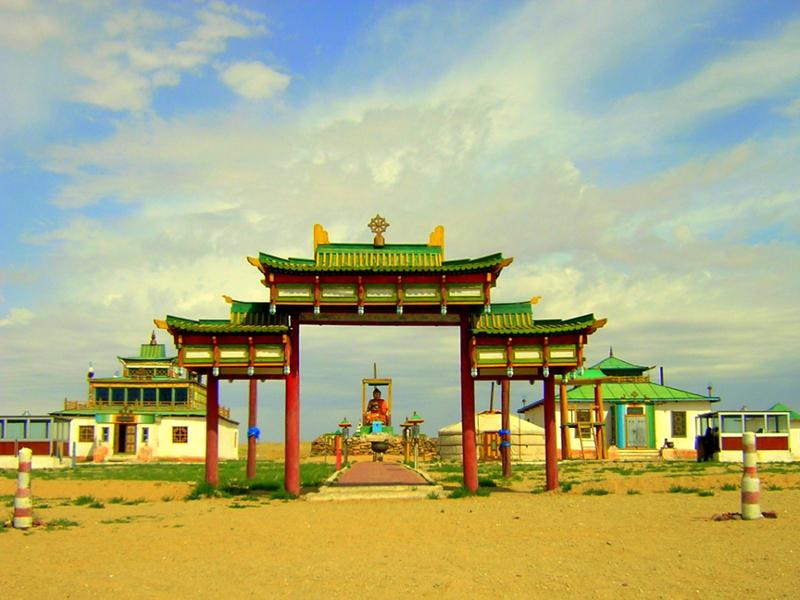
Baldan Bereeven Monastery
Located in the valley of the Baruun Jargalant River in the Ömnödelger district, Khentii Province, Baldan Bereeven Monastery is a magnificent sanctuary of the Buddhist Gelugpa school. It is among the monasteries destroyed by communists in the 1930s.
Long undergoing restoration thanks to an international aid program, the ruins are now accessible once again. The site is also worth visiting for the beauty of the surroundings, with the monastery surrounded by picturesque and sacred mountains of the Khentii Range: Munkh Ulziit, Arvan Gurvan Sansar, Bayan Baraat, and Bayan Khangai.
|
Practical information Address : 6C2H+8J2, Breven Kid, Khentii, Mongolia |
Khambiin Khiid Monastery
Built in the mountains on the initiative of Zanabazar, in honor of his teacher, the monk Erdene, the Khambiin Khiid Monastery ranks among Mongolia's most sacred sanctuaries. Although today it is no longer active, monks visit one or two times a month for religious ceremonies.
|
Practical information ● Address : Erdene Khamba Monastery, Khognokhan Natural Reserve ● Entrance fee : free |
What is the difference between a monastery and a temple in Mongolia?
The terms temple and monastery are often used interchangeably, but they actually designate two distinct notions:
● A monastery (hiid in Mongolian) is a religious complex where a community of monks lives. It generally serves as a center for study and transmission of Buddhist teachings. A monastery comprises several buildings, including temples dedicated to prayer – for monks and the faithful.
● A temple (sum): this is a place of worship where one meditates, makes offerings, or performs rituals. This type of building can exist alone or be part of a religious complex. Unlike a monastery, it does not house monks – since it is simply a "prayer hall". A temple belonging to a monastery is often (incorrectly) referred to as such.
In summary? A monastery is a place where monks live (and where it is possible to pray), whereas a temple is simply a place of prayer!
Gunj Temple
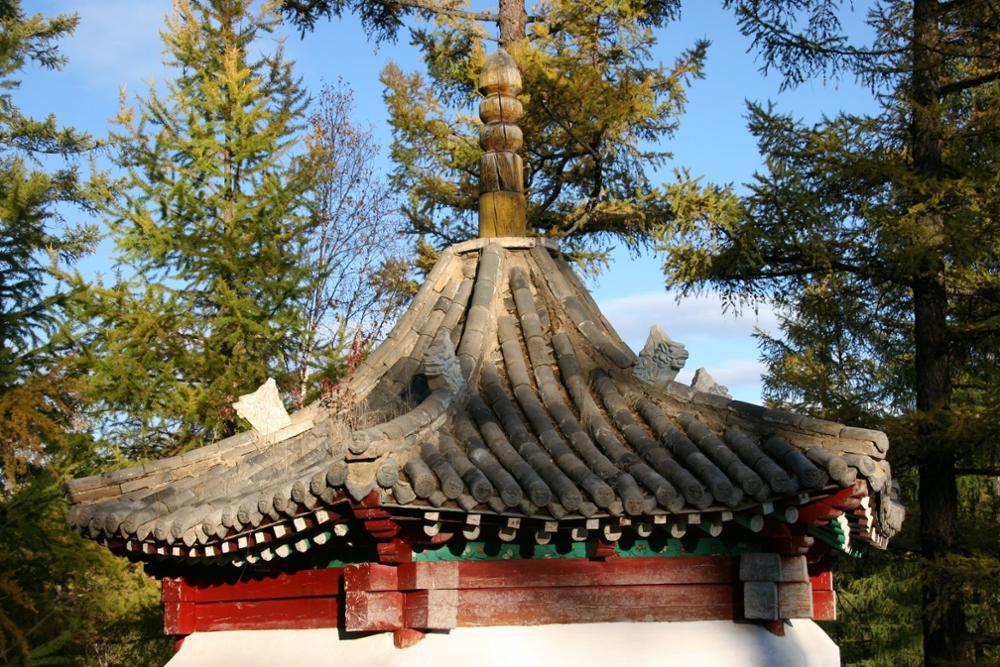
Located within Gorkhi Terelj natural park, Gunj Temple (or günjiin süm) was built in 1740 by Khan Dondovdorj. Protected since 1961, the building had escaped Soviet destruction before falling into obscurity. Today, only the main temple and a few monastery walls remain.
While not the most beautiful temple in Mongolia, it deserves a stop during a hike through the park (on foot or horseback) as you can still see the entrance to an underground passage – which once had a defense system.
|
Practical information ● Address : Энхтайвны Өргөн Чөлөө 206, Ulaanbaatar, Mongolia (Töv Province) ● Opening hours : daily / 24 hours ● Entrance fee : free |
Choijin Lama Temple
In the business district of Ulan Bator, near Sukhbaatar Square, you will find Choijin Lama Temple. It belongs to a vast religious complex, erected between 1904 and 1908. Since 1942, the building has housed the Museum of Religion, where you can admire objects of worship, as well as a gilded statue of Sakyamuni (the original Buddha), dating from the 18th century.
|
Practical information ● Address : WW79+HH5 Genden St, SBD - 1 khoroo, Ulaanbaatar 14240, Mongolia ● Opening hours : 9am to 6pm in summer and 9am to 5pm in winter (closed Sundays and Mondays) ● Entrance fee : free for under 16s, $4 USD/adult (15,000 ₮); ● To know : you will need to pay approximately $4 USD (50,000 ₮) for the right to take photographs within the establishment. |
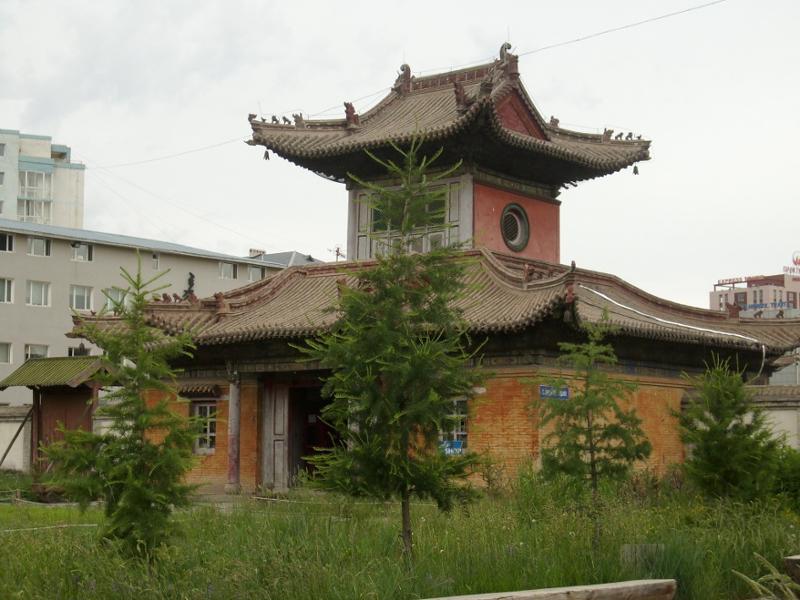
Bouteeliin Temples
Within Bouteelin Monastery stand several temples – the main one recognizable by its brilliant colors. Built in 2014, the building has been somewhat criticized for its unconventional architecture.
Erected on a hillside in the steppes of Bayanchandmani (northwest of the capital), this sanctuary offers breathtaking views of the surrounding mountains. It is a meditation center that offers retreats dedicated to Buddhist practice.
Before reaching the entrance gate, you will need to climb a grand staircase, where you can admire numerous stone statues.
|
Practical information ● Address : byteeliin khiid, Bornuur, Töv, Mongolia ● Opening hours : daily from 8am to 7pm ● Entrance fee : approximately $2 USD/person (5,000 ₮) ● To know : the complex is an interesting stop when hiking on the Bayanchandmani high plateaus. |
Mongolia's monasteries: 2 featured itineraries!
➡️ If you want to visit several monasteries but don't know how to fit them into your itinerary: discover our Mongolia Express tour! An opportunity to visit 3 essential religious sites, but also to meet the nomads of the Orkhon (a UNESCO-listed valley)
➡️ Planning a mystical stay in the Shambala region? Discover our Sands of the Gobi tour... On the agenda: visits to Khamar Monastery and a stop in the legendary kingdom…