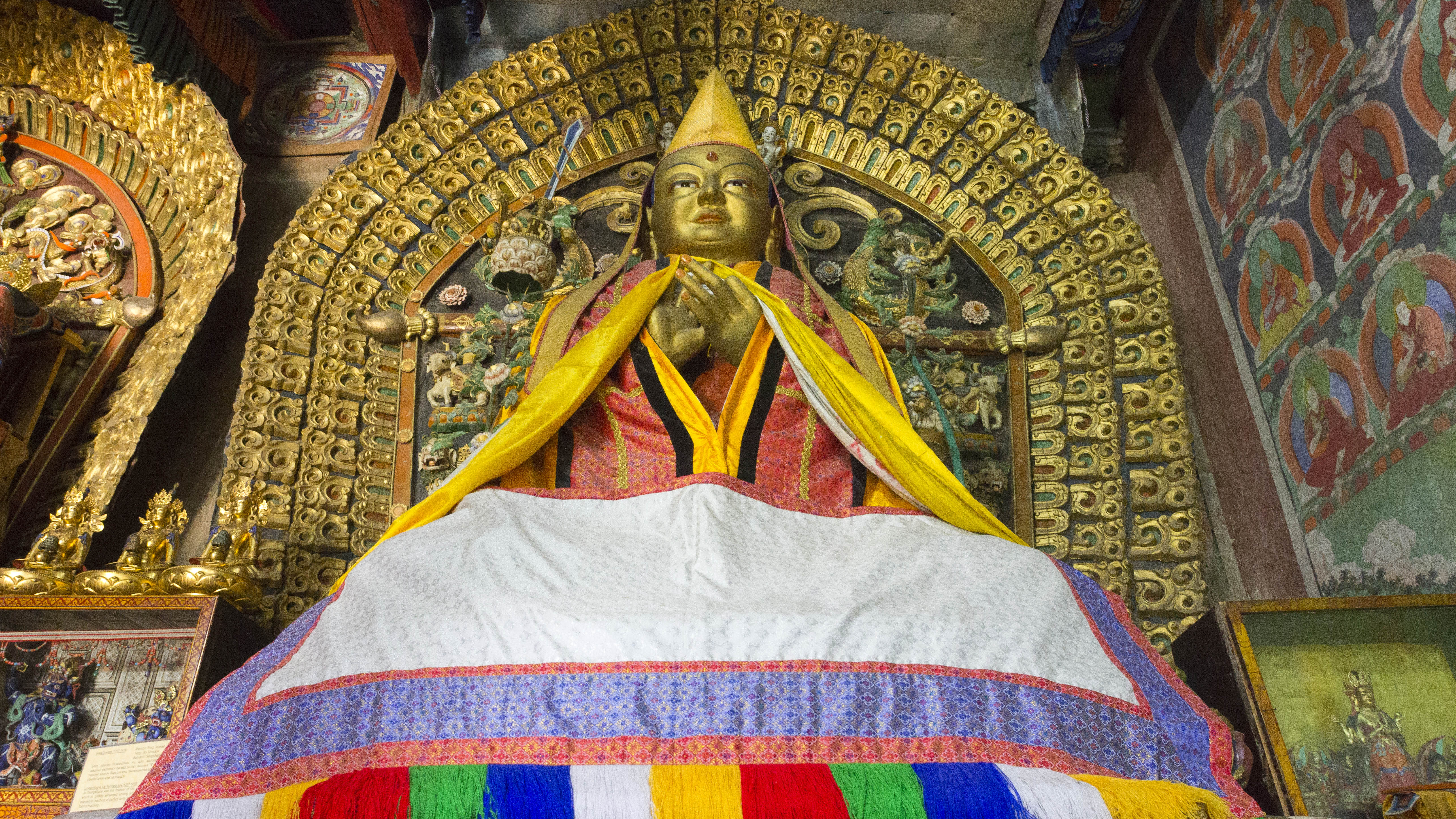
Buddhism in Mongolia
The first Buddhist temples in Mongolia were built during the Hun period, which began in the 3rd century BC.
The first Buddhist temples in Mongolia were built during the Hun period, which began in the 3rd century BC.
From 330 AD to 550 AD, during the Mongol-Nirun period, Buddhism had become the official state religion, and more than ten kings were granted honorary Buddhist titles. However, Buddhism was not practiced by common people, who continued to follow ancestral shamanic practices.
Buddhism became the religion of the Mongol state for the second time during the Yuan Empire period, when Kublai Khan made Lama Pagva the spiritual master of the Nation.
After the collapse of the Yuan Empire, however, shamanism once again became the most popular religion.
In the 16th century, Buddhism became the state religion of Mongolia for the third time. In 1587, Altan Khan was the first to grant the title of Dalai Lama, meaning "ocean of wisdom," to Sodnomjamts, the leader of the "Yellow sect" of Tibetan Buddhism.
However, Buddhism was only truly practiced by common people from the 19th century onwards. The peak of Buddhism's development in Mongolia was reached in the late 19th and early 20th centuries. With the support of the Manchus, more than 700 monasteries were built across the country, housing over 30,000 lamas.
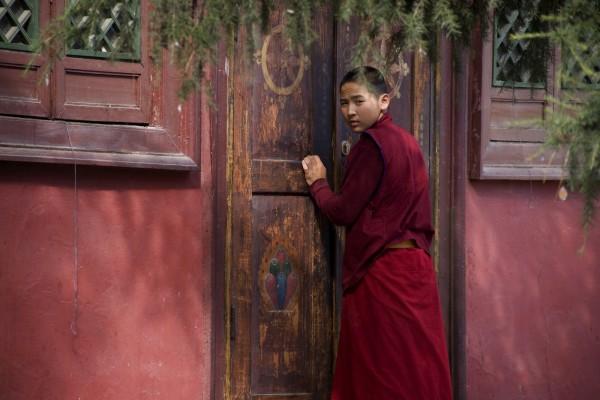
The Manchus had a policy of encouraging the spread of Buddhism in Mongolia partly to destroy local culture, and partly as a means to minimize potential political opposition to their regime, ensuring that a large proportion of the male population was engaged in monasteries. By the early 20th century, there were 115,000 lamas in Mongolia, corresponding to 20% of the total population and more than a third of the country's male population. Young boys were typically enrolled in monasteries from the age of five or six, where they were raised under the tutelage of elderly lamas.
In 1911, Mongolia became an independent religious state with the 8th Bogd Khan as its leader. Following the popular revolution of 1921, Buddhism began to decline, and in the 1930s and 1940s, nearly all Mongolian monasteries were destroyed by the government in an effort to abolish the state religion.
The form of Buddhism practiced in Mongolia was extremely influenced by the ritualistic and mystical practices of Tantrism, reflected especially in the belief in the supernatural power of sacred words. This belief takes the form of books or printed flags and recited mantras.
In the "Yellow sect" of Buddhism, the book is the most sacred object. It is the source of wisdom helping mankind escape suffering. In cases of illness or misfortune, as well as during periods indicated by astrological tables, Mongols consider it appropriate to read or have lamas read particular books. Typically, it is not the entire book that is read but the dharani, series of texts and magical syllables that contain the essence of the book in question. Each family considers it very auspicious to be in possession of a religious sutra, which is folded in cloth and kept carefully in the back of the yurt. Only a Lama is permitted to touch this sutra. Thus it is never read as such, but preserved as a symbol of its content, which is believed to have influence regardless of whether it is read or not.
Mongols also believe that placing a prayer flag (khiimoriin dartsag) on a pole at the back of their yurt will bring support in their daily life. The words inscribed on their flag are supposed to be "activated" by the continuous breath of the wind. In the same way, prayers can be activated by holding a book to one's head, or by turning the wheel of a prayer mill, a cylindrical device containing hundreds of prayers.