Mongolie from 1691 to 1911
The Manchus conquered both Inner and Outer Mongolie, incorporating them into their empire. The Manchurian emperor thus became the sovereign of Mongolie. Nevertheless, the majority of Mongol nobles retained their titles. The Qing government reorganized the administration of Inner Mongolie with their consent.
The 24 provinces of Inner Mongolie were divided into 6 regions. The Qing empire appointed a governor for Outer Mongolie who resided in the city of Uliastai. There was also another government in the city of Ih Huree that managed Inner Mongolie. When western Mongolie finally succumbed to the Manchus, they established the Khovd administration in 1725. The Manchurian government formed four provinces, including the province of Khan Sain in tribute to his contribution in the war against the Oirats.
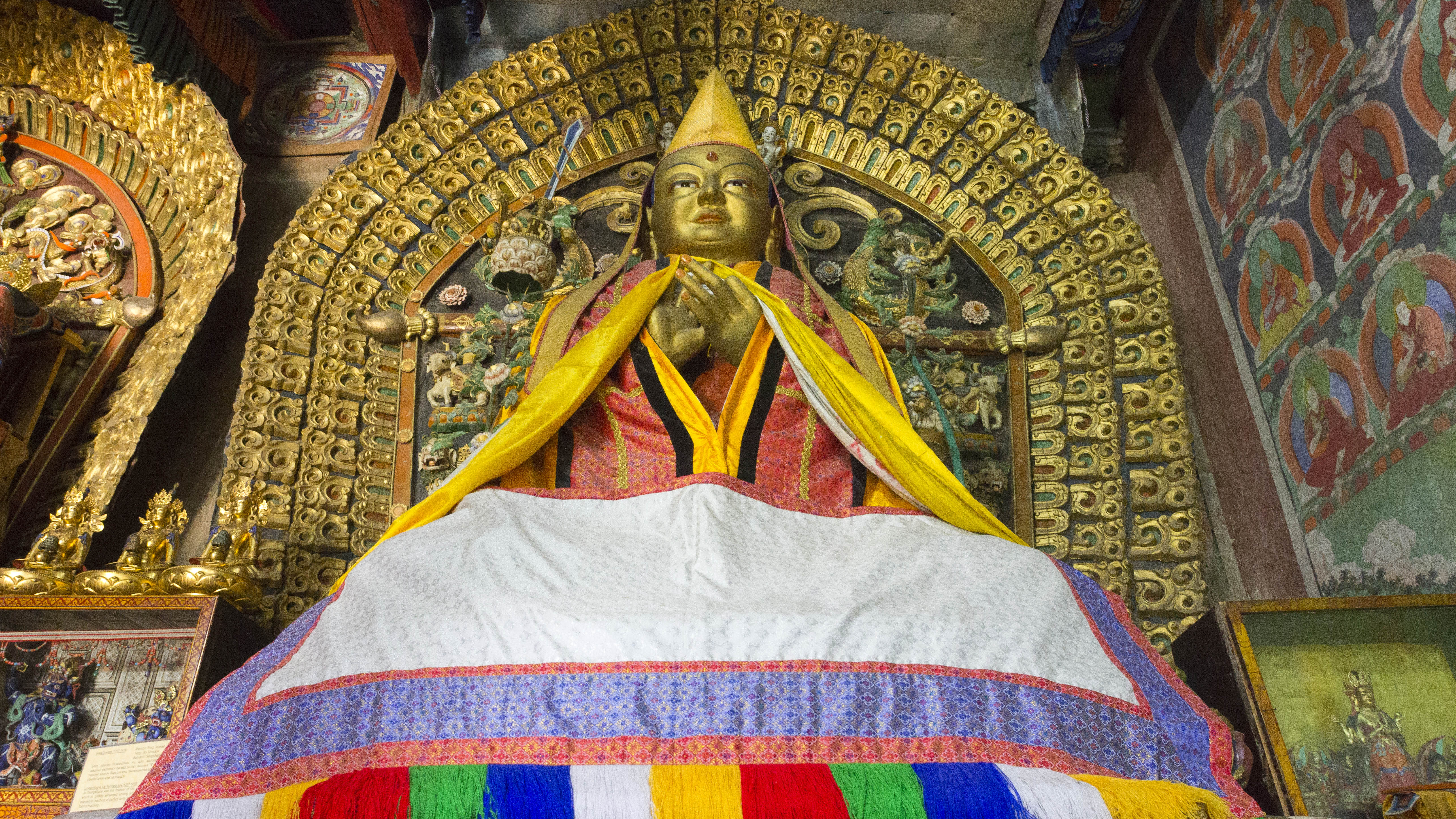
When the Mongols converted to Buddhism in 1639, they elected a superior to lead the Buddhist Church, holding the title of Bogd. The Bogd was responsible for religious affairs, and when the Manchus arrived, they retained him as the official Buddhist leader. A special ministry controlled the Bogd's actions and Buddhist ceremonies. In this way, the Qing empire created an extremely elaborate administration, with taxes and political arrangements for Inner and Outer Mongolie.
The Mongols resisted Manchurian imperialism through rebellions and uprisings. In 1755, a large number of Mongols launched an attack that encircled western Mongolie. Among the rebels were the boshigt Galdan, Amarsanaa, and Chingunjav. The attack was successful at first, but the Manchus gained the upper hand and severely punished the mutineers. Amarsanaa fled Mongolie and found refuge in Russia, where he died. The others were executed.
Manchurian laws in Mongolie covered all aspects of Mongol life. "Halh Juram," which was enacted between 1709 and 1795, was the legal document of this period. There was also "the legal writings of Inner Mongolie," which were enacted in 1817. This consisted of 63 volumes covering various legal matters.
During the period of Manchurian domination, Mongol literature experienced a renaissance. Poets and writers produced remarkable religious and secular works. The most famous was the monk Danzanrawjaa, who lived in the 19th century and was a great dramatist. His most well-known work was "Saran höhöö."
The Manchurian government suppressed any idea of autonomy in Mongolie. Consequently, Mongolie spent the 19th century as a minor region of the Qing empire.