The Position of Women in Mongolian Society
Several eminent Western specialists agree that Mongolian women have traditionally held relatively higher social positions and greater autonomy than women in the Islamic societies of Central Asia or in China and Korea.
The Subordination of Women in Traditional Society
Several eminent Western specialists agree that Mongolian women have traditionally held relatively higher social positions and greater autonomy than women in the Islamic societies of Central Asia or in China and Korea. Women managed the herding and milking of sheep, and systematically ran the household during the death or absence of their husband, particularly during military service, performed corvée labor, and oversaw migrations.
Mongols have been more concerned with a woman's fertility than her virginity and do not share the obsessive concern with female purity found in much of Asia. Women, however, although not timid, remained subordinate to men and were confined to the domestic sphere.
Traditionally, women cared for sheep, which provided the family's basic means of subsistence, while men tended to horses, which contributed more to prestige, warfare, and sport. The Mongols have a practice of combining strict subordination of women with a more flexible attitude toward women's participation in tasks traditionally associated with men, and women normally replaced men in their absence for activities such as milking horses, or even riding them in races.
Women have always participated in archery competitions, one of the "three manly sports" (the others being horse racing and wrestling).
When the revolution of 1921 began, notable efforts were undertaken to draw women into public life and to use their labor in industry. The state's constant efforts to promote population growth also led to an emphasis on women's reproductive capacities; bearing a large number of children was thus considered a civic duty. The state, however, glossed over the contradictions between the production roles in the economy and the reproductive roles assigned to women. Yet tensions did exist, and frequent births, maternity leave, and childcare likely affected the types of jobs women occupied and their professional engagement.
The Significant Role of Women in Mongolia's Economy
Education and Employment of Women in Mongolia
Today Mongolian women's participation in education is nearly universal and extends across all levels of the education system and the paid workforce.
In 1985, women represented 63% of students in higher education institutions and 58% of students in specialized secondary schools. In the same year, they represented 51% of all workers, an increase of nearly 46% since the 1979 census. In 1979, medicine and education were dominated by women, who made up 65% of all doctors and 63% of employees in education, art, and culture. Women also represented 67% of teachers in general education institutions and 33% of teachers in higher education. They made up nearly 47% of agricultural workers and 46% of those in industry.
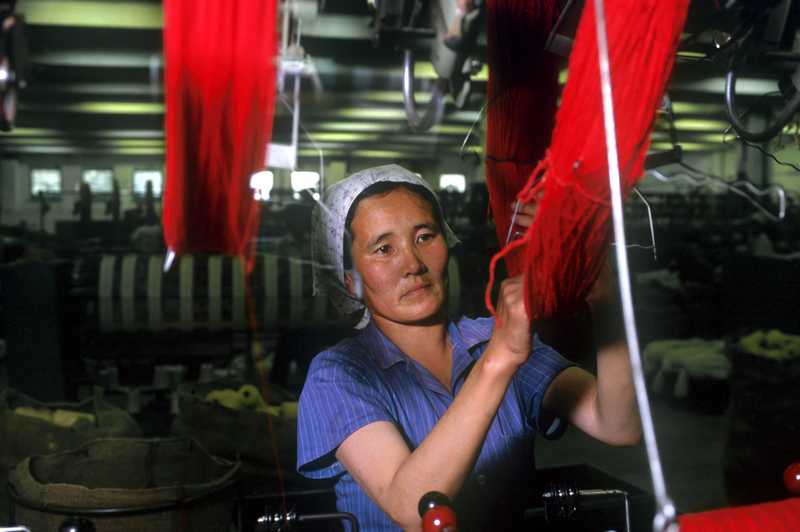
The high rate of women's enrollment in higher education reflects the predominance of women in medicine, nursing, teaching, and pediatrics. This echoes the Soviet Union model, where most doctors were women and where the social status and economic situation of doctors were lower than in the United States or Western Europe. The most highly qualified Mongolian scientists, engineers, administrators, and military officers were trained in the Soviet Union. In 1989, no statistics were available on the percentage of women among these elites. However, Mongolian reports on women's work indicate that certain women were employed as airline pilots, judges, and sculptors, and that women predominated in the lower-paying jobs of the food industry, textiles, and hospitality sectors.
Mongolian women benefited from legal equality, but those working endured "the double day"—the burden of household tasks added to a salaried work day. This problem was recognized, and a series of studies undertaken by the Mongolian Academy of Sciences in 1978 showed that the greatest source of tension for women in urban areas was the excessive hours spent in transit between the workplace, home, and shops. Roads and buses were too scarce, food shops were not only rare and had inappropriate hours, but were also too far from residential neighborhoods. The proposed solutions, all indirect, included increasing the bus network, opening neighborhood shops (stores, restaurants, public laundries, and tailoring services), and expanding daycare, kindergartens, and study hours in elementary schools. The issues of women's overrepresentation in lower-paying jobs and their representation in higher professional education and administrative ranks, beyond mere symbolic figures, were not addressed.