Bayankhongor Province
Territory: 116,000 km² Population (2000): 84,100 Center: Bayan Khongor, 620 km from UB Number of Somons: 20 Bayankhongor Province was established in 1941. View the detailed map of the province
Territory: 116,000 km² Population (2000): 84,100 Center: Bayan Khongor, 620 km from UB Number of Somons: 20 Bayankhongor Province was established in 1941. View the detailed map of the province
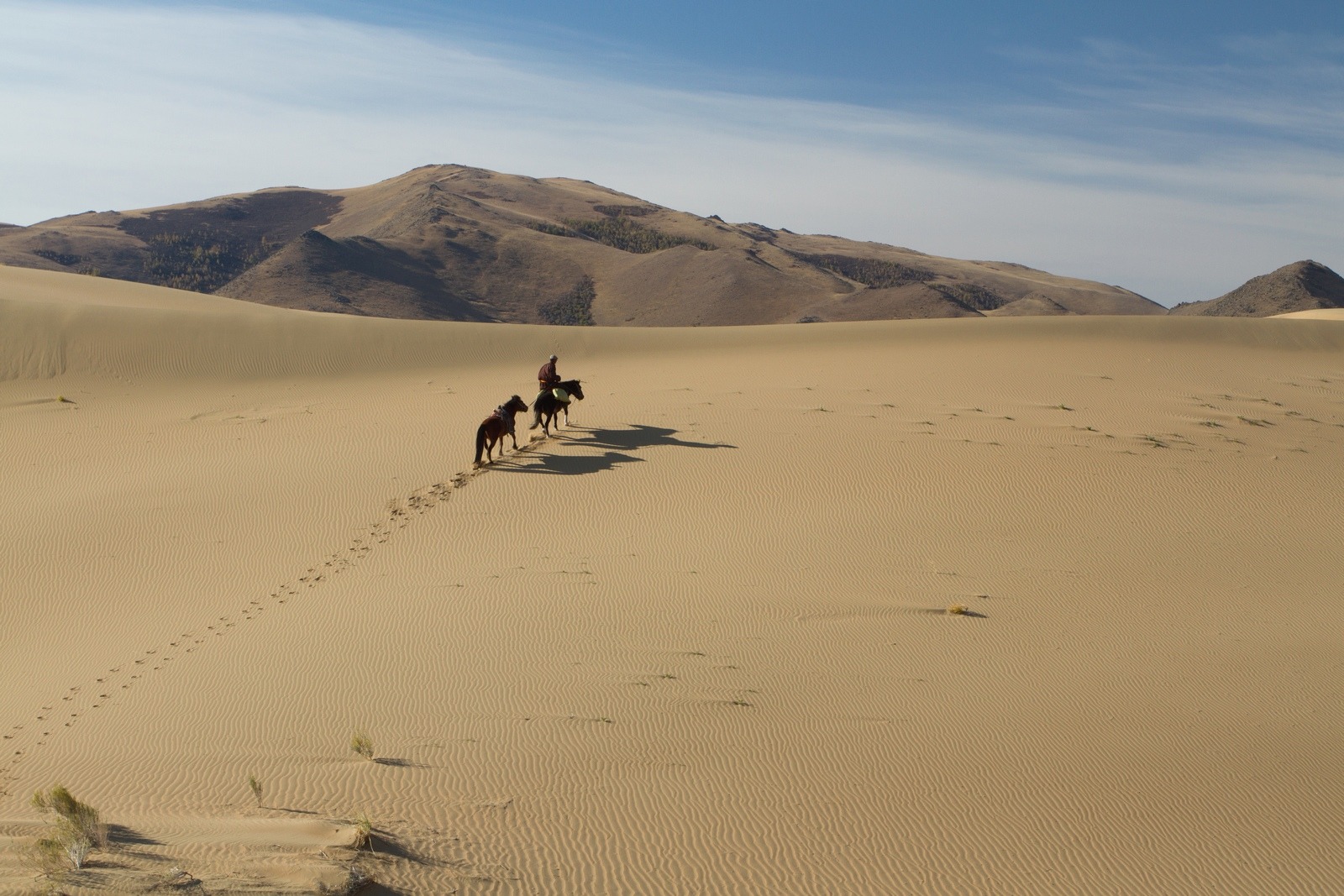
Bayankhongor Province is located in southwestern Mongolie, encompassing the high plateaus of the southern Khangai Mountains, the southeast of the Gobi Altai range, the heart of the great lake depression in western Mongolie, and much of the Trans Altai desert. This geographic setting has earned the province the nickname "Region of Three Zones."
The province shares a border with the People's Republic of China.
Elevation ranges from 750 to 3,957 meters above sea level. Zereen, Nomchi, and the Tsenkher Gobi desert represent the lowest-lying regions, while the highest point is the majestic Ikh Bogd Uul massif.
The Ikh Bogd Uul region captivates visitors with striking natural colors set against landscapes of commanding majesty, all while harboring abundant natural resources.
Bayankhongor Province is renowned for its natural hot springs. The Shargaljuut hot spring resort is well-known among Mongolians. Water temperatures range between 45 and 95°C. The region boasts more than 100 springs and geysers. Lakes Orog (140 m²) and Buuntsagaan (252 m²) are the province's most significant.
The region is also home to numerous medicinal herbs.
Wildlife populations in Bayankhongor are notably robust, with abundant marmots, badgers, lynx, argali sheep, ibex, saiga antelope, and black-tailed antelope. Among rarer species, you'll find wild donkeys, camels, wild horses, and Gobi bears, whose natural habitat is, fittingly, the Gobi itself.
Agriculture is the province's primary economic sector.
Livestock: 2,511,300 comprising: Horses 157,400 Camels 38,700 Cattle 196,900 Sheep 866,000 Goats 1,252,300