Tsagaan Sar
Tsagaan Sar
For Mongols, the first celebration of the year is the lunar new year, Tsagaan Sar, meaning "white moon". The date of these celebrations is calculated according to the lunar calendar. It is a
For Mongols, the first celebration of the year is the lunar new year, Tsagaan Sar, meaning "white moon". The date of these celebrations is calculated according to the lunar calendar. It is a grand family festival, with numerous ceremonies, lasting three days. The traditions of Tsagaan Sar are centuries old and deeply respected by the Mongol people.
Tsagaan Sar symbolizes the first day of spring, when winter comes to an end and temperatures begin to warm. This falls in January or February according to the Gregorian calendar, depending on the lunar phases.
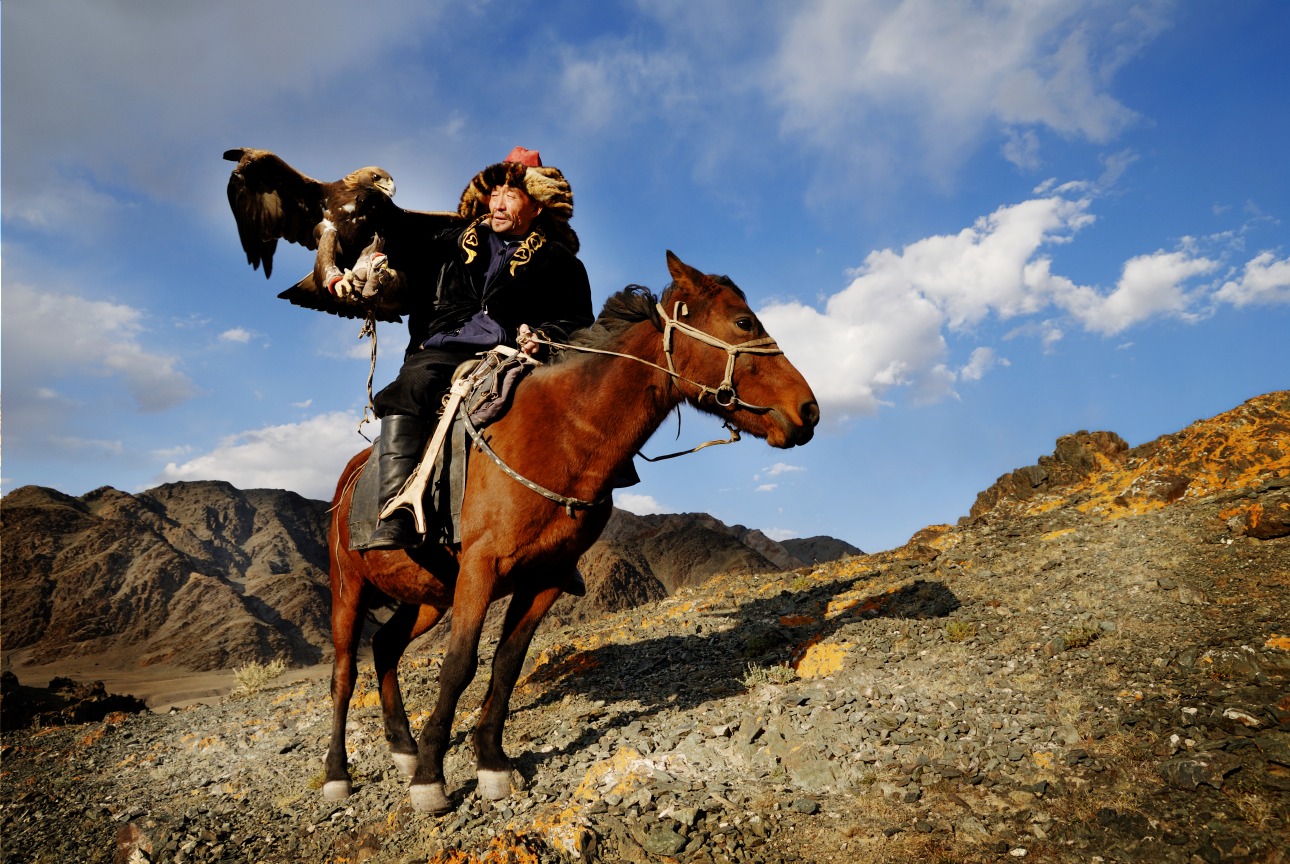
Preparations for Tsagaan Sar begin several weeks before the festivities start. Each family prepares several hundred meat dumplings, called buuz, and balconies transform into giant freezers. Buuz are the traditional new year dish. Families also prepare in advance the elegant clothing they will wear. Nomads ready their finest horses, which they will ride during the celebrations.
The eve of Tsagaan Sar is called "Bituun", meaning "new moon". Throughout the day, Mongols thoroughly clean their homes. Herders also clean their barns. Candles are lit to symbolize the illumination of Samsara and all beings who have attained the stage of Buddha. Mongols place three blocks of ice in front of their door so that the horse of the deity Palden Lhamo can drink during the deity's visit to the household. In the evening, families prepare a grand dinner with abundant foods for feasting. A major Mongolian wrestling competition is broadcast on television that night. Families organize card games, as it is believed that people who have good luck this evening will be fortunate throughout the year. People settle their debts and try to reconcile to begin the new year under the best auspices.
On the morning of Tsagaan Sar, the mistress of the house offers the first cup of milk tea to the gods, throwing the contents outside in all directions. After sunrise, people begin their greetings. They must then step outside their home to perform ritual prayers. These prayers are found in the newspaper and are determined according to the Chinese horoscope.
During the two days of Tsagaan Sar (and often throughout the entire week that follows), Mongols will visit their family members, both close and distant; they may visit up to a dozen families in a day. One must always begin with the homes of the eldest, starting with those of one's parents. Each visit is ritualized. Once at your host's home, they await you seated in the northern part of their yurt, hat firmly in place. You will greet them according to the ritual known as Zolgokh. To do this, guests present themselves one after another to the master of the house. With the Khadag on their arms, the guest places their forearms on the extended forearms of their host, while pronouncing the phrase "amar baina uu? Sar shinedee saikhan shinelej baina uu" which means "Are you living in peace? Are you celebrating the new year well?". The host then embraces you on both cheeks (or sniffs you), before the guest gives them money (new bills to mark renewal; the amount depends on how important the host is to you, but generally between 1,000 and 20,000 tugriks) and/or vodka. Guests then sit around the table where a steamed lamb back, "uuts", has been placed, and a plate of traditional dry cakes, "tsagaan sariin tavgiin idee", arranged in a pyramid and always in odd numbers. The mistress of the house serves milk tea as well as traditional dishes. As guests exchange their snuff bottles, people generally discuss how winter has been. Guests drink three times, usually vodka. Once the meal is finished, as guests prepare to leave, the host offers a gift to each of their guests.
Mongols place great importance on the first day of the new year, as they believe it conditions the rest of the year. Thus, Mongols have a religious ritual called "Khiymorio sergeekh" to call good fortune. During Tsagaan Sar, Mongols also follow the ritual of the Ovoo to thank the gods and nature.

Give it a go!
Our local experts arrange this activity for you.