Uliastai
Uliastai
An ancient Qing garrison nestled among the Khangai mountains, Uliastai reveals an authentic Western Mongolie: ruins, the sacred Otgontenger, local life.
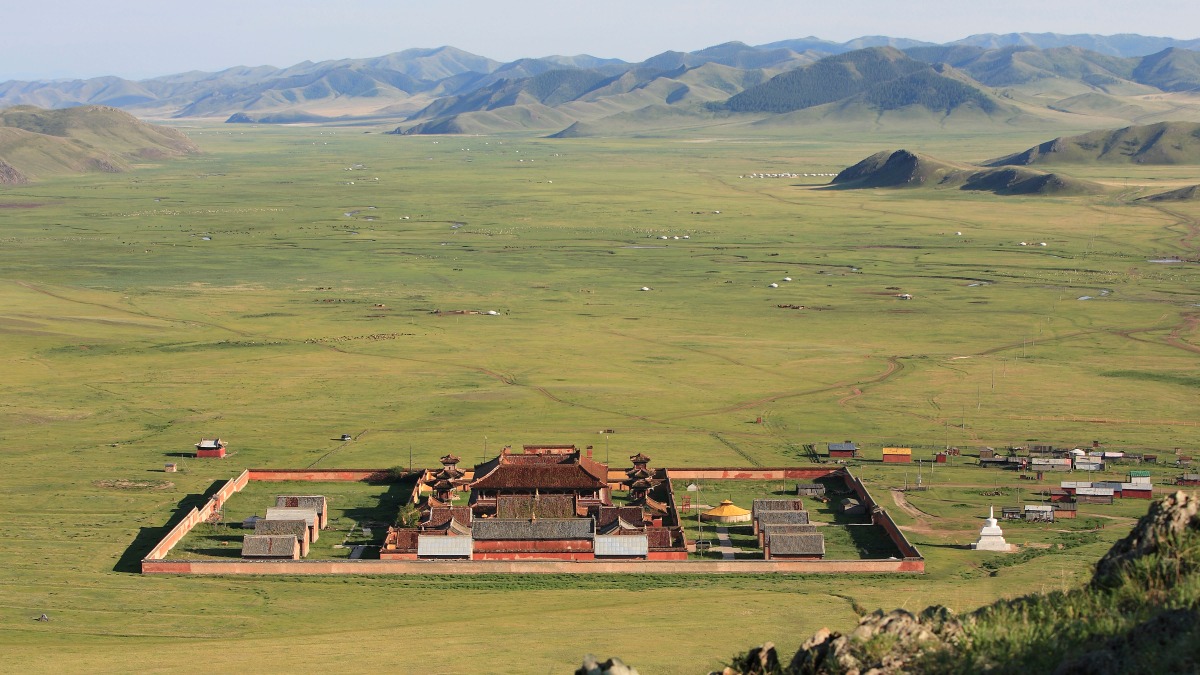
Uliastai is the capital of the Zavkhan Province, in the western part of Mongolie. It lies 1115 km from Ulaanbaatar, in a valley surrounded by mountains where the Chigestei and Bogd rivers meet.
While in 2010 it was the country's 10th largest city with 24,276 inhabitants, its population has declined sharply. Today it has only around 16,000 residents and has become the country's 16th largest city.
History
Together with Khovd, Uliastai is one of the oldest cities in Mongolie. It was long an important trade hub in Central Asia. Indeed, numerous caravans stopped there, and this continued until the 20th century, the city being connected by a network of caravan routes to Urga (now Ulaanbaatar) to the east, to Khovd to the west, and to other cities such as Barkol or Hohhot to the south, in China.
The city was founded as a military garrison by the Manchurians in 1733, when the Qing ruled Mongolie. Uliastai was at that time the de facto capital of "Outer" Mongolie, with Qing Amban, the governor general, establishing his administration in Uliastai to oversee the Khalkha Mongols to the east and the Oirad Mongols to the west of the Khangai mountains. At its height, the fortress housed up to 3,500 soldiers and was surrounded by camps of Chinese merchants.
During the 1911 Popular Revolution, the military governor of Uliastai, along with his staff and military guards, fled the Uliastai fortress under the protection of Cossack troops.
Traces of Manchurian rule can still be observed in Uliastai, notably the ruins of the governor's fortress which stand on the banks of the Bogd River, a short walk from the city center. Manacles, as well as torture instruments used by the Manchurians, are displayed at the National History Museum in Ulaanbaatar.
Want to discover this destination?
Our local advisors design your tailor-made trip.