Khövsgöl Lake
At Siberia's threshold, 136 km of pure water ringed by larch forests, realm of the Tsaatan reindeer herders and a wooded counterpoint to Mongolia's southern steppes.
Khövsgöl Lake occupies a tectonic basin in northern Mongolia at 1,645 metres altitude, against the Russian border of the Tuva Republic. Stretching 136 kilometres long and 36 kilometres wide, with depths reaching 267 metres at its lowest point, it alone contains nearly 70% of the country's fresh water. We often describe it as Mongolia's answer to Lake Baikal in Siberia, just 200 kilometres away as the crow flies: the same geological origin, the same crystal-clear water you can drink straight from the shore, the same array of endemic fish species such as omul and lenok.
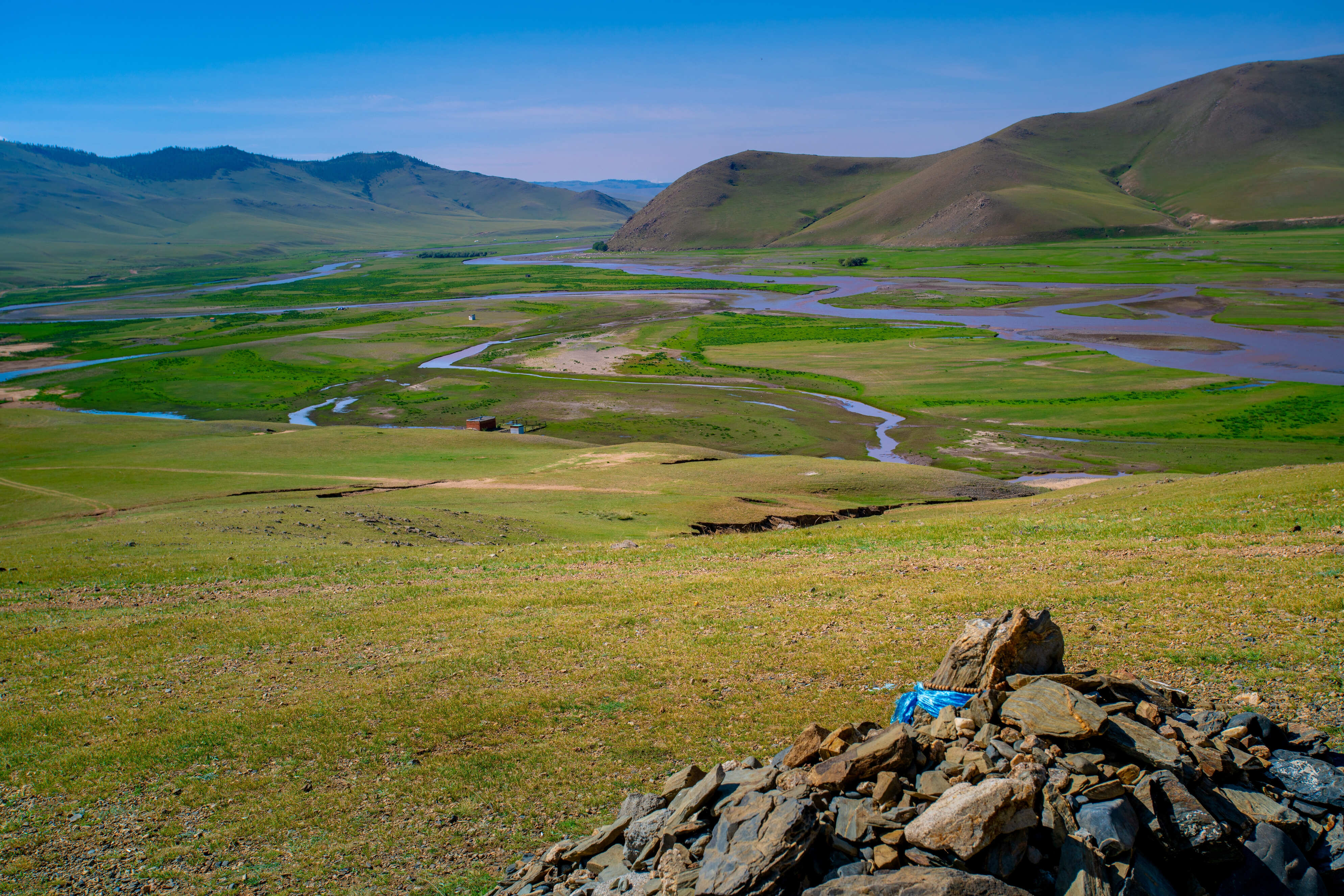
The contrast with the rest of Mongolia strikes you immediately upon arrival. While southern Mongolia unfolds its dry steppes and desert landscapes, the shores of Khövsgöl are carpeted with Siberian larch forests, Siberian stone pines and birches that descend to the water's edge. This is the southern limit of the taiga. The slopes of the Khoridol Saridag mountains to the west exceed 3,000 metres and remain snow-capped well into the season. The gentler eastern shore hosts most of the ger camps and the two main access points, Khatgal to the south and Khankh to the north.
The region is inhabited by Darkhad Mongol herders in the eponymous valley to the west of the lake, and by the Tsaatans further north. The Tsaatans, approximately 200 families, live in the taiga of the Sayan mountains, herding reindeer in canvas tipis called ortz. We organize visits to their camps from the village of Tsagaannuur, at the western end of the Darkhad valley. Allow two to three days on horseback to reach the summer camps (eastern taiga) and longer for the more remote winter settlements. Such an encounter only makes sense with a respectful protocol and a guide who speaks their Tuvan dialect: we ensure this systematically.
Life around the lake remains rural. Regulated fishing, yak herding, pine nut harvesting in autumn, and moderate timber extraction. Khatgal, once a Soviet port where barges of fuel departed for Russia, now has 3,000 inhabitants and serves as a logistics hub: it's the departure point for horseback treks around the lake, kayaking expeditions and winter ice crossings, organized in March during the Ice Khövsgöl festival.
As for heritage, the area contains several shamanic sites. Mongols revere the lake as Dalai Eej, the mother ocean. Mount Toson Khulstai and several ovoo (ritual cairns) punctuate the headlands of the western shore. The Bronze Age deer stones scattered through the Mörön valley and around Uushigiin Uver rank among the finest in the country: we systematically make them a stopping point on the way in or out. The city of Mörön, the provincial capital 100 kilometres south of the lake, has an airport connected to Ulan Bator by 1.5 hours' flight.
In July, each sum (district) organizes its own local Naadam, more authentic than the capital's: Mongolian wrestling, children's horse races over 15 to 30 kilometres, archery competitions. Khatgal's usually takes place around July 11th. It's a chance to see herding families descend from their summer pastures in silk deels, sometimes three generations on a single saddle.
Must-See Experiences
Horseback tour around the lake from Khatgal. An 8 to 12-day equestrian trek along the western shore, with bivouacs at herding families' camps, crossing the Jankhai and Borsogo passes for sweeping views over turquoise waters.
Tsaatan reindeer herder camp in the taiga. Two to three days on horseback from Tsagaannuur to reach a reindeer herder camp, a night in an ortz, milking the females at dawn.
Khatgal Naadam in July. Children's horse races across the lake steppe, wrestling bouts on grass and archery contests, in a village atmosphere far from Ulan Bator's crowds.
Deer stones at Uushigiin Uver. Fourteen Bronze Age engraved stelae aligned across the steppe near Mörön, among Central Asia's best-preserved funerary ensembles.
Ice Festival on the frozen lake. Early March brings speed skating races, ice sculptures and ritual shamanism on the lake's frozen surface, then up to 1.2 metres thick and passable by 4x4.
When to Visit
The viable season is short. We recommend the window from mid-June to early September. In June, daytime temperatures range from 15 to 22°C, alpine flowers blanket the hillsides, but nights remain cool (3 to 7°C) and the ground may be waterlogged from late snow melt. July and August are the most stable months with 20 to 25°C during the day, also the period of local Naadam festivals and brief afternoon showers. September offers remarkable light and larch autumn colours around the 10th-20th of the month, but the first frosts arrive quickly.
From October to May, the region shifts into Siberian winter. The lake freezes completely from January to May, with night-time lows of -30 to -40°C in January-February. This period only appeals to seasoned travellers coming for the early March ice festival, when daytime temperatures rise to around -15°C. We advise against visiting the Tsaatans in May and early June: melting snow makes the trails impassable and reindeer are in the midst of calving season, a time when families prefer not to receive visitors.
Practical Advice
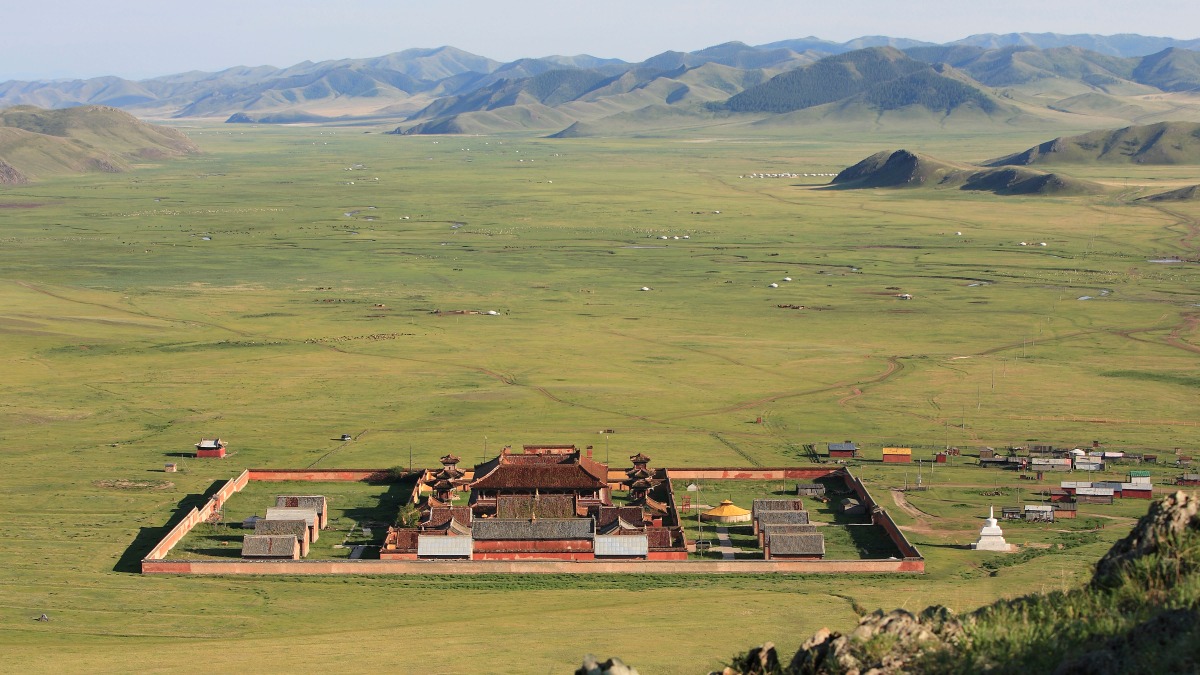
We recommend a minimum of 4 days on site to justify the journey, ideally 6 to 8 days if you want to combine a partial lake tour with a Tsaatan visit (which itself requires 5 to 7 days from Mörön, including 4 on horseback). The logical entry point is Mörön airport, served daily from Ulan Bator in 1.5 hours' flight. The road from the capital is feasible but represents 18 to 20 hours of rough track, worthwhile only combined with intermediate stops like Amarbayasgalant or the Orkhon Valley.
Khövsgöl combines excellently with the Orkhon Valley if you come by road, or with the Gobi Desert using Ulan Bator as your air hub (Mörön-UB-Dalanzadgad flight). For 15 to 21-day itineraries, this is the sequence we most often propose. Comfort around the lake is good: we work with three ger camps at Khatgal and on the eastern shore, equipped with private facilities. Among the Tsaatans, however, conditions are rustic (shared tipi, no electricity, dry toilets). This destination suits nature lovers drawn to cold landscapes, riders even of beginner level, and families with children aged 10 and above for the lake portion. The Tsaatans require good fitness and genuine ethnographic interest, not passing curiosity.