Photography and Videography in Mongolia
Mongolia is a country perfect for capturing stunning photographs and videos, with exceptional landscapes, encounters with urban and nomadic people, and truly fascinating biodiversity.
Mongolia is a country perfect for capturing stunning photographs and videos, with exceptional landscapes, encounters with urban and nomadic people, and truly fascinating biodiversity. It would be a shame not to immortalise it all! Here are some tips to help you plan and make the most of your stay (and bring home some great shots).
Let's talk equipment
With today's digital cameras, it's very easy to take hundreds, even thousands of photos during your travels. SD cards and other formats compatible with your cameras or video equipment let you shoot and film without limit. Lenses are constantly improving and offer impressive creative possibilities, whether fixed or zoom optics. Everyone has their own preferences when it comes to travel photography and video, and we couldn't say what to buy or pack. However, a few useful accessories are worth mentioning:
- Extra batteries (and chargers): in doubles, triples or more, especially if your trip lasts more than 1 to 2 weeks. We can't stress this enough—it's crucial to bring spare batteries, because out on the steppe, in the desert or in the mountains, you can quickly run out of power! Temperature affects battery life, and despite our team's best efforts, you'll often find yourself in a location where you can't recharge.
- A cleaning kit suited to your equipment. It sounds simple, but electronic devices hate dust and water! A soft, non-abrasive cloth (like those used for glasses) and a blower bulb to remove dust from your lens and camera sensor are essential. It's really disappointing to get home and realise all your photos are covered in "spots" and other imperfections that only show up on a larger screen. For your information, Mongolia being a relatively dry country, dust is everywhere in the countryside. We warned you!
- A camera bag or backpack designed for your gear. Essential for storage, preventing damage, and safely transporting all your equipment. It's the first line of defence! A good bag will last you several years and see many trips to the other side of the world.
- Special mention for "something that stabilises"—whether it's a photo tripod, a monopod, a mini tripod you can attach almost anywhere, or even a bag of rice. It's always better to avoid camera shake if you're not perfectly steady yourself (and it happens to us too!). And as a bonus, it lets you take night photos (on clear nights you can actually see the Milky Way in Mongolia). Promise, we're not going into technical details here—this isn't a photography tutorial!
- And of course your camera and its dedicated lens or lenses (yes, some people have actually forgotten them!)
With all this, you're already very well equipped for all kinds of adventures and even better prepared to bring home lasting memories!
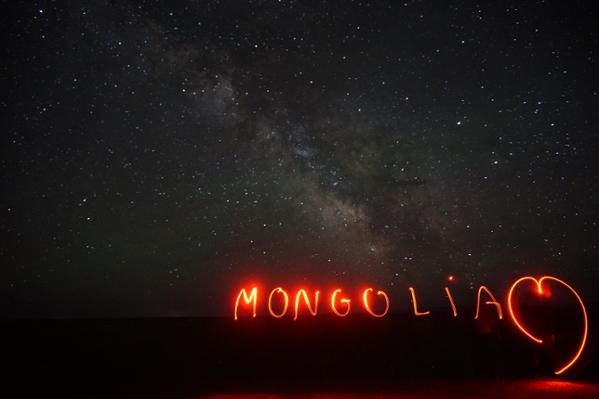
With a good tripod, a bit of patience and good travel companions, you can create beautiful things!
But what if you run out of memory or accessories? Following the adage "prevention is better than cure", you can find 2-3 shops in Ulan Bator that will supply you with these useful tools BEFORE your trip begins. But where to shop in the capital?
- the specialist photography store Tuna Electronics, located near the Department Store (on Peace Avenue), which is packed with equipment for amateurs and professionals (memory cards, all kinds of accessories, flashes, tripods...). The staff isn't the friendliest, but you can find what you need—or burn a hole in your wallet!
- at the Department Store, the former Mongolian State department store, which has a small electronics section on the 5th floor. Among a few camera models and accessories from major brands (mostly Canon and Nikon; other brands like Sony, Pentax or Fuji... don't expect much!)
- If you're feeling adventurous and like to browse: the Computer Land building, which houses 2-3 small electronics shops focused on photography gear. Watch your belongings in these narrow corridors—we warned you! Located along Peace Avenue west of the Department Store, it's a 2-3 minute walk away. You'll find it behind Golomt Bank, just behind a brick building with a big "Canon" sign (it's the last building on this small street, next to a cyber café).
- the DJI/hobby zone store, specialists in drones (clearly identified flying objects!), which will delight fans of aerial photography and video. On the street facing the main entrance of the Department Store, at the same level as the Beatles statue.
Practical tips for your travels in Mongolia.
During jeep trips on Mongolian tracks, expect to encounter a lot of dust. It's therefore important to keep your camera in its case when you're not actively taking photos or videos.
It's also always good to keep your equipment protected from the sun (especially in the Gobi Desert) and from the outdoors in winter (at -40 degrees, batteries can still last about 15 minutes! And lenses and cameras can freeze...).
Rain isn't good either unless your equipment is "waterproof". Again, common sense—you'll want to avoid staying out for hours shooting in gloomy weather (GoPro and action camera enthusiasts, you're totally excused).
Opportunities to recharge batteries are few and far between. Generally, this is only possible during your nights at ger camps where you can benefit from the camp's electricity. A USB-type charger adaptable to the car's cigarette lighter is a viable solution for jeep circuits, but for independent treks, it's best to be self-sufficient and have enough spare batteries to last the entire journey.
Near Genghis Khan Square, many shops offer affordable photo printing. Quality isn't always guaranteed, though it's constantly improving. You can print photos on the ground floor of the Department Store or wait until you're back in your home country.
Important to know! It is forbidden to take photographs inside monasteries and temples. There are no restrictions for exteriors. You can sometimes obtain special permission to photograph in exchange for a small donation. In most museums, you must pay an additional fee, often quite high, to take photographs inside (and it's even more expensive for video). It's worth taking a quick look inside before deciding whether to pay this extra fee.
Remember that monks and nomads are not models, and if they refuse, you must not photograph them. It's polite to always ask before taking someone's photograph. Being courteous is a tradition and will always help your future interactions with everyone you meet while travelling. Be careful if you wish to photograph sensitive areas, particularly at border crossings and military facilities—this is not well tolerated.