The Mongol Empire
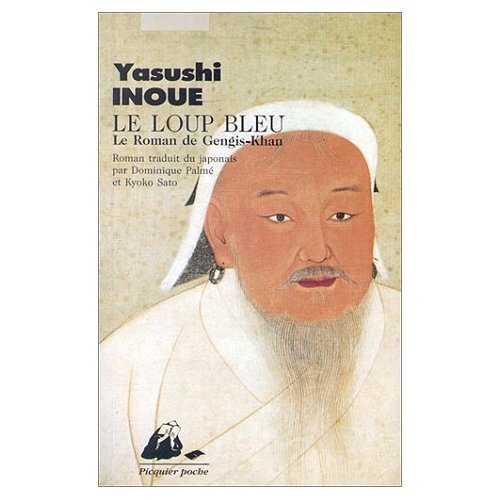
Genghis Khan waged a decisive war against the Jurchen dynasty in northern China. His son Juchi conquered vast Siberian territories, securing the northern frontiers. This victory marked a turning point for the Mongols.
Genghis Khan waged a decisive war against the Jurchen dynasty in northern China. His son Juchi conquered vast Siberian territories, securing the northern frontiers. This victory marked a turning point for the Mongols. Furthermore, Genghis launched a massive military campaign on the eastern flank. After defeating the Kara-Khitans, the Mongols drew closer to Khwarezm, present-day Uzbekistan and Afghanistan. The war with Khwarezm began in 1218. The Mongol army crossed Transoxiana, thus dominating the great Khwarezmian cities. Urgench, Samarkand, Gherat, Merv, Bukhara and numerous other cities fell under Genghis's rule.
In 1221, Jebe and Subedei, two talented generals, advanced further west along the Caspian Sea. In their progression, they approached Georgia and Armenia. These two Caucasian kingdoms were conquered by the Mongols, who later crossed the Caucasus mountains and entered the lands of Russian princes. In 1223, Jebe and Subedei encountered the Russians on the Kalka River and defeated them decisively. The two generals then turned back and returned home by way of the Volga, Bulgaria, and the Urals.
Genghis Khan died in 1227. He left behind a colossal empire stretching from the Caucasus to the Korean peninsula, from China to Siberia. His son Ögedei ascended the throne in 1229. He continued the war against the Jurchens, who suffered palace after palace losses. In 1235, Mongolie captured the last Jurchen stronghold.
The Mongol Empire had a strict hierarchical structure. Power was concentrated in the hands of the Khan. The consultative body was the Great Assembly, the Kurultai, composed of generals and the aristocracy. Genghis Khan's half-brother, Shikhitutug, was responsible for judicial duties. Tsagaday, Genghis's younger son, ensured the proper functioning of the Great Law, the Yasa.
In 1235, the Kurultai approved that the western campaign be led by Batu, Genghis's grandson, assisted by General Subedei. The army marched hundreds of kilometers and conquered Russia. In the brief period from 1237 to 1240, Mongol forces captured major Russian cities such as Kiev, Vladimir, and Ryazan.
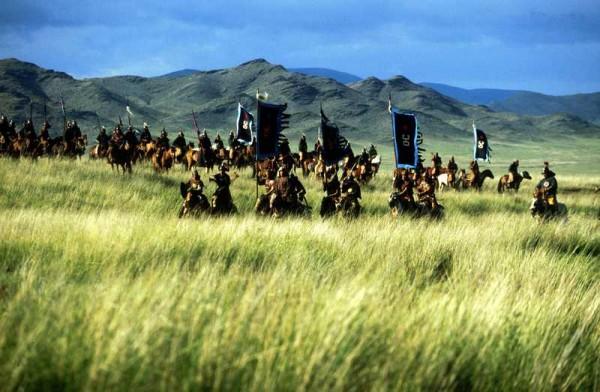
Batu then advanced into Europe, attacking Hungary and Poland.
In 1241, the Mongols defeated the Europeans at Liegnitz.
In 1242, when Batu reached the Adriatic, leaving Hungary, Moravia, and Bohemia in ruins, a message arrived with news that Khan Ögedei had died and that the princes of Genghis's dynasty must return to Mongolie. Batu departed Europe and settled in the Volga region, founding the Golden Horde. The results of the western campaign brought Mongolie onto the international stage. European emissaries came to the Mongol capital, Karakorum, to develop diplomatic relations with the Khan. The next khan, Güyük, reigned for only two years. The throne passed to Möngke, a shrewd politician who maintained relations with the Roman Catholic Pope and European kings. Möngke launched the central-western campaign. The army advanced into Iran and Syria.
In 1258, the Mongols captured Baghdad and established a new dominion. The next khan, Kublai, who inherited the empire in 1260, conquered southern China and annexed Korea. His reign was the longest. Vietnam and Burma acknowledged Mongol sovereignty. Nevertheless, Kublai's desire to conquer Japan ended in failure. Two fleets were destroyed. In 1279, Kublai moved the capital from Karakorum to Beijing and established the Yuan dynasty.
By approximately 1298, the Mongol Empire covered most of the Eurasian continent. The empire was a union of four dominions: the Mongol domain (Mongolie, China), the Golden Horde (Russia and the Urals), the Chagatai domain (Central Asia), and the Ilkhanate kingdom (Iran and the central-west). The khans after Kublai were not effective rulers; they were unable to administer such a vast empire. The Mongols were a small minority in the conquered territories. One after another, rebellions erupted and provinces seceded. In 1312, the Golden Horde separated from the metropolis. The natives of the Chagatai domain took control in the 1340s. The Mongols in Iran gradually disappeared into the native population. The central government of the empire also showed signs of decline. Thus, Khan Togon-Temür and other Mongols fled China in 1368 when Chinese rebellions began to spread. This marked the end of the Mongol Empire.