Crossing the Gobi Desert, the must-see highlights
Straddling Mongolia and northern China, the Gobi Desert is a vast arid expanse where canyons, sand dunes, vertiginous rock formations, icy rivers and lunar landscapes converge. It is also a major hub for paleontology. Planning a trip there during your travels in Mongolia? Discover all the must-see sites in the Gobi Desert and all the practical information you need to visit it!
Straddling Mongolia and northern China, the Gobi Desert is a vast arid expanse where canyons, sand dunes, vertiginous rock formations, icy rivers and lunar landscapes converge. It is also a major hub for paleontology. Planning a trip there during your travels in Mongolia? Discover all the must-see sites in the Gobi Desert and all the practical information you need to visit it!
The Gobi Desert in a nutshell:
- 1.3 million km²: that's the area of the Gobi Desert. It is Asia's largest desert and the 5th largest in the world!
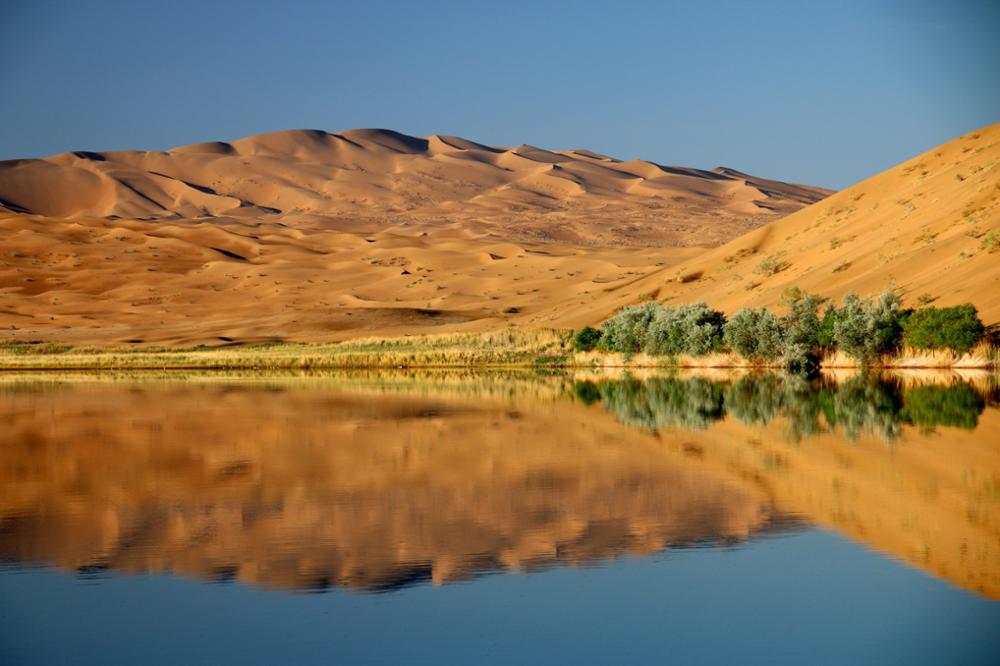
- 5% sand: apart from sand dunes like those of Khongor-els, the Gobi Desert contains very little sand, but rather dry grasslands and sedimentary rocks. Although its name means "territory without water" in Mongolian and "dry sea" in Chinese, the Gobi Desert is home to rivers and lakes forming oases.
- 3,500 km²: that's the number of kilometers of grassland consumed by the desert each year—this is what we call desertification.
- 90°C: that's the temperature gap between winter and summer. The Gobi Desert holds the record for the greatest thermal range.
- 0.3 people per km²: the Gobi Desert is one of the least populated regions in the world. Its inhabitants are mostly families of nomadic herders who are forced to move regularly to find new grazing areas.
What to do and see in the Gobi Desert?
The Flaming Cliffs of Bayanzag (Flaming Cliffs)
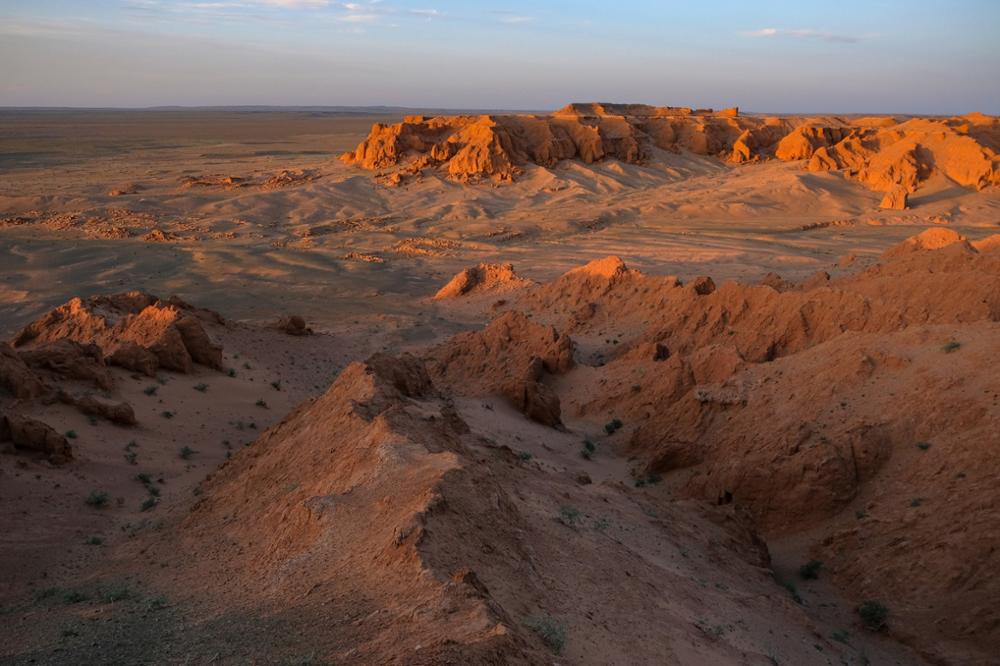
Located in Ömnögovi Province, the Bayanzag cliffs are ochre and red-colored sandstone cliffs that have earned them the nickname "flaming cliffs" or "blazing cliffs."
Beyond their sublime landscapes, the Bayanzag cliffs are one of the world's most renowned paleontological sites. Indeed, it was here that paleontologist Roy Andrews Chapman discovered dinosaur bones in 1922. Following his discovery and in the years that followed, hundreds of bones (including complete skeletons) were unearthed. Paleontologists even found a nest and a clutch of fossilized dinosaur eggs.
Today, the bones and eggs discovered can be admired in many museums around the world, including the Museum of Natural History in Ulaanbaatar. On site, there is also a modest museum recounting the history of all these fascinating discoveries.
In addition to retracing the footsteps of dinosaurs in Mongolia, the Bayanzag cliffs are located not far from a Saxaoul forest. In fact, the word Bayanzag means "rich in saxaoul" in Mongolian. It is a tree emblematic of the Gobi Desert.
Capable of reaching up to 2 meters in height, this thorny tree has roots that dig deep into the ground, allowing it to thrive in arid environments. It is an excellent fuel for locals and a food source for desert animals.
The Khongor Dunes (Khongoryn Els)
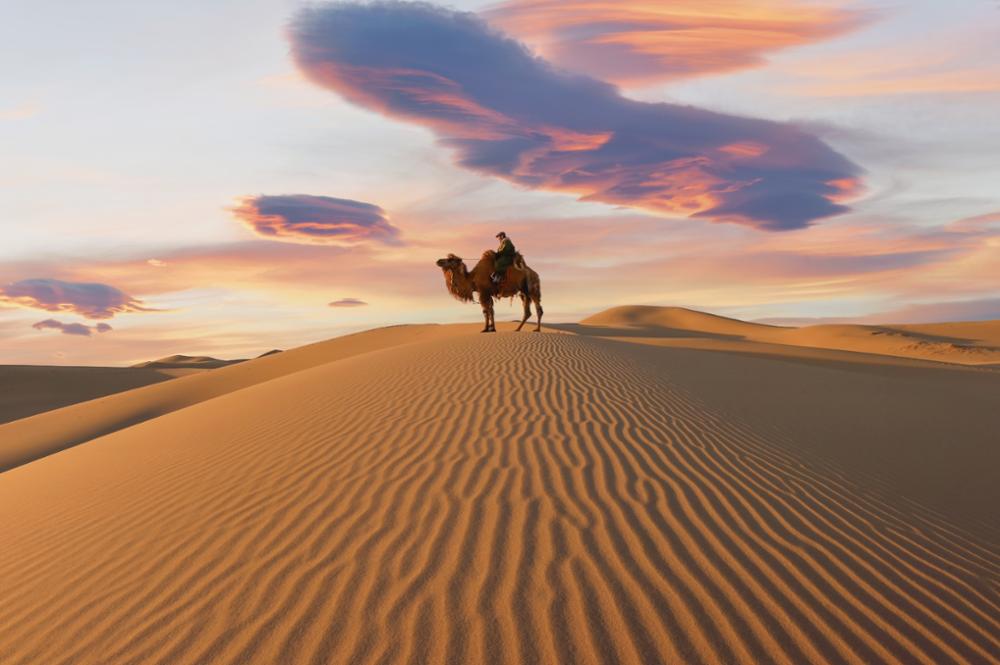
Covering an area of over 900 km², the Khongor dunes form Mongolia's largest sandy zone. Located in the Gobi Gurvan Saikhan National Park, the dunes are characterized by spectacular dimensions: they stretch for over 180 km in length and 20 km in width and can reach up to 300 meters at their highest peaks.
Sometimes pale yellow, sometimes golden, the Khongor dunes offer some of the country's most beautiful landscapes. By climbing one of them, you will be able to enjoy a breathtaking view. From up there, you can hear the famous sound of wind that earned the dunes the nickname "singing dunes." Quite impressive, the sound is often compared to that of an airplane taking off or landing.
We recommend visiting the Khongor dunes early in the morning or at the end of the day to enjoy the best lighting and avoid the intense heat.
The White Stupa (Tsagaan suvarga)
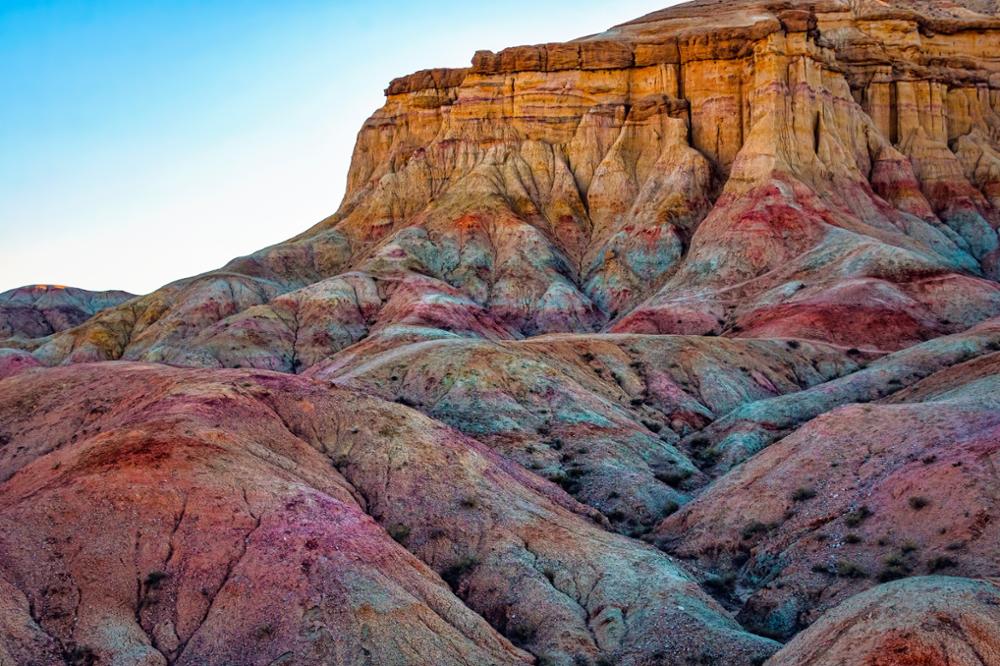
Also called the White Stupa, Tsagaan suvarga is a natural site made up of eroded rock formations, one of which resembles the shape of a Buddhist stupa (hence its nickname). From a distance, the cliffs give the appearance of a ruined city.
Standing 60 meters high and stretching 400 meters long, the rock formations are composed of various minerals that account for their different colors: ochre, pink, orange, reddish... Once submerged underwater, the rocks also contain many marine fossils and shells.
Plan for about 1 hour of hiking to reach the top of the Tsagaan suvarga cliffs. Be careful! Make sure not to get too close to the edge to avoid the risk of falling!
Southwest of the white stupa lies Mount Ulaan Suvarga. Nicknamed the "red stupa," it has much the same structure but stands out for its more intense red colors.
The Yolyn Am Valley and Yol Canyon
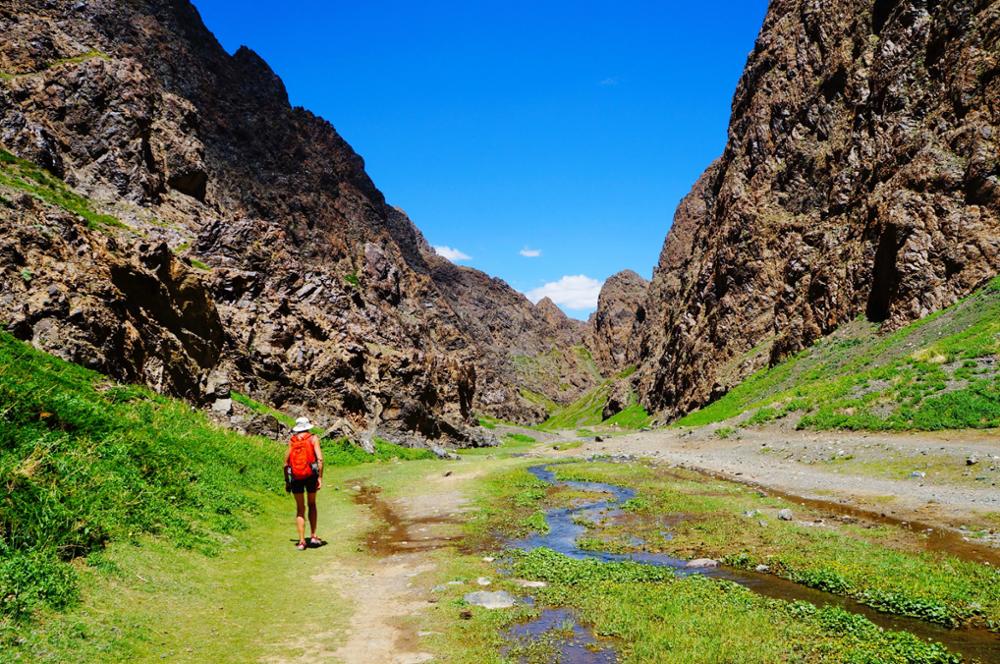
Located in Gurvan Saikhan National Park, about 60 km southwest of Dalanzadgad, the Yolyn Am Valley offers striking contrasts. There is a deep gorge, Yol Canyon, which extends over 70 km² at the end of which a vast valley unfolds.
The Yolyn Am Canyon (or Yoliin Am) is particularly famous for its river whose water remains frozen for most of the year. As you stroll through Yol Canyon, you can discover layers of ice. You will see the famous permanent glaciers, waterfalls and impressive rock formations sculpted by erosion. Very wide at the entrance, the valley narrows little by little so much so that no more than two people can pass side by side through the narrowest passages.
The valley and Yol Canyon are home to unique biodiversity. Among Mongolia's emblematic animals living in this area, we can mention:
- the Siberian ibex (or Asian ibex),
- the argali sheep (one of the largest wild sheep),
- snow leopards or
- the bearded vulture to which the valley owes its name ("Yol" meaning "bearded vulture" in Mongolian).
You can learn more about local flora and fauna in a museum located at the park entrance.
The Baga Gazrlin Chuluu Rock Formations
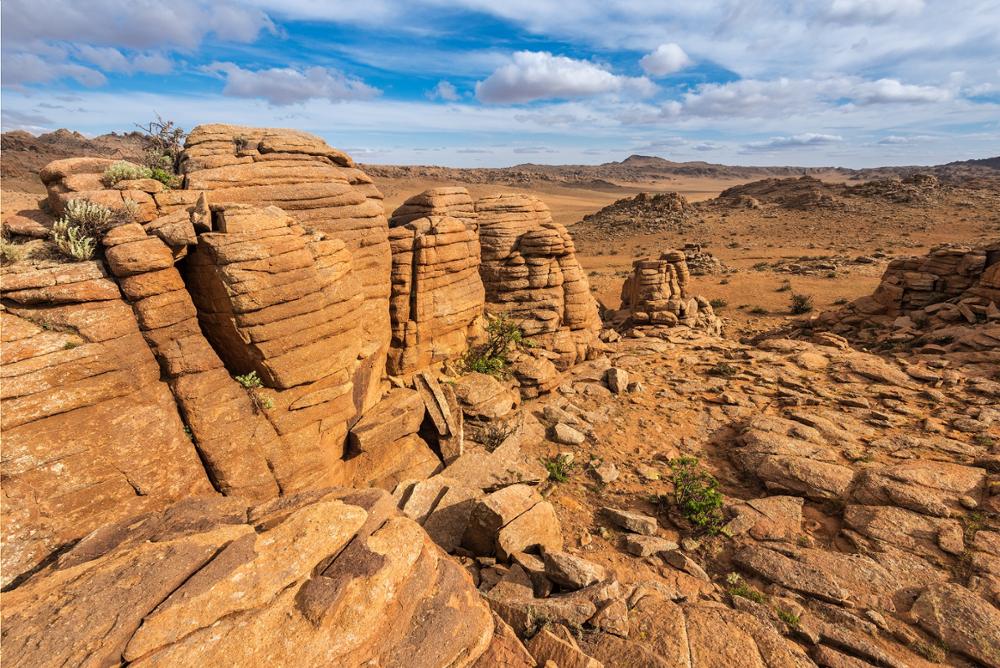
Located in the heart of the steppe, in the sum of Delgertsogt, the Baga Gazrlin Chuluu rock formations offer lunar landscapes, among the most beautiful in the Gobi Desert. These are massive granite rocks of ochre color, perched at 1,751 meters altitude. Eroded by winds for millennia, they today form an impressive granite canyon.
On site, you will find the inscriptions and drawings of two venerated monks who lived here in the 19th century. You can also see the ruins of an old temple dating from the 17th century where rainwater is said to cure eye diseases. On the wildlife side, you may encounter some ibex, marmots and argali sheep.
Ongiin Khiid Monastery
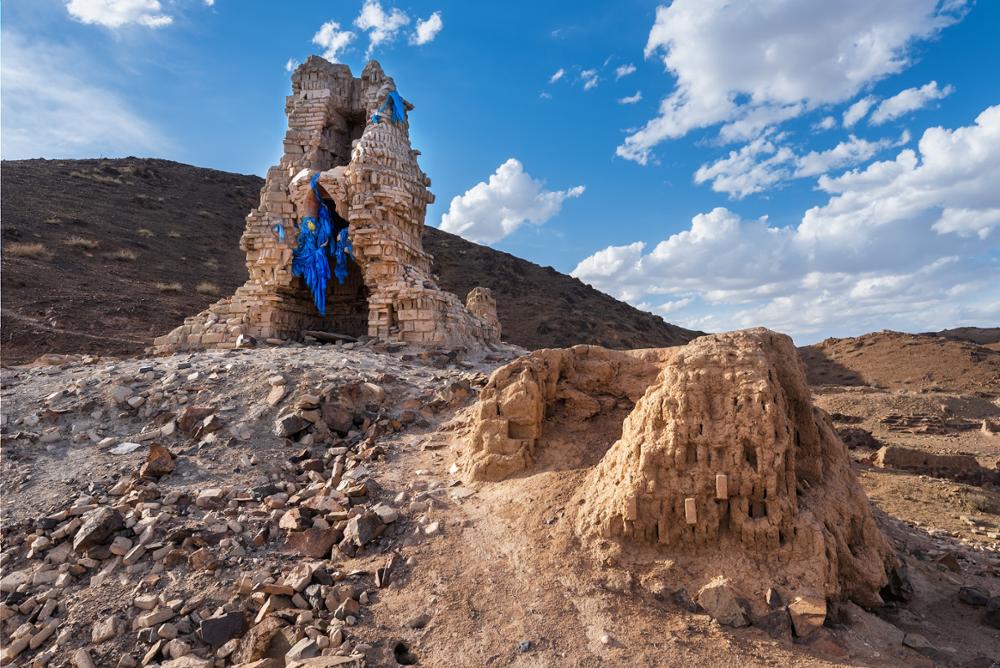
We conclude with what was one of Mongolia's largest and most respected monasteries: Ongiin Khiid Monastery.
Founded in 1660, the complex consisted of two sites, located on either side of the Ong River (Ongiin gol). It contained administrative buildings, temples, Buddhist universities... The arrival of communist authorities in power resulted in the destruction of the monastery in 1939 as well as the death of 200 monks and the imprisonment of many others. It was not until 1990, with the fall of communist rule, that the site was rebuilt on the initiative of 3 monks who had studied at the monastery 60 years earlier.
Today, you can still see the ruins of the monastery including the original white stupa, a rebuilt temple, and two museums set up in yurts. You can admire traditional and original objects, carved stones, fossils, and more.
Ongiin Khiid Monastery is home to a cold water spring named Bar Khamba. The water is renowned for its healing properties. It is said to help treat digestive ailments. According to tradition, the water should be drunk before sunrise.
Practical information for visiting the Gobi Desert
What is the best time to visit the Gobi Desert?
The best time to explore the Gobi Desert is from June to September. Avoid April and May when sandstorms can be devastating.
The Gobi Desert experiences extreme temperature variations: up to 40°C during the heat of the day in summer and down to -35°C during winter nights. Be sure to pack appropriate clothing!
How to get to the Gobi Desert?
Most travelers reach the Gobi Desert from Ulaanbaatar using one of the following means of transport:
- Airplane: you can take a domestic flight from Ulaanbaatar airport to Dalanzadgad airport, the capital of Ömnögovi Province. Count about 1.5 hours of flight time.
- Car rental with driver: it's ideal for discovering Mongolian landscapes while being accompanied by a local. Count between 8 and 10 hours of driving for a Ulaanbaatar-Dalanzadgad route.
- Bus: it's the most economical way to reach the Gobi Desert from Ulaanbaatar, but also the longest. Count between 10 and 12 hours of driving.
Once there, you can move around on foot, by van or 4x4, or on horseback during a horseback journey in the Gobi Desert.
How much time to plan for visiting the Gobi Desert?
We recommend planning 3 days on site (not including travel time) to discover the must-see highlights of the Gobi Desert. To take your time, discover remote sites, and share authentic experiences with local people (homestay), plan for at least 5 days.
Where to stay during a trip to the Gobi Desert?
The yurt camps, such as the Gobi tour yurt camp, are the main types ofMongolian accommodation in the Gobi Desert.
For a more authentic experience and immersion with the locals, you can also plan to sleep in a yurt at a local's home to spend a stay with a nomadic herding family. An opportunity to share the daily life and lifestyle of nomadic families renowned for their legendary hospitality...
Need help organizing your stay in the Gobi Desert? Contact us!
Florine Dergelet