Mongolia's Extinct Volcanoes: Geological Treasures to Explore
When you think of Mongolia, vast steppes often come to mind. Yet Mongolian landscapes extend far beyond endless plains. Surprisingly, the country is home to remarkable volcanic terrain. Though Mongolia has no active volcanoes, its extinct volcanoes offer breathtaking vistas. Discover the finest volcanic landscapes this remarkable country has to offer.
When you think of Mongolia, vast steppes often come to mind. Yet Mongolian landscapes extend far beyond endless plains. Surprisingly, the country is home to remarkable volcanic terrain. Though Mongolia has no active volcanoes, its extinct volcanoes offer breathtaking vistas. Join us as we discover the finest volcanic landscapes this remarkable country has to offer.
Khorgo Volcano
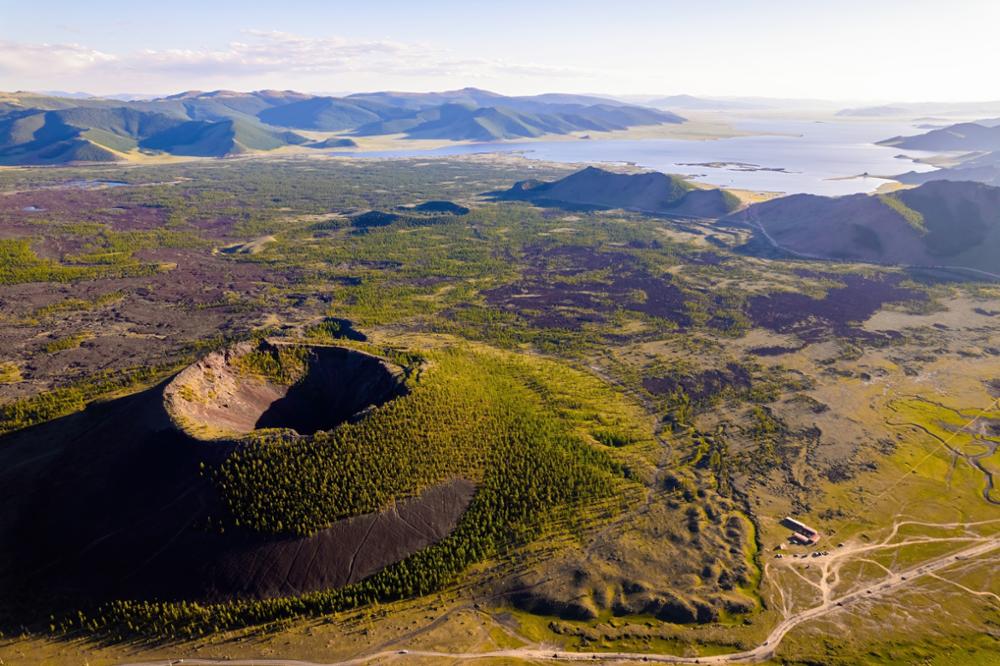
We begin with Mongolia's most renowned volcano: Khorgo. Located within the Khorgo-Terkhiin Tsagaan Nuur National Park, in Arkhangai Province, this extinct volcano's last eruption occurred 8,000 years ago.
At 2,240 meters elevation, the summit is easily accessible to hikers. A trail of approximately 16 kilometers leads to the top. Upon arrival, you'll discover a magnificent basalt crater measuring 200 meters in diameter and 70 to 100 meters deep. From the summit, you can enjoy exceptional panoramic views of the surroundings, particularly the celebrated Terkhiin Tsagaan Lake (see sidebar).
Around the volcano, numerous fascinating landscapes await discovery. Among them, you'll find Siberian larch forests inhabited by wild animals including Siberian goats, wild boar, Siberian deer, and numerous bird species.
The site is also renowned for its rock formations sculpted in stone, such as solidified lava bubbles that locals nickname "basalt yurts."
Focus on Terkhiin Tsagaan Lake and Arkhangai's Volcanic Activities:
Beyond its impressive volcano, the park is also home to one of Mongolia's most beautiful lakes: Terkhiin Tsagaan Lake. Also called the "White Lake," it was created by Khorgo volcano's last eruption during the Holocene. The lake is surrounded by diverse ecosystems (taiga, mountain steppe, wetlands...) and craters of other extinct volcanoes that testify to Arkhangai's ancient volcanic history.
Uran Uul Volcano
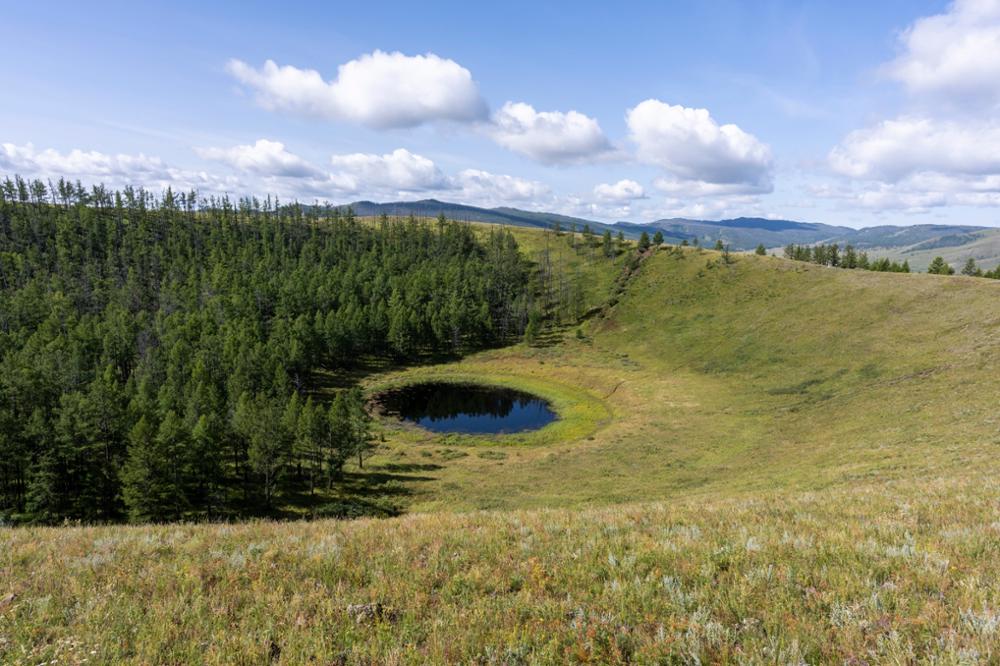
Heading to the Uran Togoo Nature Reserve, in Bulgan Province, near the town of Uran Togoo, to discover another popular Mongolian volcano: Uran Uul. While the precise history of this extinct volcano remains unclear, it is believed to have been active 20 to 25 million years ago.
A hike through the forest leads to its crater (approximately 15 minutes). Here you'll witness how lava that flowed millions of years ago has given way to remarkably fertile landscape.
Among the Siberian larches lives abundant flora and several wild animals including argali (the world's largest wild sheep), Siberian ibex, Apollo butterfly, and many others.
Upon reaching the summit at 1,638 meters, you'll discover a circular crater measuring 500 meters in diameter and 50 meters deep, containing a small lake of profound darkness within.
It's possible to descend to the crater floor and/or complete a circuit around it during a hike of approximately 1 hour.
Uran Togoo Nature Reserve is home to two additional extinct volcanoes: Tulga Uul and Javalch Uul. Both can be explored during hikes.
Shilin Bogd Volcano
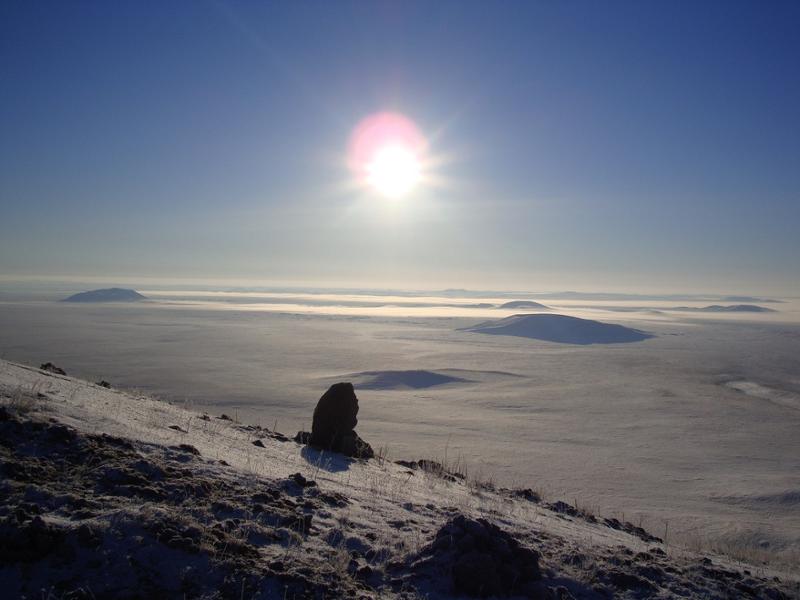
Located in Sukhbaatar Province, in the Dornogovi region near the Chinese border, Shilin Bogd is an extinct volcano rising to 1,778 meters elevation. Standing in relatively flat terrain, it is visible up to 60 kilometers away.
Its summit features a crater 2 kilometers in diameter and 300 meters deep, reachable via a relatively easy 30 to 40-minute climb. We recommend camping at the volcano's base to make the ascent at sunrise and enjoy breathtaking views from its summit.
While popular with travelers for its landscapes, the volcano is also deeply revered by locals. It ranks among Mongolia's three most sacred mountains (alongside Otgontenger and Khan Khentii). You'll see many Mongolians climbing Shilin Bogd to make offerings at the ovoo. According to local beliefs, men (not women) who climb the volcano will experience spiritual renewal.
It is possible to circuit the crater by following a hiking trail. Tradition dictates that this loop should be completed clockwise.
The Sacred Mountain of Otgontenger
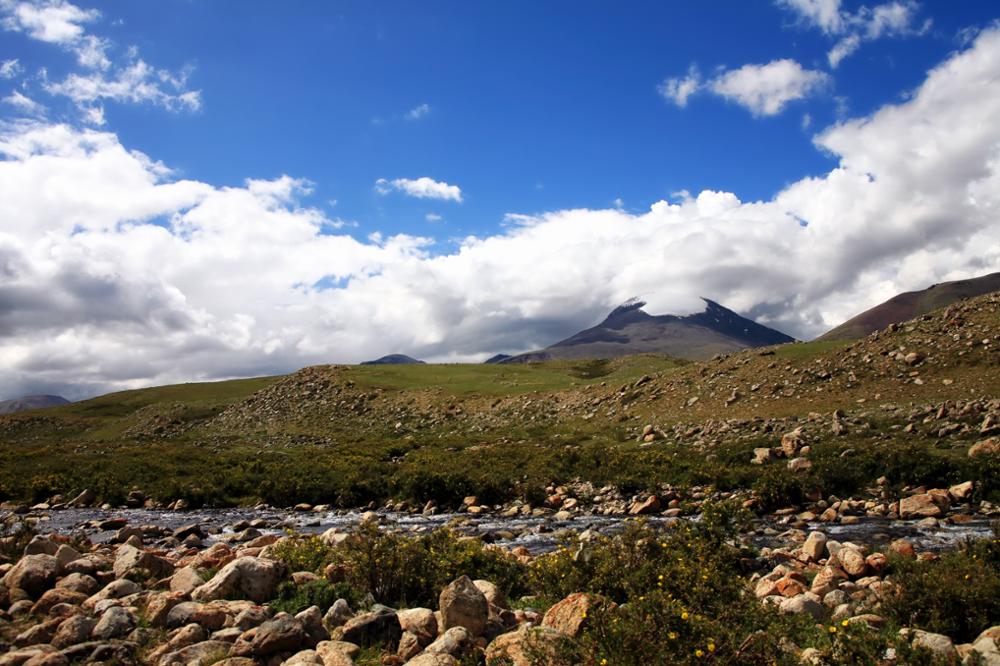
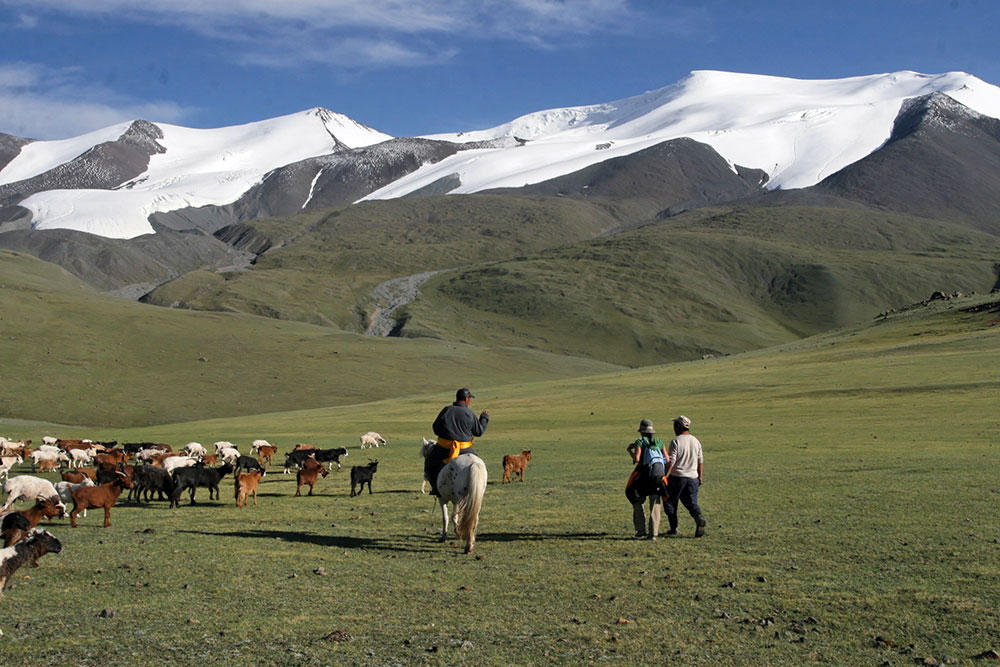
We conclude with the Otgontenger Peak, situated in Zavkhan Province within the Khangai Mountains. While not technically classified as a volcano, the region displays reliefs and formations linked to ancient volcanic activity. We believe it deserves inclusion here.
At 4,008 meters, Otgontenger is Mongolia's fifth highest mountain and the tallest peak in the Khangai range. It is also the only summit in this range to retain permanent snow and glaciers dating to the ice age.
Beyond its permanent glacier, Mount Otgontenger holds several natural treasures. On its southern face stands the country's largest granite cliff. Just below, at the mountain's base, the landscape is enhanced by the Badarkhundaga Lake, fed by the glacier.
Due to the progressive diminishment of permanent snow, a decree from the Ministry of Nature and Environment issued in August 2022 prohibits summit attempts. Nevertheless, exploring its slopes and surroundings remains entirely feasible.
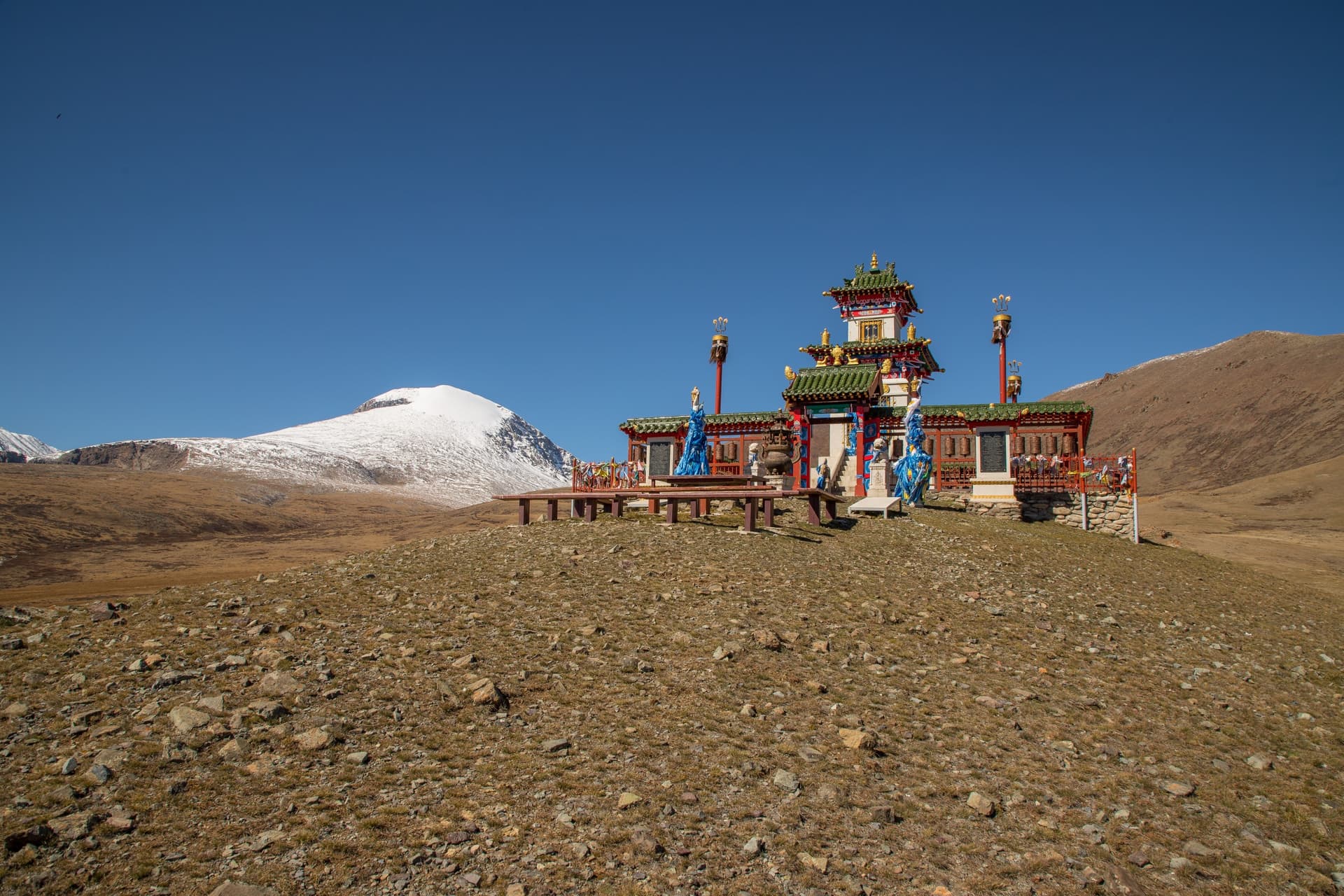
Mount Otgontenger is also among Mongolia's three most sacred mountains. According to tradition, the mountain is considered the home of Ochirvaani (Vajrapani), a protective deity in Buddhism. Venerated since 1779, numerous shamanic and Buddhist rituals take place here. By presidential decree, the mountain must be honored every four years.
Interested in exploring Mongolia's extinct volcanoes? Contact us to plan your journey and create a custom itinerary tailored to your preferences and budget. Also discover our itinerary to explore Mongolia's essential wonders.
Florine Dergelet