Shamanism in Mongolia (In-Depth Guide)
Shamanism is neither a religion nor a lifestyle. It is a set of beliefs dictated by a holistic and animistic conception of the world. Present in Mongolia since time immemorial, shamanism...
Shamanism is neither a religion nor a lifestyle. It is a set of beliefs dictated by a holistic and animistic conception of the world. Present in Mongolia since time immemorial, shamanism aims to find balance between humans and their environment. Since it is not easy to explain, shamanism tends to be viewed as a form of witchcraft. Yet shamans possess unsuspected powers that will astonish you when you meet them! Definition and origins of shamanism, shamanism and Buddhism, the roles and rituals of shamans… We explain everything about shamanism in Mongolia.
1. What is shamanism?
Shamanism is one of the oldest spiritual practices in the world. It is not based on faith in a god but rather on animism—that is, a belief that attributes a soul and spirit to all living beings and all elements that compose nature. In this sense, shamanism correlates several worlds: the one that is visible and perceptible, and those we cannot see, namely the world of spirits, the world of purgatory, the world of waters, and the world of nature's guardians.
There is no doctrine or holy scripture in shamanism. However, shamans practice a number of rituals (see section 7) to enter into contact with higher entities as well as spirits. This may concern the souls of animals, the dead and ancestors of the people, the souls of the sick to be healed, or children yet to be born…
2. Origins of shamanism
Shamanism draws its origins from Siberia, more precisely from the Altai Mountains, with the Evenki tribe. In Mongolia, shamanism is the oldest belief of the people. It was even proclaimed the official religion of the Mongol Empire in the 13th century. The Mongols practiced mainly Tengrism, a form of animistic polytheistic shamanism stemming from ancient Turkic religions. This form of shamanism was popularized in Mongolia through Genghis Khan, founder of the Mongol Empire. But Mongolian shamanism also includes other forms, such as yellow shamanism, influenced by Tibetan Buddhism (see section 3), or black and white shamanism.
Over time, Mongolian shamanism continually clashed with Buddhist currents. Not to mention the arrival of communism, which had traditions and religions in its sights. Consequently, until 1995, shamans who practiced their rituals faced imprisonment. It was only at the end of communism that shamanism experienced a revival and continues to develop under multiple influences, embracing other doctrines and religions.
Today, shamanism continues to be practiced in Mongolia and is found primarily in the daily lives of ethnic groups such as the Darkhads, Buryat Khotgoid, Uriankhais, and the Tsaatans. Shamanism is also practiced by numerous peoples worldwide—from Asia to Africa, through the Americas and Australia!
3. Shamanism and Buddhism
At once competitors and complements, shamanism and Buddhism have succeeded one another more than once in Mongolia. And although Buddhism is the official religion today, it was not always a given among the population. Indeed, common people long followed ancestral shamanistic practices, even when Buddhism was a state religion. So much so that a form of shamanism influenced by Buddhism came into being: yellow shamanism! This refers to the yellow hats (Gelugpa) of Tibetan Buddhism and thus draws inspiration from Buddhist practices. This type of shamanism is still practiced today by the Khalkha Mongols.
4. Who are shamans?
Shamans are men or women who have been chosen by spirits or through hereditary transmission for their healing powers. Becoming a shaman is not learned, and no one can teach it. For the shaman, shamanism is not a lifestyle choice; it is a gift from nature to ensure harmony between humans and the world. This is why shamans cannot turn away from their missions and must take their role very seriously.
5. The shaman's illness
As mentioned, one does not become a shaman—one is born a shaman. The selection of a shaman occurs through a process known as the touch of the spirit. To discover their powers, the shaman must know and face the initiatory illness. The symptoms are described as conventional and more or less expected and provoked.
During the ceremony, the individual enters a trance. If they faint, this indicates their entry into the world of shamanism. It is at this moment that ancestors take the soul of the future shaman so they can be instructed. The shaman's illness can last a few days or several years. It is customary to believe that if the candidate designated by spirits does not become a shaman after undergoing this initiatory illness, they risk death. This shows how critical the role is within Mongolian peoples of shamanistic belief…
6. The role of shamans
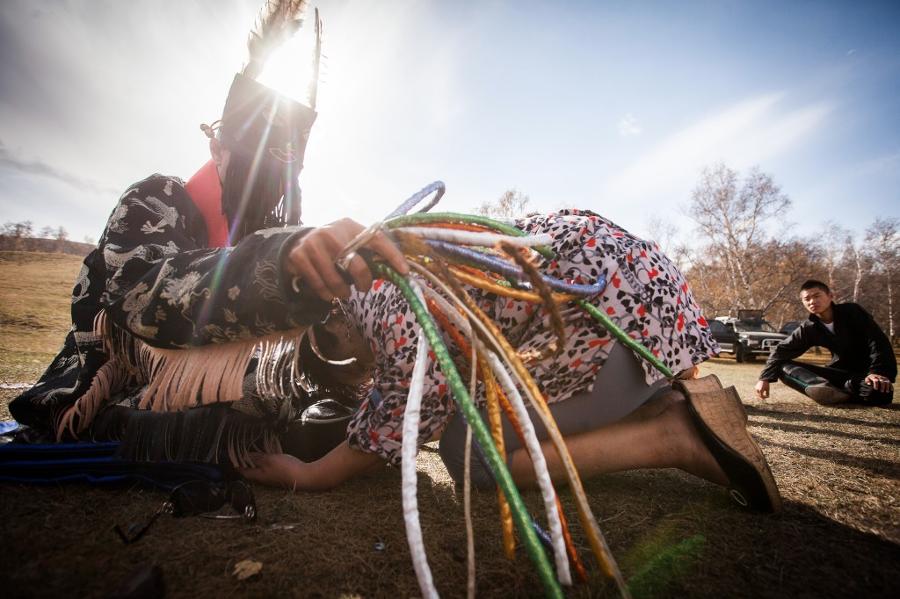
In Mongolia, they are nicknamed relayers, for they are the intermediaries between humans and other worlds. But beyond this function, shamans play a very important role in the social functioning of a people, community, or society. They are spiritual guides and masters, healers and protectors whom everyone listens to and respects daily. They are the ones who heal body and soul, name children, accompany the souls of the dead, communicate with nature to bring rain or game…
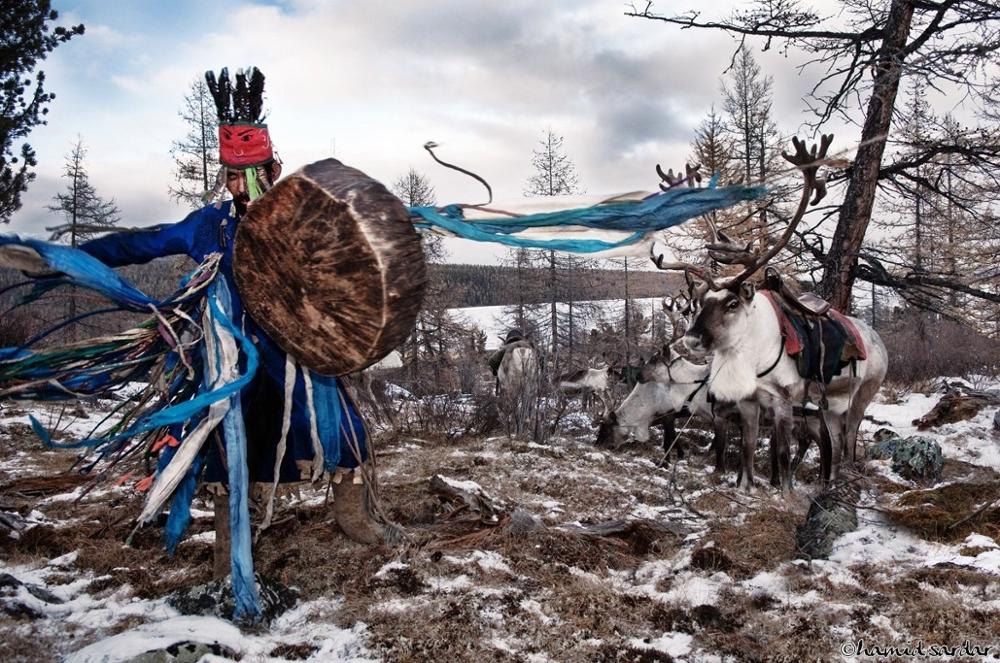
Of course, rituals vary from region to region, and all shamans can personalize them. To communicate with spirits, they can practice various forms of rituals to enter trance. Most often, it is a dance accompanied by rhythmic drumbeats. Others sing, and some consume alcohol, herbs, and other hallucinogenic plants during the ritual to open their perceptions. Drum journey is characteristic of North Asian shamanism. Thus, Mongolian shamans use the drum to reach a trance state. It is no coincidence that in the Evenki language (Tungusic language of Mongolia), the word shama translates to "to dance, stir, shake, bound"…
7. The shaman's trance
To communicate with spirits, the shaman must reach an altered state of consciousness. In other words, the shaman must enter a particular psycho-physiological state which, through ecstasy, allows them to cross the limits of rational consciousness and thus communicate with other worlds. Most often, the trance state is represented by bodily expression whose tremors are evocative of the presence of spirit(s) in the shaman's body.
The tools used to enter trance are numerous. In Mongolia, the drum is a sacred object because it is through the drum that the shaman enters into contact with spirits. Moreover, the shamanistic drum is considered a Mongolian national treasure. It is strictly forbidden to lift this object of great symbolic value from the ground. Beyond the drum, shamans have other accessories such as a jaw harp, a mirror, stones (numbering 41), or small cloth dolls.
When a shaman enters a trance, spirits manifest themselves. One often hears that they take the form of wild animals such as the wolf, owl, bear… An intimate conversation then takes place between the shaman and the spirits. The shaman can offer gifts to the spirits they encounter, and when the ritual ends, they take care to share the messages and answers from the spirits to the people's questions. During a trance state, the shaman undergoes a loss of sense of space and time. They experience visions and can feel a decreased perception of pain and, conversely, an increase in physical strength. A trance can be so intense that the shaman must be accompanied by an assistant who intervenes if needed.
Meet the shamans
To discover the secrets and mysteries of shamanistic rituals, nothing beats an immersion within Mongolian tribes. Take advantage of a journey to Mongolia to meet certain peoples of shamanistic belief. You can stay in the steppes https://www.voyage-mongolie.com/circuit/chamanisme-dans-la-steppe in the company of a shaman and their assistant, who will teach you the rituals and initiate you into shamanistic meditation. For an experience beyond time, ride across the taiga to reach the camps of the Tsaatans https://www.voyage-mongolie.com/circuit/coeur-chaman and discover their shamanistic traditions.
And if shamanism interests you, don't miss the Shamanism Festival https://www.voyage-mongolie.com/festival-du-chamanisme-en-mongolie, which takes place every year in Mongolia in June or September. This event brings together shamans from around the world who come to share their knowledge and powers…
One thing is certain: if you meet a true shaman, you will be marked forever by this experience…
Florine Dergelet