A Look Back at Mongolia's Official Olympic Outfits' Success at the 2024 Games
Unveiled in early July, the official outfits for Mongolia's Olympic athletes captured the world's imagination. For many, they were even the most beautiful uniforms at the 2024 Olympic Games.
July 30, 2024 — Unveiled in early July, the official outfits for Mongolia's Olympic athletes have captivated the world. For many, they're even the most beautiful uniforms of the 2024 Olympic Games. Here's more about these exceptional costumes, rich in symbolism...
Creations by Mongolian brand Michel&Amazonka
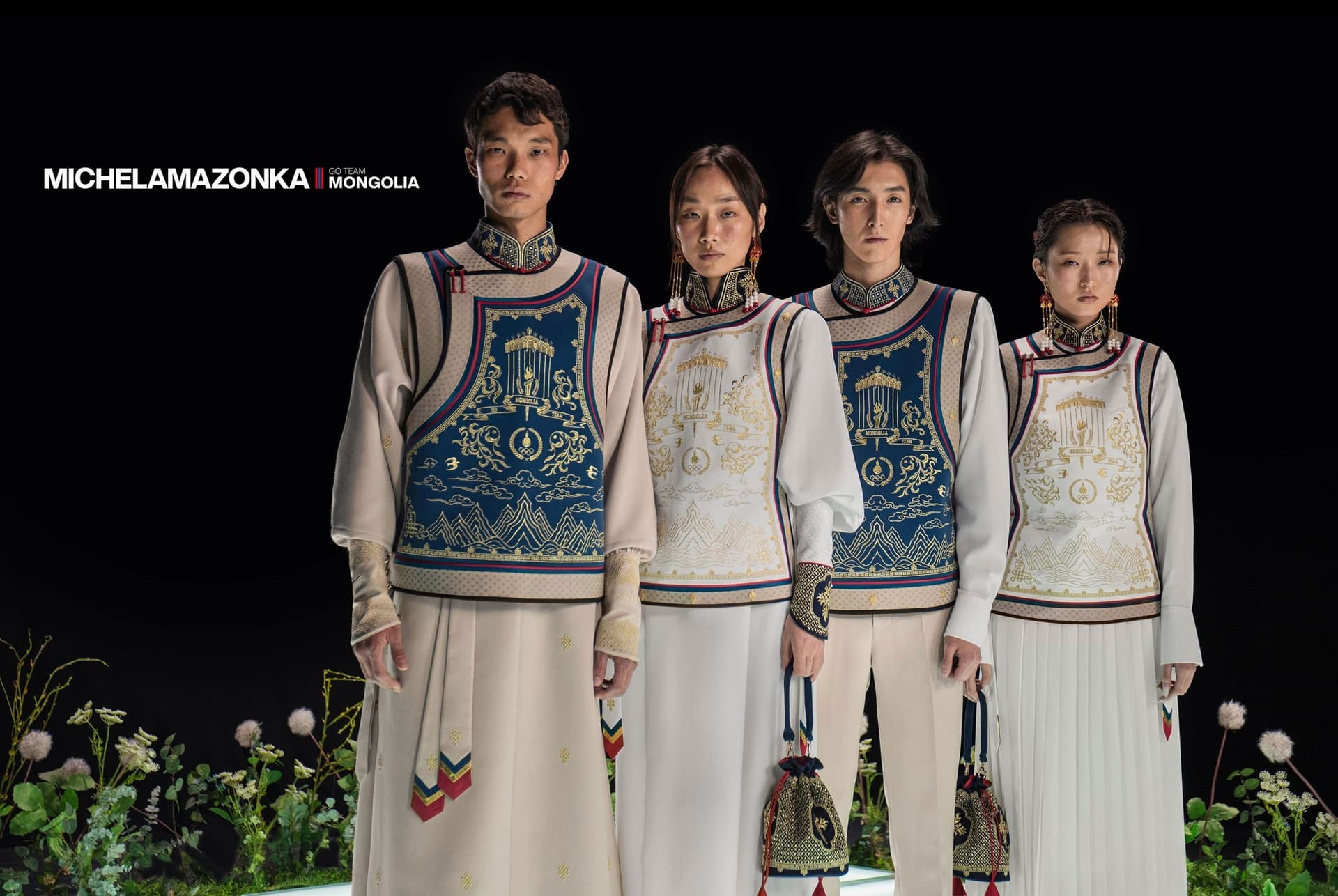
The outfits worn by Mongolia's Olympic athletes at the opening and closing ceremonies of the Games haven't stopped generating buzz since they were unveiled in early July. And for good reason—they rank among the most elaborate and refined looks of this edition.
All were designed by a local brand: Michel&Amazonka. Founded in 2015 by three sisters (Michel, Amazonka, and Munkhjargal Choigaalaa), the company is based in Ulaanbaatar. The three women draw their inspiration from the robes worn by their grandfather, who was a monk, and from the embroidery their grandmother created. Today, their signature style represents a fabulous blend of Mongolian culture and European aesthetics.
Over 20 hours of work for each outfit
Each outfit required more than 20 hours of work. That speaks to the meticulous attention to detail. In total, Michel&Amazonka's teams produced 120 ensembles for the Olympic and Paralympic events (70 outfits for men and 50 for women). An extraordinary effort, especially considering the designers had just 3 months to create all the uniforms.
Costumes filled with symbolism...
All uniforms worn by Mongolian athletes incorporate the codes of the country's traditional dress, with nods to the Olympic Games and European culture. First, you'll see all the colors of the Mongolian flag: red, gold, and blue, which symbolize longevity in Mongolie.
Moreover, numerous national symbols and figures from Mongolian mythology are embroidered in gold thread, such as the Gua-Maral, Mongolia's legendary deer. The creators of Michel&Amazonka also drew inspiration from Naadam, Mongolia's largest traditional event.
In an interview with GQ magazine, one of the founders, Batbaatar Munkhbaya, explained: "We drew inspiration from Naadam, which is somewhat like our Olympic Games. It's a grand festival that takes place in Mongolie in July, and people dress up for the opening ceremony."
Among the embroideries inspired by Naadam is the Tug banner. "When Naadam begins, this banner is brought to the stadium, and it's the symbol marking the start of the festival," she explains. You can also see the 9 white banners, which signify "that our Naadam has begun."
The outfits also feature symbols related to the Olympic Games, such as embroidered Olympic rings and the Olympic torch. There are also falcons, a symbol of Mongolian warriors, and mountains representing the athletes' hard work and perseverance. "They're embroidered in gold thread because we want our uniform to bring home gold medals," Batbaatar Munkhbaya noted.
Differences between men's and women's costumes
Both women and men's Olympic athlete outfits for Mongolia's team draw from traditional Mongolian clothing.
For women, the outfits consist of an embroidered caftan over a long white skirt. The skirt is inspired by "deels," a flowing robe that is Mongolia's national costume. Female athletes are also equipped with accessories such as red and gold earrings adorned with pearls.
For men, the outfits feature deep blue jackets paired with typical Mongolian accessories: a traditional pointed hat called a buryat and traditional boots named gutals.
So, what do you think of Mongolia's Olympic team outfits? Do you agree with many internet users that they deserve the gold medal for the most beautiful costumes at the 2024 Olympic Games?
Florine Dergelet — Florine Dergelet is a web writer with over 10 years of experience and a traveler driven by the desire to discover the world with an open heart. Each of her articles is an invitation to slow down, to listen, to understand. For her, travel isn't about checking countries off a map, but about weaving ties—often invisible yet always powerful—with places, peoples, and all manner of creatures from the animal kingdom. Her motto? Advise travelers ethically, awaken their awareness about animal welfare, respect for cultures, and the importance of humble, sustainable tourism. Because the most beautiful memories often bloom far from the spotlight, in the shadow of a trail, over a conversation, or in the quiet breath of a world we finally take time to hear…