Driving in Ulaanbaatar: 8 Things You Need to Know!
Driving in a foreign country, especially in a congested city like Ulaanbaatar, can be a constant challenge. Arm yourself with patience, courage, and read this survival guide to understand the unique way Mongolians drive and successfully navigate through the traffic of Mongolia's sprawling capital.
Driving in a foreign country, especially in a congested city like Ulaanbaatar, can be a constant challenge. Arm yourself with patience, courage, and read this survival guide to understand the unique way Mongolians drive, and successfully navigate through the traffic of Mongolia's sprawling capital.
Can I drive today? A question of license plate number
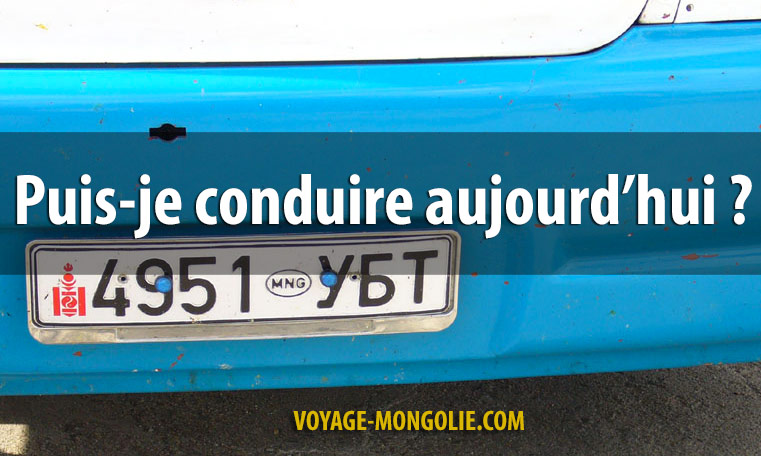
The first thing to check before getting behind the wheel is whether your vehicle is authorized to circulate in the city that day. Ulaanbaatar was originally designed to accommodate 400,000 residents. Today, the city has nearly 1.3 million residents, vehicle ownership is extremely high, and traffic congestion poses serious problems. The municipality has therefore implemented an alternating traffic system to limit the number of vehicles allowed on the road.
The system is straightforward: if your license plate number ends in 1 or 6, you are not permitted to drive on Mondays; 2 and 7, on Tuesdays, and so on. If you drive in the city on a day when you are not authorized, you can be sure to finish the day with a fine: the police are watching.
Right-hand or left-hand drive?
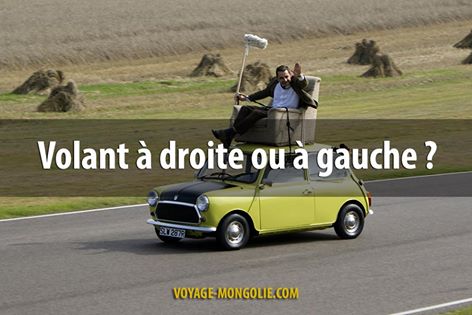
There you are, behind the wheel of your car, but on which side is the steering wheel positioned! In Mongolia, there are indeed roughly as many cars with the steering wheel on the right as there are with it on the left. The explanation: the automotive market in the country is primarily a used car market, and the side where your steering wheel is located depends on the car's country of origin. Vehicles from Japan or Hong Kong, for example, will have the steering wheel on the right, while those from South Korea or the United States will have it on the left.
Once you know this, you can breathe easy: if you have a left-hand steering wheel, you're all set, and it's on the right side of the road that you drive!
And what about passing—on the right or on the left?
You're on the right side of the road, with a left-hand steering wheel... everything looks good. But then you notice cars passing indiscriminately on the right or on the left. Vehicles surge in every direction, the 2 lanes transform into 4 lanes... If you have the misfortune to drive during Naadam, you'll discover that certain arteries (to reach the racecourse, for example) turn into 11 lanes, with everyone trying to move forward by driving on the tracks alongside the main road, and of course attempting to merge back into your lane when crossing bridges, for instance. You must learn to hold your own with both elbows and steering wheel to carve out your path, and temporarily forget civility—otherwise, you risk getting stuck.
Passing through traffic lights

Here again, passing through lights may surprise more than a few, as the rules differ slightly from what we're used to. Assuming the light is functioning, here's the Mongolian traffic code:
Green light: Time to go, but the line isn't moving, so you get frustrated and honk.
Yellow light: You've been waiting patiently while the light was green, and now it's already turning yellow. There's only one solution: accelerate!
Red light: You're stuck in the middle of the intersection, and you finally understand why no one could move when the light was green.
The sense of right of way
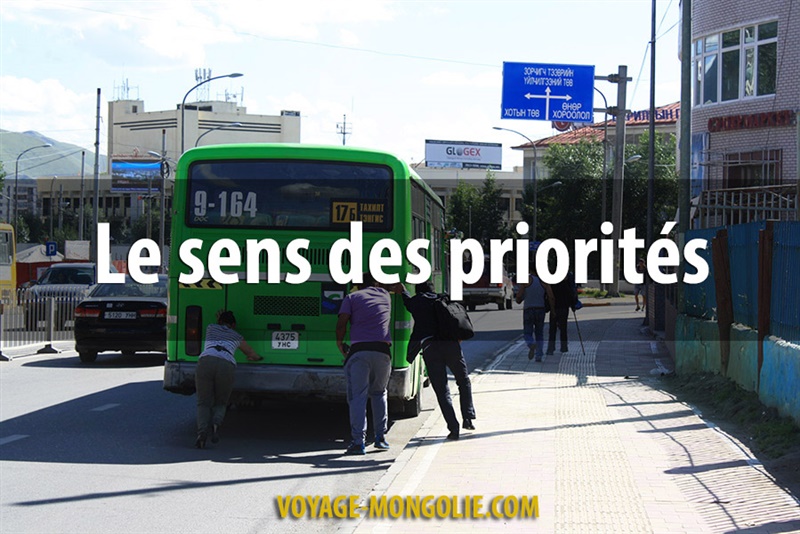
Perhaps the biggest difference from driving in Europe, right of way is not on the right or left, but often to the boldest, and depends primarily on the vehicle you own.
As you might have guessed: buses have priority! Buses in Ulaanbaatar are often in poor condition, and drivers are the most brazen. They merge into your lane without concern that you're in the process of passing them, forcing you to swerve into the oncoming lane or slow down to get back behind them at the risk of being engulfed. Whenever you see a bus, you need maximum vigilance. After buses, priority is often given either to large 4x4s or to the most dilapidated cars, already covered in scratches. Owners of mid-range cars in good condition are often the least aggressive, fearing damage to their vehicle, which represents a significant investment. If you're not the kamikaze type behind the wheel, then be patient—perhaps you'll be lucky enough to have someone let you pass... someday, maybe.
Pedestrian crossings

Unfortunately, in the ranking of priorities, those with the smallest and most fragile vehicle—pedestrians with their two feet—come last. Don't assume that because you're on a pedestrian crossing, cars will stop to let you pass.
Mongols on foot are nonetheless quite reckless, and you'll need constant vigilance to avoid people darting into traffic trying to cross the avenues.
Speed limits
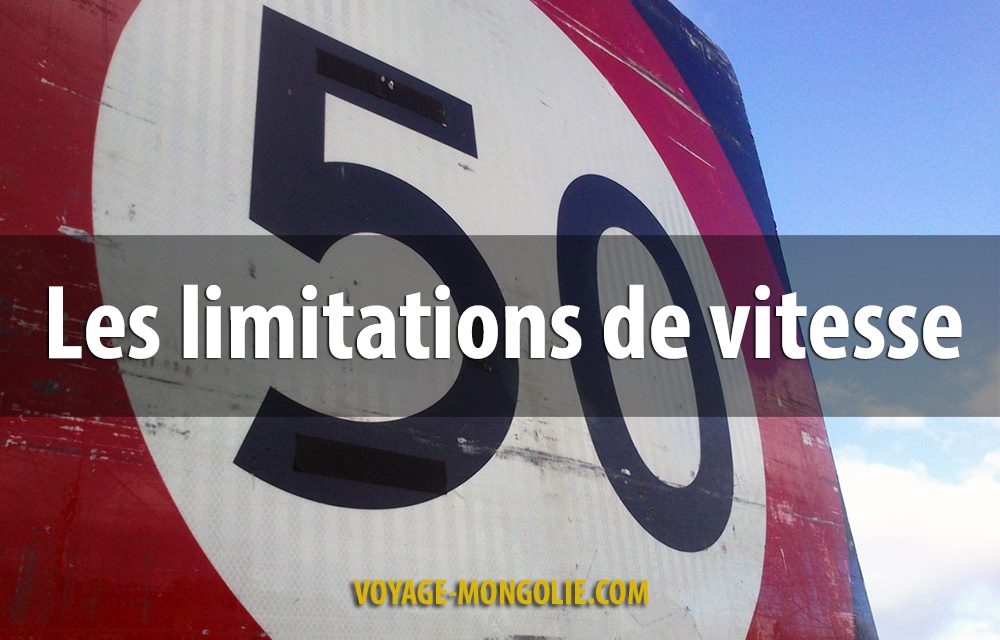
Normally limited to 50 km/h on main city roads, and even 20 km/h in residential zones, you'll notice that Mongolians, when they can (at night, for example), enjoy pushing the limits. So stay vigilant even when traffic is flowing smoothly. Also remember that the road surface can be in very poor condition in some places, and going too fast, you risk not seeing until too late the pothole (or rather, crater) in the middle of the road.
Recently, the municipality has installed numerous cameras throughout the city, and enforcement has increased. Fines are now, as in many countries, sent directly to your home. Hopefully this will curb some people's enthusiasm!
The horn, my best friend
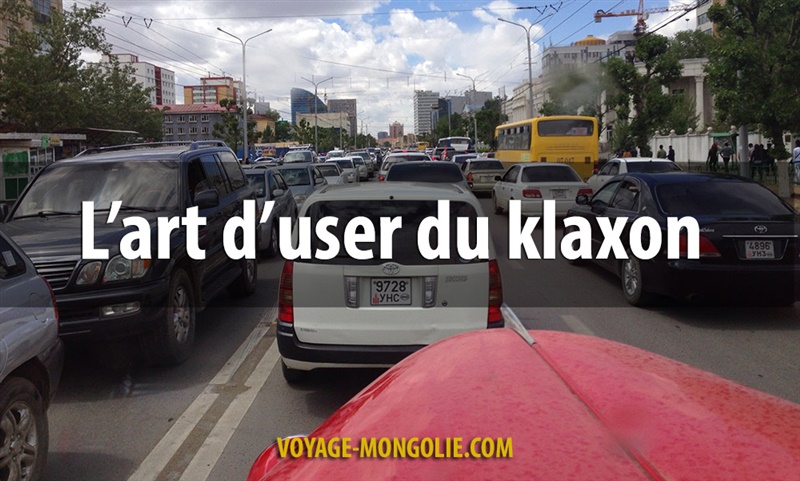
The use of the horn in this urban jungle will remain your best ally. Don't think that drivers honk only to complain—it's used systematically to announce your presence and thus any danger you might pose. If you're passing a bus or truck, you can honk while doing so to warn the driver of your passage. If a pedestrian seems to be behaving dangerously, then similarly a horn blast might make them realize you won't slow down and cause them to step back.
To sum it up: don't be afraid to make noise in a residential area—honk away!
Many foreigners, and even Mongolians, don't dare venture onto the capital's roads. Yet with some experience and plenty of vigilance, this new style of driving—at the very least—can prove quite exciting.
For those who prefer a calmer experience, you can also manage by avoiding certain time slots. For instance, prefer arriving at work early (before 8:30 AM) and leave early, ideally before 5:00 PM. For shopping, you should be fine heading out on the weekend in the morning. A Sunday at 10:00 AM, for example, you'll always find calm conditions.