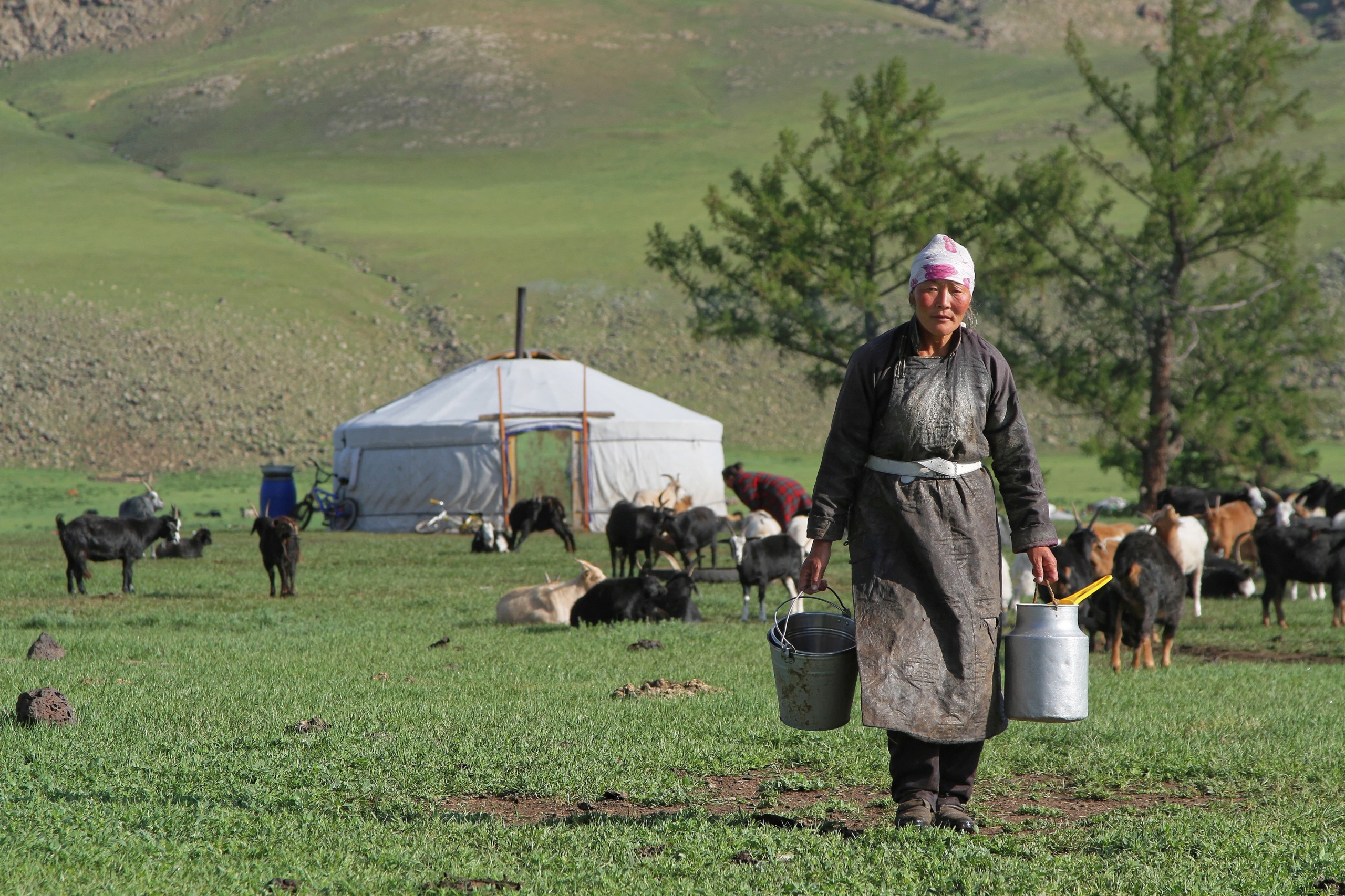
The Truth About Genghis Khan: Barbarian or Hero?
He is often depicted as one of the most ruthless warlords in history, spreading bloodshed across the entire Eurasian continent... But was Genghis Khan truly a treacherous barbarian
He is often depicted as one of the most ruthless warlords in history, spreading bloodshed across the entire Eurasian continent... But was Genghis Khan a treacherous barbarian or a unifier who laid the foundations of the modern world? That is what we will endeavour to determine in this article based on historical data!
For the sake of clarity, arguments in favour of Genghis Khan will be written in green, while arguments against him will be in red.
Everyone knows Genghis Khan, the 13th-century warlord whose wars cost millions of lives and left only ruins in their wake.
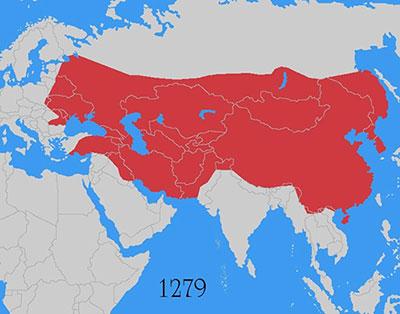
True, but we cannot deny that he was one of the greatest leaders in history. Born as Temüjin, he was an orphan without resources, yet managed to overcome the endless divisions of the Mongol clans to unite them and forge the greatest empire the world has ever known, stretching from the Pacific to the heart of Europe.
------------
For example, due to his invasions and the massacres that resulted, Northern China lost two-thirds of its population!
It is well documented that the Jin dynasty long controlled the northern tribes, paying them to turn on each other, and attacking them periodically. As for the demographic variation, it may well be due to poor census records, not forgetting that many peasants had joined Khan's army! These data may therefore seem outdated.
------------
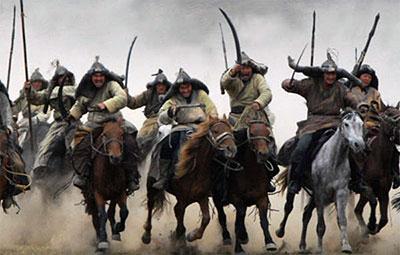
Genghis Khan's armies razed entire cities to the ground, massacring their inhabitants and sowing chaos in their wake.
Genghis Khan preferred enemies to surrender and pay tribute, but he believed deeply in loyalty and diplomatic law. Cities that were razed were those that rebelled after surrendering, or those that killed his ambassadors. His sense of justice was strict.
------------
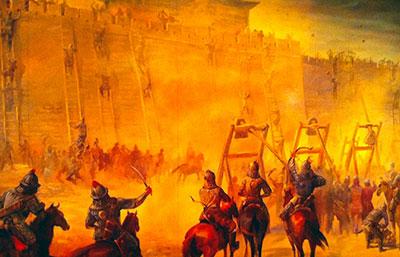
Many reports show that the brutality of his army went beyond justice: tearing infants from their mothers' wombs, using prisoners as human shields, or filling the moats of conquered cities with the women of those cities to support siege weapons.
This is sadly likely true, but is it really worse than what other medieval armies did? Certainly, this in no way excuses the atrocities committed at that time, but it tends to make Genghis Khan someone ordinary for his era, not merely a bloodthirsty savage. Moreover, the unification of the tribes abolished the kidnapping of wives; Mongol women had a better situation than most. They controlled the household, could divorce their husbands, and were listened-to advisors. Temüjin remained with his first wife his entire life, even raising her possibly illegitimate son as his own.
------------
The legacy left by Genghis Khan was a catastrophe: nearly 40 million deaths across Europe during the conquests of his descendants. 10% of the world's population! Not to mention deaths caused by the Black Plague introduced to Europe through the Golden Horde's siege of Kaffa.
The reports presenting these facts were written more than a hundred years after that period, so it is difficult to rely on them completely. Moreover, the survivors benefited from the advantages of Genghis's empire. The Mongol Empire indeed advocated religious tolerance among its subjects, soldiers were well treated, promoted on merit rather than birth, he established a vast postal system, and applied universal justice, not to mention cultural contributions.
------------
It is also difficult to justify the destruction of Baghdad, the cultural capital of the era, by Hulagu Khan: libraries, hospitals and palaces were burned, irrigation canals were blocked...
It is true that Baghdad was unlucky, but its Caliph refused to surrender and Hulagu was later punished by Berke Khan for this gratuitous destruction. Obscurantism was not a Mongol tradition. Generally they saved doctors, scholars and artisans from conquered places and sent them throughout their realm, spreading knowledge across the world.
------------
It is also worth noting the destruction of Kievan Rus, leaving its people in the Middle Ages even as the Renaissance spread across Europe?
Western Europe was not exactly a place of peace at that time. The stability of the Mongol empire actually allowed the Silk Road to flourish, enabling commercial and cultural exchanges between East and West, and from its legacy descended Russia and China, forged from unified principalities. In fact, long after the Empire, descendants of Genghis Khan could be found among the ruling nobility throughout Eurasia.
------------
An amusing thing (if you will): you, reading this article right now, could very well be a relative of Genghis Khan. Indeed, 16 million men today descend from Genghis Khan, that is 1 in 200! So, what do you think? Can the historical or cultural weight of a leader compensate for the deaths caused by their irresistible rise? Feel free to share your thoughts in the comments!