Key Historical Figures of Mongolia
Mongolia is a remarkable country brimming with possibilities, countless discoveries, and a truly extraordinary past—all made possible by a select few personalities whose stories we explore here.
Mongolia is a remarkable country brimming with possibilities, countless discoveries, and a truly extraordinary past—all made possible by a select few personalities whose stories we explore here.
Mongolia's history, both past and present, deserves to be known and respected. There is so much to discover! This is the mission Horseback has embraced over the past 10 years. Come, let's revisit the classics following the momentous events of recent weeks!
Mongolia in the Age of the World's Greatest Empire…
"Genghis Khan" (The Universal Ruler) Born as Temüjin between 1155 and 1162 in the Khentii province, east of the capital Ulaanbaatar, this iconic Mongol figure was the founding father of the Mongol Empire—the largest empire in history by area. He died in August 1227 in what is now Gansu province in China, from injuries sustained when he fell from his horse during a hunting expedition.
Son of a Borjigin tribe clan chief, he succeeded in uniting several nomadic tribes of Central and East Asia under the name of the Mongols, employing unprecedented strategies for his era. He became their leader, their "Khan." Through successive conquests, including China, he earned the title "Chinggis Khan," supreme ruler. Much of Asia pledged allegiance to him, and even after his death, his descendants expanded the empire for more than 150 years. A testament to his unparalleled influence: his grandson became the first emperor of the Yuan Dynasty in China.
It is thanks to him that Mongolia became known and remained the center of the world during that era—a vast empire stretching from Japan to present-day Hungary. A modern man for his time, he also contributed to the emancipation and protection of women (establishing laws in their favor, using clever tactics to resolve tribal conflicts, and banning the practice of abducting women—a Central Asian tradition), as well as pioneering innovative concepts such as postal relay stations and the office of ambassador. He remains a source of pride for Mongolia today, with numerous buildings and commercial brands drawing inspiration from his name.
The Era of "Modern" Discovery…
Nikolai Mikhailovich Przewalski Born in 1839 with the Polish surname Przewalski, this naturalist of Polish origin served as an officer in the Russian Imperial Army and was a distinguished geographer and explorer of Central Asia. Always yearning to reach the city of Lhasa in Tibet, he traveled throughout Central Asia, crossing regions previously unknown to Westerners. As for Mongolia specifically, he was the first European to encounter the endemic Mongolian equine species, the horse that would bear his name "Przewalski." He became an icon of wildlife conservation from the 1990s onward, leading to the establishment of a national park and reserve in the heart of Mongolia, which welcomes some 13,000 visitors annually.
Fernand Grenard – French Explorer During the same period, Fernand Grenard also profoundly influenced political affairs and knowledge of Mongolia, China, and the Tibetan region. Lhasa remained forbidden to foreigners as late as 1891 and was a subject of great interest to Grenard. He joined the expedition of Jules-Léon Dutreuil de Rhins to eastern Turkestan (China) that same year, tasked with studies of history, languages, and ethnography. Grenard was a graduate of the School of Political Sciences and the School of Oriental Languages, attached to the Ministry of Foreign Affairs. He later served as Consul General in Moscow and Ambassador of France to Yugoslavia, concluding his career in 1927. He continued to publish works on Central Asia. In his book Haute Asie (1931), he provided precise descriptions of Mongolian history, geography, and peoples, supported by photographs, engravings, and sketches of landscapes and sites of interest. You can consult his book online—chapter 2 specifically addresses Mongolia.
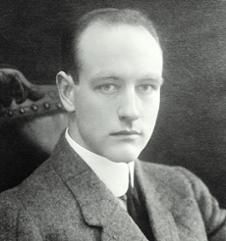
Roy Chapman Andrews A passionate traveler and biologist, Roy Chapman Andrews conducted extensive research and traveled to the far corners of the world to observe nature and animals, personally filming diverse mammals and whales in the early twentieth century. He assembled extensive collections of species for Columbia University in the United States. From around 1910 onward, he journeyed to Asia, particularly China, undertaking several expeditions with his wife. This led him to Mongolia in 1920, where he discovered prehistoric rhinoceros skeletons. During this period, other dinosaur fossils were uncovered through his work, particularly between 1922 and 1923 in the Gobi Desert. He contributed significantly to our understanding of prehistory and the development of paleontology in Mongolia, which also became a major tourist attraction in the Bayanzag region (the Flaming Cliffs). Today, a dinosaur museum in Ulaanbaatar, the capital, displays part of the collection discovered in this area. His work profoundly influenced knowledge of Mongolia and remains a reference today. Some even credit him with inspiring the creation of the Indiana Jones character in the 1940s-50s!
The Age of Revolution…
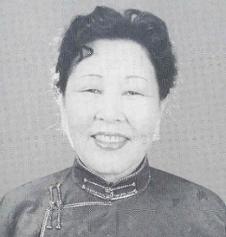 Namjilyn Norovbanzad
She was a traditional and folk Mongolian vocalist who introduced the country's culture to the world. Born in Dundgovi province in the southern part of the country, Norovbanzad came from a family of nomadic herders. Recognized for her powerful and mesmerizing voice, she won numerous local awards and provincial competitions, which led her to relocate to Ulaanbaatar, the capital. She dedicated herself to singing as a livelihood and gained prominence through the 1990s. At the height of her career, she introduced the world to the Urtiin Duu, the distinctive long song tradition of Mongolia. Her songs spread globally and were even remixed by others. She received countless accolades, including in 1957, when competing among over 30,000 participants, she earned honors and the Gold Medal at the World Festival of Students and Youth in Moscow. The Mongolian Government decorated her with a Medal of Merit in 1999, and she was voted best singer of the century in 2000.
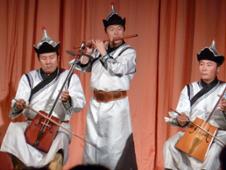 The Tumen Ekh Ensemble
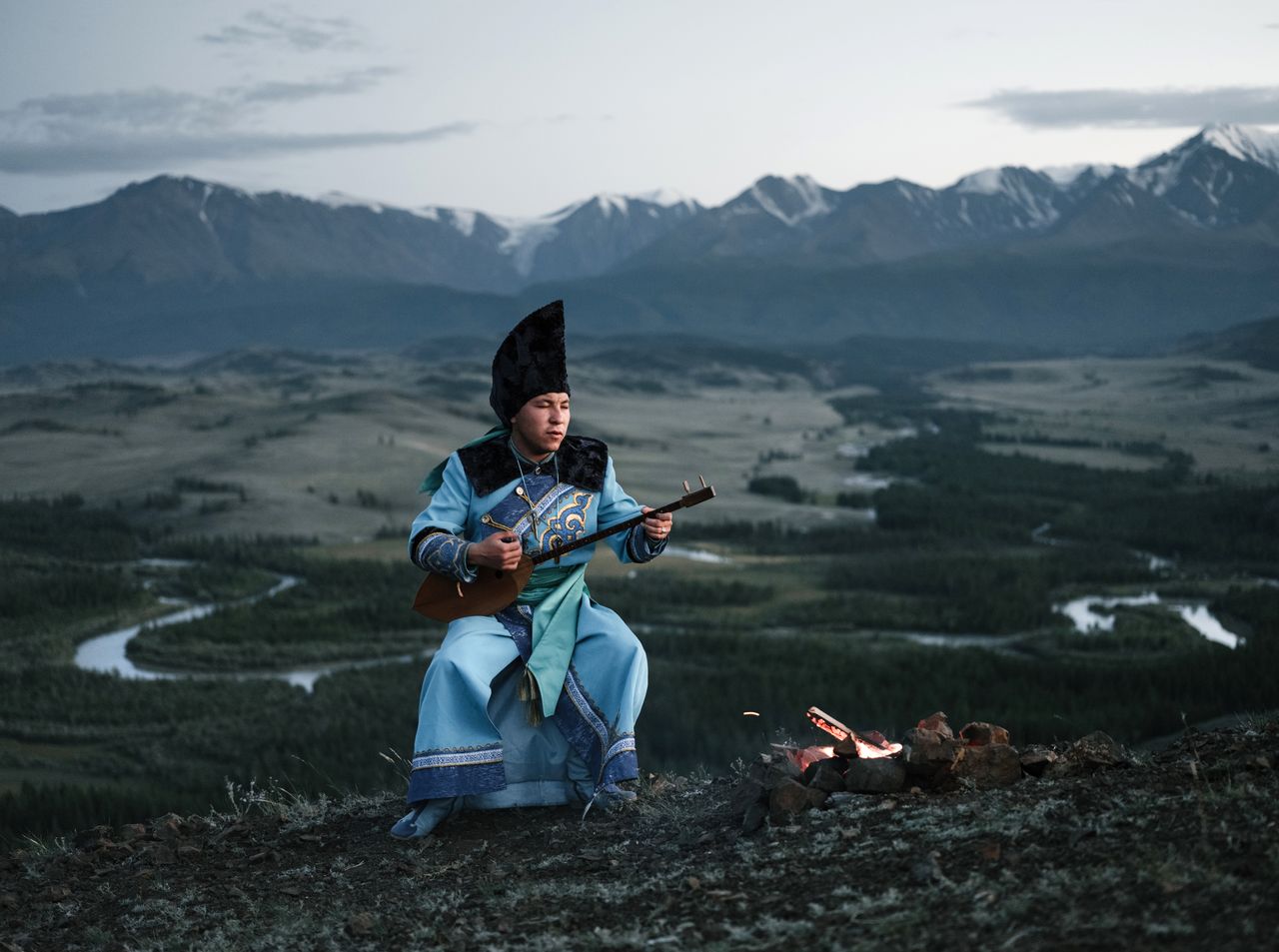
We have previously described on our site this reference of Mongolian music. Founded in 1989 to promote Mongolian musical arts and culture across the country and abroad, after more than 26 years of performances, it has become the must-see show for any tourist visiting Mongolia or anyone interested in culture and music. Its distinctive traditional style has captivated generations and continues to showcase Mongolia's unique instruments, long and short singing, acrobatics, and dances in colorful costumes. This ensemble has won numerous awards and performed in over 40 countries.
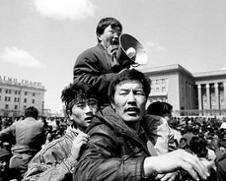 Sanjaasürengiin Zorig
In Mongolia's modern history emerges one icon—a statesman and revolutionary. Sanjaasürengiin Zorig was a leading figure in the 1990 revolution that transformed Mongolia into the multi-party republic we know today. Influenced by his father, Vice Minister of Education, and the history of his mother, daughter of a Russian geographer who was imprisoned during the Stalinist era in the 1930s, Zorig became politically engaged. Between 1989 and 1990, he emerged as a leader in the peaceful revolution that shifted the country from a communist system to a multi-party system. From June 1990 to 1996, Zorig served as Minister of Infrastructure. He was assassinated in early October 1998 in his apartment. Today, a statue honoring him stands in the heart of Ulaanbaatar, near Genghis Khan Square.
The New Generation…
Mongolian Athletes (Olympic Games) In the world of sport as well, Mongolia recently distinguished itself at the Beijing Olympics in 2008. With only 29 athletes (China had 639 for comparison!), Mongolia captured 4 of the finest medals across 7 different disciplines, including 2 Gold in Judo and Boxing, and 2 Silver in Boxing and 25-meter Target Shooting. These games proved most fruitful in Mongolia's history, making this nation one of the best-placed among the 87 participating nations at the 2008 games, ranking 16th by medal count relative to population (equivalent to 1 medal per 749,000 inhabitants). This competition propelled Mongolia toward recognition as a serious sports competitor.

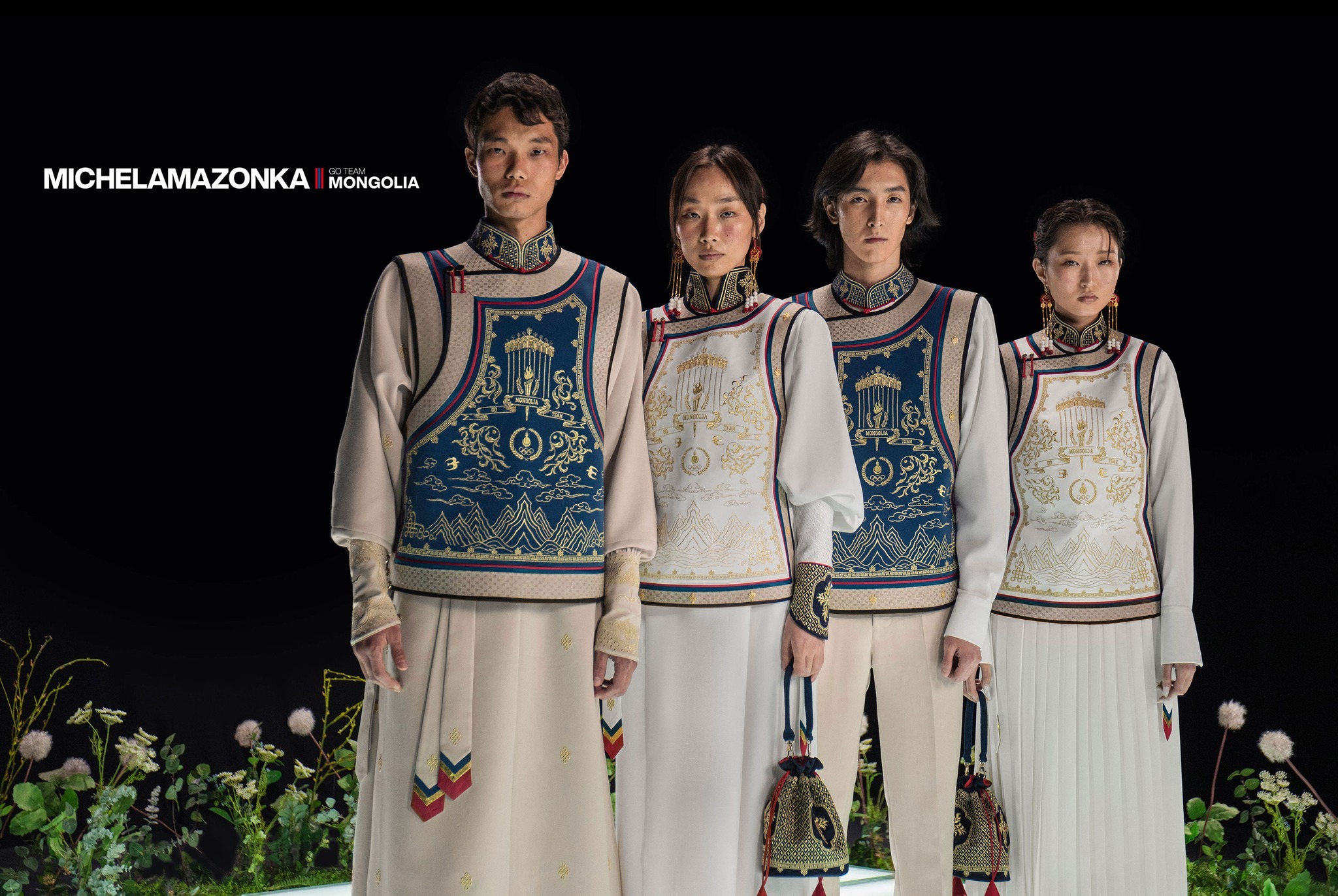
Katya Zol Fashion has not been untouched by Mongolia's influence. Consider Katya Zol, a young designer born in Mongolia. Her talent for blending traditional colors and motifs with contemporary Western styles allowed her to rise to prominence in the 2010s, first in Malaysia and gradually expanding internationally. She was chosen by the Mongolian Arts and Culture Council to represent her country in Kuala Lumpur in 2012, and gained fame through a Cosmopolitan Magazine feature, propelling her to the New York Fashion Week the following year. The Mongolian Government, through the Ministry of Economic Development and the Office of the President, turned its attention toward her. She represents aspects of modern Mongolian life, showcasing traditional styles and materials distinctive to Mongolia such as cashmere, making her recent prominence a new avenue for Mongolia's promotion.

Enkhbatyn Amartüvshin Most recently in the music world, young baritone Enkhbatyn Amartüvshin achieved the highest accolades this year, winning the award for best interpreter worldwide at the BBC Cardiff Competition, voted on by the public. Few Mongols are represented at the global level in this field, and this achievement further strengthens interest in Mongolia, its arts, and its culture.
Of course, other personalities have enriched Mongolia's past and culture, and this article could be even more extensive. Mongolia, a nation worthy of recognition, was the center of the world in the thirteenth century and will be once more in 2016, hosting the 11th ASEM Summit (Asia-Europe Dialogue) celebrating 20 years of exchange among nations, representing roughly 60% of the world's population!