Photography trip to Mongolia: where to go?
The "land of the blue sky" is an incredible country for taking amateur or professional photographs. Stunning landscapes, protected flora and fauna, ancient religious buildings: this Asian country situated between Russia and China offers countless photographic subjects!
28 Jan. 2023The "land of the blue sky" is an incredible country for taking amateur or professional photographs. Stunning landscapes, protected flora and fauna, ancient religious buildings: this Asian country situated between Russia and China offers countless photographic subjects! Wondering which itinerary to take for a photography trip to Mongolia? We show you where to go to capture stunning photos.
Khorgo-Terkhiin Tsagaan Nuur natural park: capturing the beauty of Mongolian landscapes
Located in Arkhangai province, the Khorgo-Terkhiin Tsagaan Nuur natural park is home to many natural treasures. During your excursion, you'll be able to photograph the splendid Terkhiin Tsagaan lake, at 2,060 meters altitude. Considered one of the most beautiful in the country, it was created by an eruption of the extinct Khorgo volcano, the other jewel of the park (standing at 2,240 meters altitude).
Our photography tips:
Recommended equipment: A wide-angle lens will allow you to highlight the relief of this vast volcanic and mountainous landscape. You'll also be able to play with perspectives and create original shots.
Customs and traditions: Local people regularly fish within the park. An ideal opportunity to capture beautiful portraits (with their permission).
Khentii province: photographing protected and listed sites
Burkhan Khaldun Mountain
Burkhan Khaldun Mountain is a very important site in Mongolia as it was declared sacred by Genghis Khan (the founder of the first unified Mongolian state). Listed by UNESCO for its "outstanding universal value," the great mountain is also renowned for the beauty of its coniferous forests, steppes, and wetlands. A tip? "The sacred mountain" is breathtaking at sunset!
Gün Galuut Nature Reserve
Classified as a protected area, Gün Galuut Reserve is ideal for photographing animals. Indeed, many birds and mammals live within its lands. You'll be able to capture Argali (wild sheep), Siberian white cranes, Himalayan vultures, and other bird species around Ikh-Gun lake.
The equestrian statue of Genghis Khan
Genghis Khan was born in Khentii province in 1216. An equestrian statue in his likeness, 40 meters high, testifies to this connection. Its particularity? It's not just a simple sculpture, but a museum where visitors enjoy a panoramic view when reaching the horse's head!
Baldan Bereeven Monastery
Located in Ömnödelger district, this Buddhist religious building founded in 1654 underwent numerous architectural changes throughout history. Thanks to renovations, the site today has about fifty temples and stupas... Perfect for taking beautiful souvenir photos of Khentii.
Our photography tips:
Customs and traditions: It is forbidden to photograph the interior of monasteries and temples (except in exchange for a small donation). Photos are permitted in museums, but only if you've paid a supplement when purchasing your entrance ticket.
Karakorum: shooting the legendary city of Genghis Khan
Founded in 1220, the legendary city of Genghis Khan (or Karakorum) is a place steeped in history. Indeed, although it was razed by Ming troops in 1380, it preserves many remnants of the past! On site? About a hundred white stupas (Buddhist structures) and splendid ancestral stone carvings promise beautiful shots.
This exceptional site is also located in a valley designated as a UNESCO World Heritage site. You'll discover the picturesque landscapes of Orkhon – crossed by the eponymous river.
Our photography tips:
Ideal time for your shots: The month of July allows you to photograph the valley as it becomes covered with thousands of wildflowers. From July 11 to 13, the Mongolian Revolution is celebrated throughout the country. Naadam is an opportunity to witness archery competitions, wrestling, and horse racing... and capture authentic and varied shots.
Recommended equipment: To capture the beauty of the landscape, bring an ND filter (it will prevent overexposure by reducing the amount of incoming light).
Khustain Nuruu National Park: photography journey in central Mongolia
Endowed with rich biodiversity, Töv province is located in central Mongolia. Among its must-visit sites? Khustain Nuruu National Park, home to over 200 Przewalski's horses. Equipped with exceptional fauna, you'll also be able to photograph numerous endemic species within the reserve, including gazelles and lynxes. Note that entry to the park is only permitted accompanied by a guide.
Our photography tips:
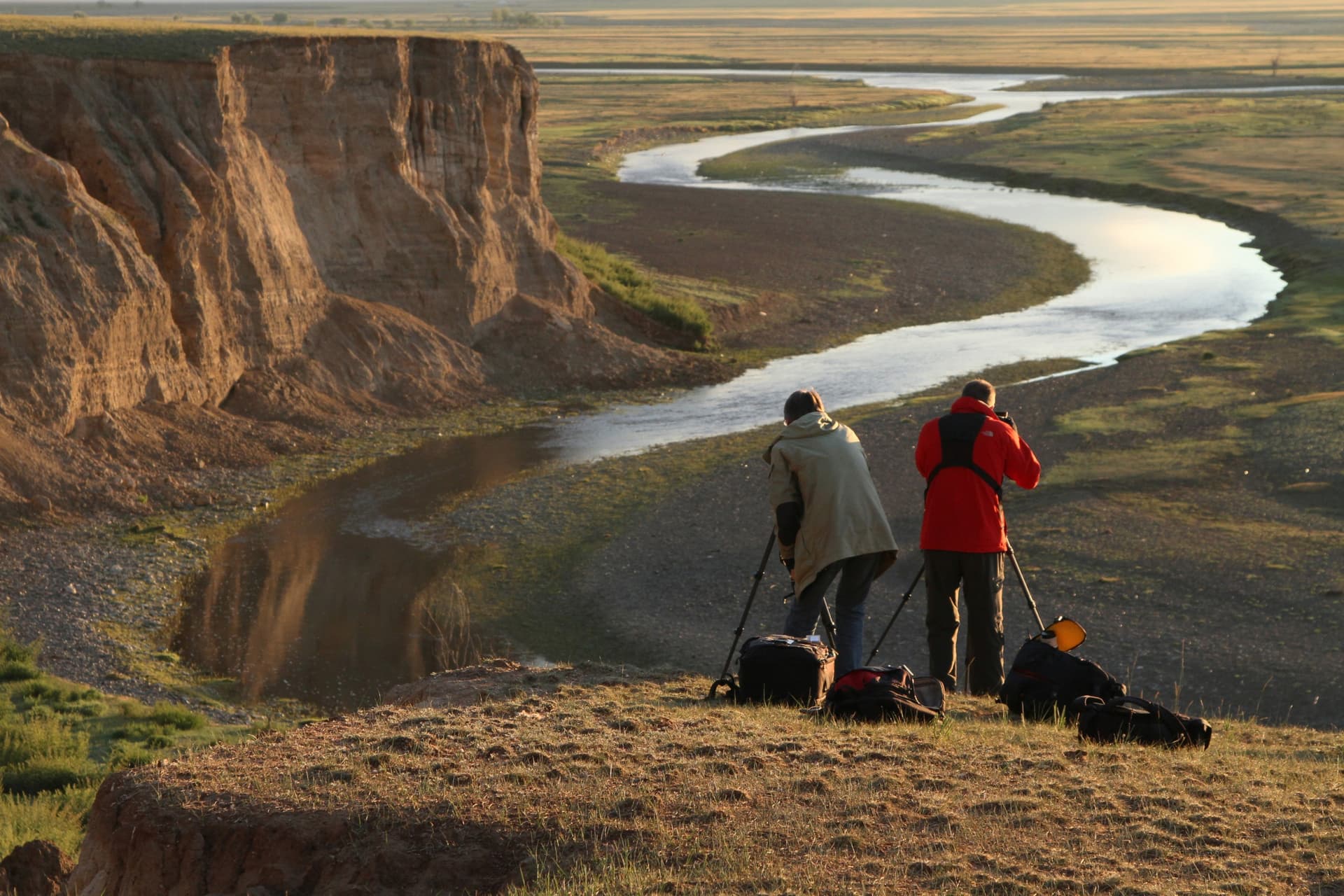
Ideal time for your shots: To observe the horses, position yourself along the riverbanks. Gathered around the water to drink, they offer a magical and wild moment worthy of a postcard.
Recommended equipment: In addition to great patience, equip yourself with a telephoto lens (which allows you to magnify distant subjects) and a body with fast continuous shooting speed (to freeze the action).
The city of Ulaanbaatar: capturing shots of the Mongolian capital
Gorkhi-Terelj National Park
70 km northeast of Ulaanbaatar lies Gorkhi-Terelj National Park. Beloved by climbers, its splendid rock walls are also a delight for photographers. Composed of rugged landscapes sculpted by erosion, Gorkhi-Terelj Park offers great creative freedom and guarantees superb shots of your Mongolia trip!
Gandantegchinlen Monastery
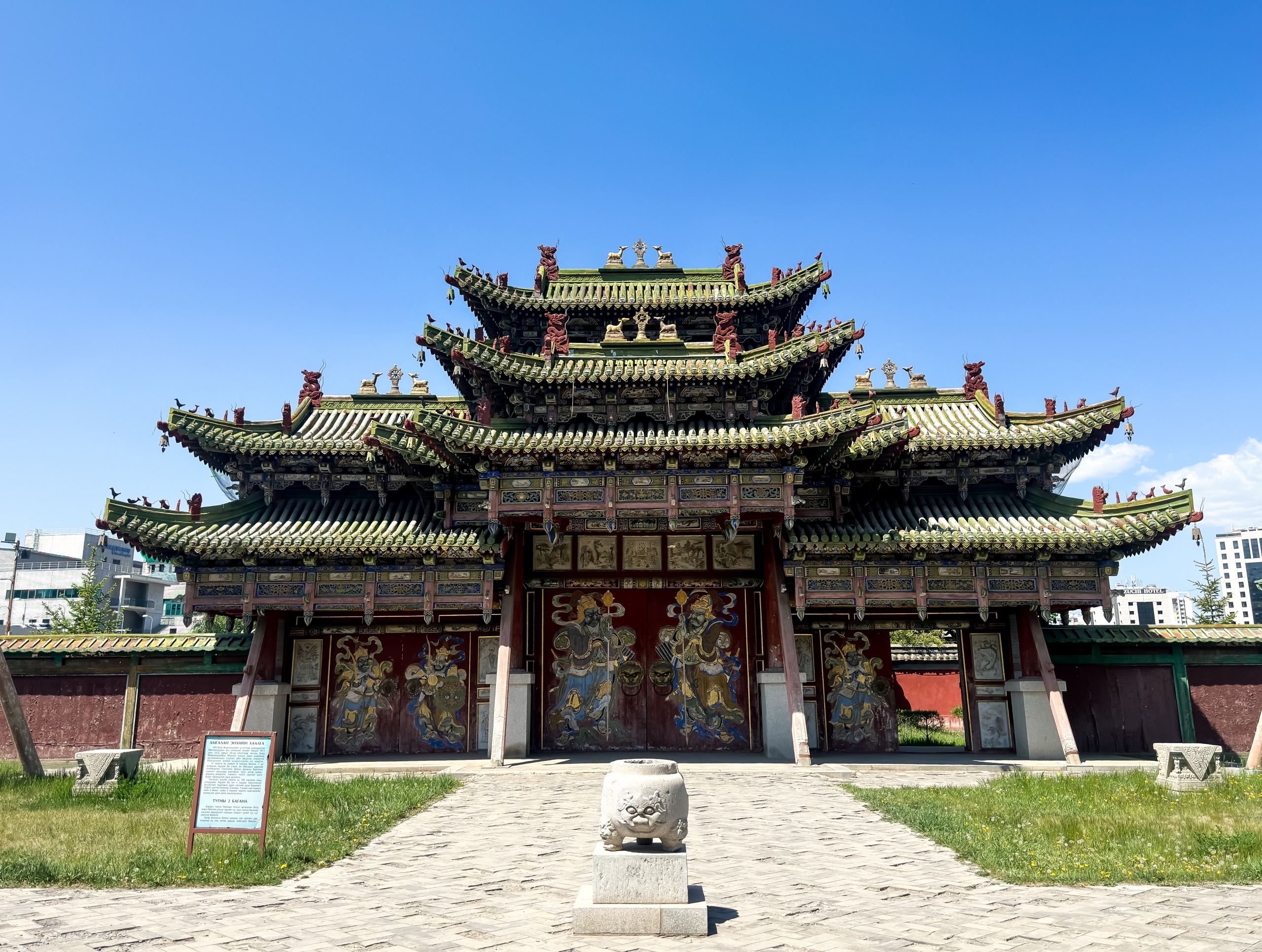
This Tibetan-style Buddhist monastery (founded in 1838) is one of the most important in Mongolia. Partially destroyed under communism and then restored in the 1990s, it now displays splendid colors.
Our photography tips:
Recommended equipment: Choose your focal length based on the perspectives and proportions you wish to achieve. Light has a direct influence on accentuating lines, so favor early morning and evening when the sun is lower and the light is softer.
Audrey Denjean
TourismAudrey DENJEANSEO web writer, Audrey Denjean places her writing at the service of English-speaking travelers. Through her blog articles, she explores what makes a country's soul – its iconic sites, its cuisine, its traditions, its history... Her goal? To convey much more than tourist information, but to describe an atmosphere, share anecdotes that make each country different and inspire, after each read, a desire to go out and explore the world.