Having Children with a Mongolian Woman
A man-woman relationship is never easy, you'll agree. Add a dose of cultural misunderstanding, and things get pleasantly spicy. Sprinkle wonderful children into the mix, and you'll face daily challenges to overcome.
A man-woman relationship is never easy, you'll agree. Add a dose of cultural misunderstanding, and things get pleasantly spicy. Sprinkle wonderful children into the mix, and you'll face daily challenges to overcome. As a young father of little Alexia Enkhriimaa, age 4, and little Anand, age 2, here are 10 challenges you'll need to embrace if you ever decide to start a family with a Mongolian woman!
Darling, I have stretch marks
Here's one point where Mongolian women share the same concerns as French women: stretch marks during pregnancy.
While Nustella, Clarins, or Biotherm have won the hearts of French women, her Mongolian counterpart will choose a completely different method, surprising, and with a smell I'd qualify as rather unpleasant. Instead of cream, she'll massage her body with sheep fat!
The first time your beloved lies down next to you covered in this hydrating balm (because yes, it does hydrate well!), you'll feel like the entire farm is in your bed. You ask her where this comes from, and there you have it. Of course, you offer to bring creams from abroad, to use olive oil, in short to find a solution so you don't have to watch the next 9 months of pregnancy transform into a permanent barbecue, but her mother and her friends tell her there's nothing better, and you carry very little weight against all these ladies.
My advice: Try to convince her, use the ladies in your family to discuss it with her, but remember one thing: if you manage to convince her and she opts for the European method, and stretch marks appear anyway, it will be YOUR fault for life... maybe 9 months isn't so long after all
Sweetheart, should we prepare the nursery?
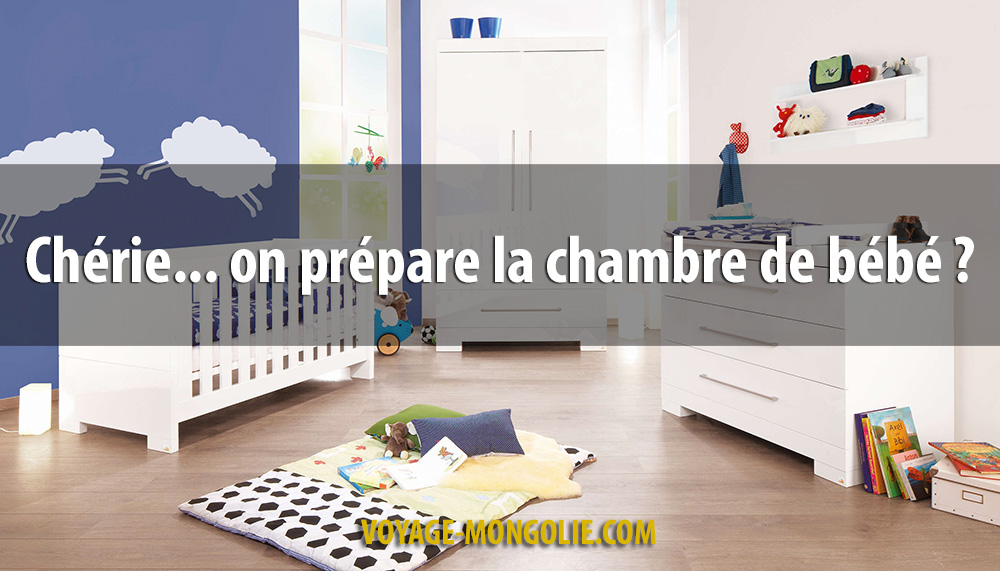
You thought that with the expectant mother six months pregnant, the nursery would already be ready, diapers bought, and the bag for the maternity ward packed. You were wrong, because in Mongolia, you don't buy anything before the baby is born. Why, you might ask?
It would be presuming the baby will live, and so according to the "speaking bench" principle we've already mentioned on the blog, risk attracting bad spirits to this baby and thus it won't survive. All baby clothes, crib, baby shampoo, etc. must be bought after birth. A lot of work ahead for dad in just a few days—do you want to fight it?
My advice: The expectant mother has gained 20 kg, has swollen legs and hot flashes, her hormones are troubling her, so don't add to it, especially since soon there will be many things you'll need to win on. So, go scout discreetly, and prepare yourself for a big shopping day while the young mother lovingly tends to her baby at the maternity ward.
So, what's his name?

Baby has finally arrived, you've been waiting for this for 9 months. Now you need to give him a name (well yes, because if you'd chosen a name for him beforehand, it would have been presuming he was going to live... you're starting to understand)
You dreamed of calling him Louise or Nathan, or giving him a beautiful Mongolian name like Enkhriimaa or Temujin, you'll have to assert yourself because Mongols don't choose names the way we do. Here are the 2 ways of choosing names I've had the opportunity to witness:
The whole family gathers when the baby comes home. There, each person will write a name on a piece of paper and everything will be placed in a hat for example. You saw me coming from miles away, and indeed, baby's name will be drawn at random!
No matter what the family thinks, your wife prefers to consult the lama, and based on numerology for the baby, it's he who will choose your child's name. This can be amusing, except that Mongolian names all have meaning, and lamas sometimes have a heavy hand. An example: Baasandalai, which literally means "An ocean of excrement".
My advice: Find a compromise, and since the baby is bicultural, why not give the child two names. When he's in primary school, he can choose the English name in an English-speaking country, and the Mongolian name in Mongolia. On the contrary, when he's a teenager, he'll choose the Mongolian name in an English-speaking country, and the English name in Mongolia.
Some names have meaning in both languages, like Michelle / Misheel (smile)
Dip baby in oil, dip baby in water—it'll make a baby all beautiful
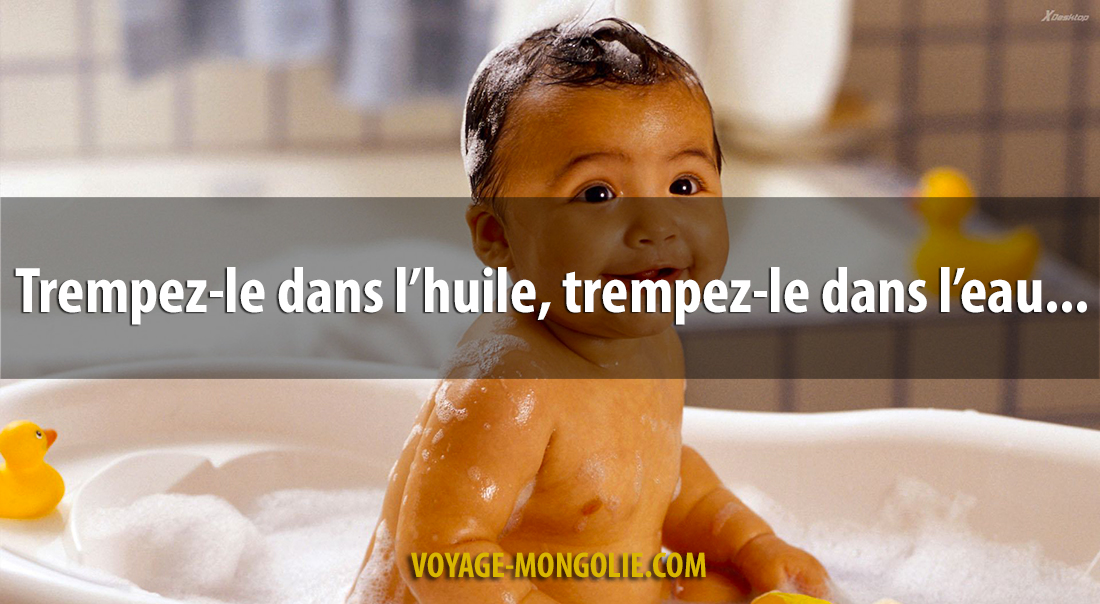
Mongolian mothers have many traditional ways of caring for baby, and you'll be surprised at every turn. Here's a small selection of things your baby is likely to be dipped into during his first few months of life.
In black tea: If baby has skin problems, or pimples, he'll be dipped in black tea
Sheep tail fat: Similarly, sheep tail fat is renowned for treating baby's skin ailments. It's also used to massage the belly in case of abdominal hernia
In airag (fermented mare's milk): Hmm, my personal favorite—Baby is dipped in airag in summer to protect him from the sun and help his tan.
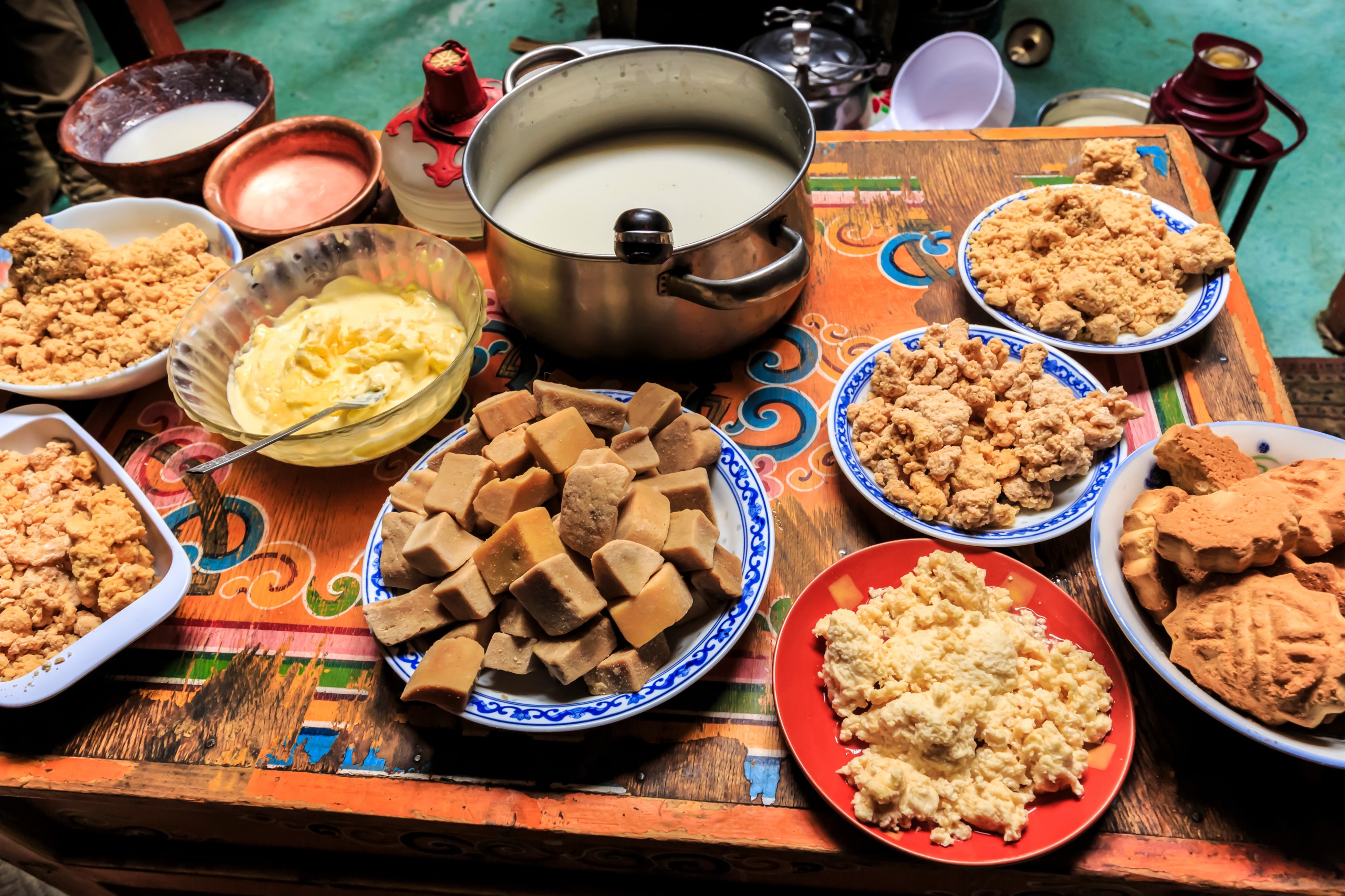
The residue from making artz (a kind of Mongolian yogurt)—Shar suu in Mongolian: This is the winter treatment to protect baby from the flu
My advice: If symptoms persist, consult your regular doctor
Mom is nursing
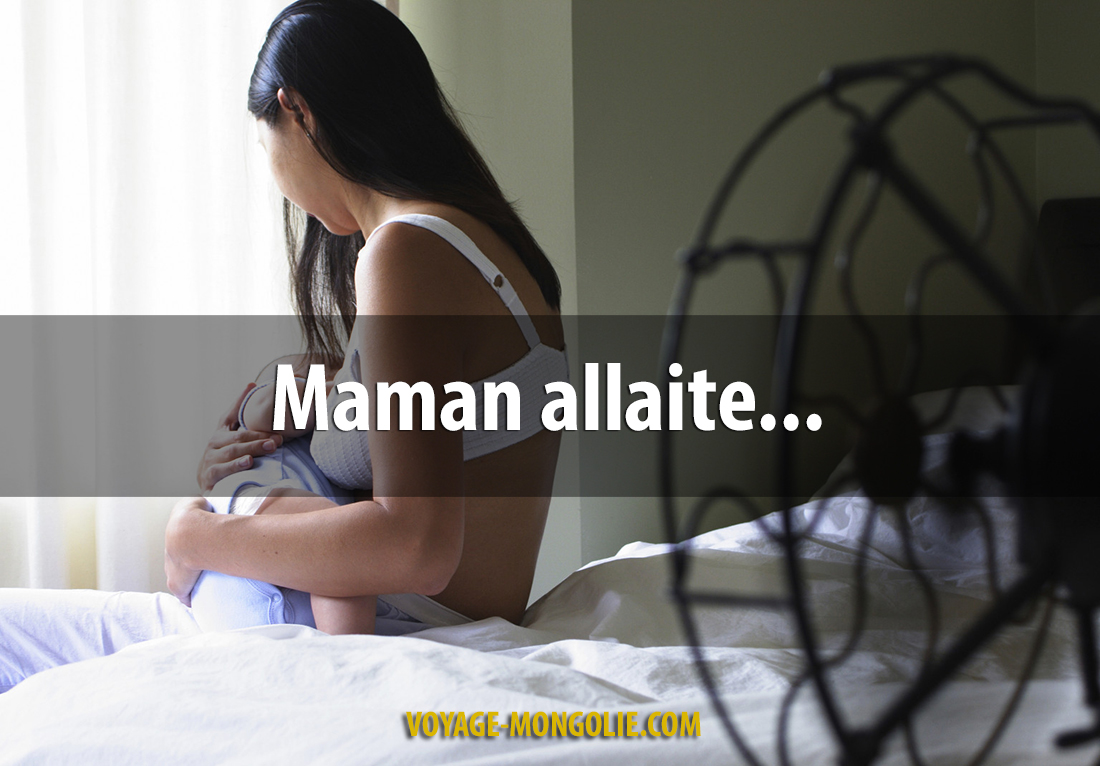
Nursing baby in Mongolia is a privilege that all Mongolian mothers are very proud of. Unlike our society where it's sometimes frowned upon for a mother to nurse in public (even though we're flooded with erotic advertising all day long, go figure), here there's no taboo, and that's very good. You'll be proud of your wife nourishing her child for long months... but while 6 months of nursing seems to be a small record in Western countries, here the period gets longer and longer. The baby is one year old, and you're thinking that formula would actually be nice, especially at night so baby gets a good and loooong sleep instead of waking you up several times to nurse. Time passes, and you revisit images of these Mongolian mothers nursing babies who haven't been babies for quite a while, these family meals where the youngest, almost 4 years old, will suckle his mother after his buuz (steamed meat dumplings).
My advice: Organize resistance after the first year, but above all don't be direct about it. Tell her you're proud of her, that she's done an amazing job as a mother, but that now it's time for her to take care of herself, and once nursing stops, she'll quickly regain her pre-pregnancy figure.
The legend of the brown rabbit—Bor khalzan tuulai
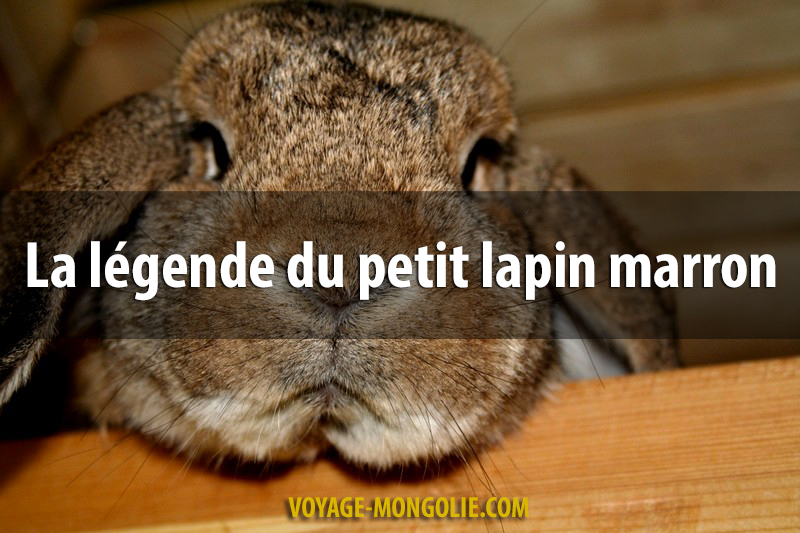
It's already dark outside, and you need to get home with baby. Bad spirits are awake at night, and you must protect baby from their presence. To do this, Mongols have a proven technique: they disguise their cherub as a little brown rabbit to fool the spirits! To do this, a vertical black line drawn on the forehead, between the two eyes, is enough (often with charcoal, but makeup works too). The spirits will mistake baby for a brown rabbit, and therefore won't come to scare him.
My advice: It's absolutely adorable, and apart from a little cleanup once you get home, this custom has no downsides. If it bothers you, it means you've really taken a wrong turn starting a family with a Mongolian woman.
A boiled sheep tail, a boiled sheep tail!
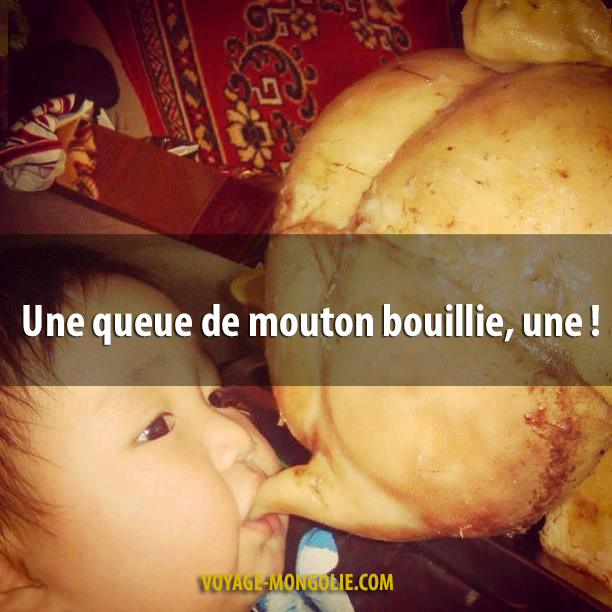
After a few months, the young mother will want to give your dear cherub a boiled sheep tail to suck on. Like a comforter, the baby will carry his tail everywhere around the house, and chew on it all day long.
The fat from the tail is reputed in Mongolia to be healthy with few bacteria; by chewing on it, baby will gain strength and fat. The fat also left on baby's skin will make it oily and thus nourish it. The downside is of course the very strong smell your charming child will have as soon as you come within 3 meters of him.
My advice: Having spent time around many children who were raised on sheep fat, this was the point where I was determined not to give in. My children smell like Mixa baby, it may be less exotic, but I can give them big hugs every day.
Bantan, more bantan
The time has finally come for food diversification, and to get baby used to other flavors. Loving cooking, your freshly imported European babycook has you ready. Let me feed baby! Carrot puree, eggplant soup, little steamed beans with a fish fillet, you have recipes for every age.
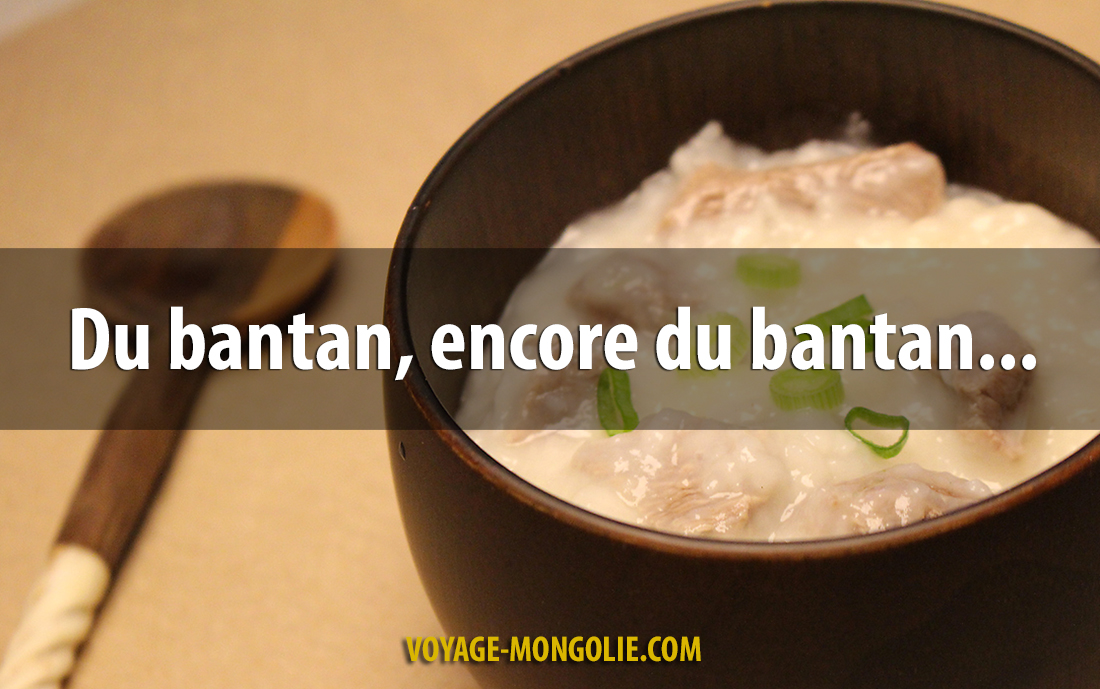
Yes, but here's the thing: in Mongolia, twice a day, baby gets the same meal: bantan! Bantan is a flour and meat soup (mutton/beef). It's very nutritious, certainly, but unfortunately it seems to me this diet has many nutritional deficiencies.
My advice: Your baby's health is at stake, you can't lose on this ground, even if mom tells you "In Mongolia we do it this way, and we're none the worse for it"... well, twice a week your soup, and the rest of the time it's dad cooking.
Don't touch my boy!
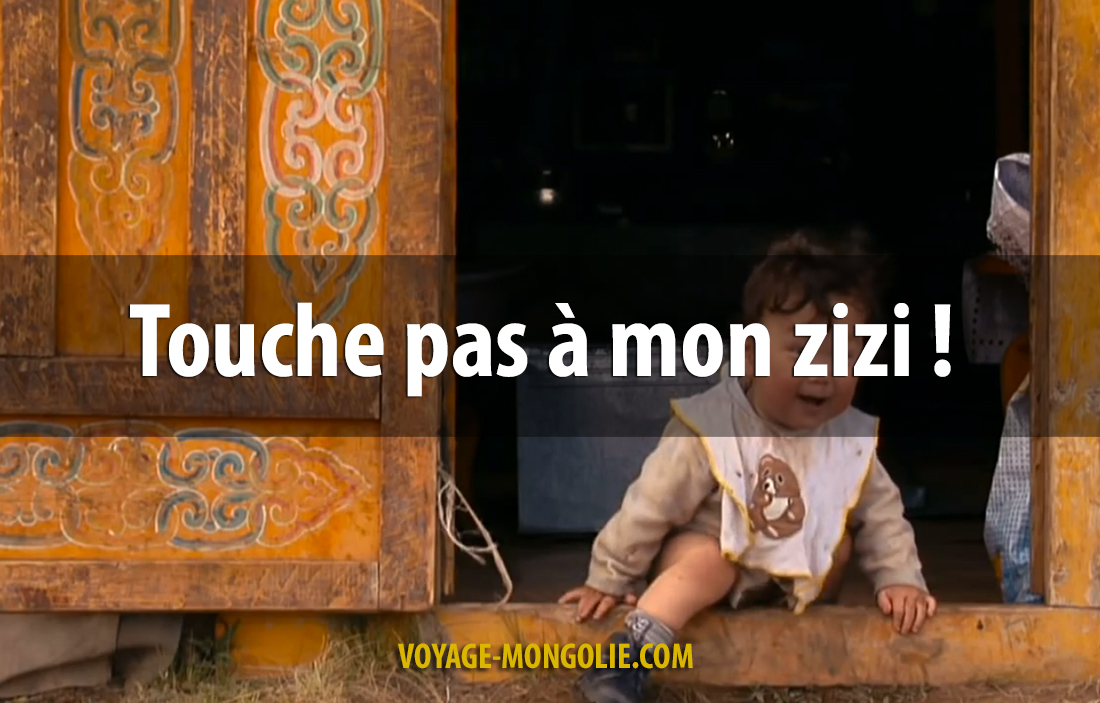
As in many other places, Mongols take great pride in having a son. I was indeed surprised when some taxi drivers came to congratulate me on the birth of my second child (a boy) by telling me you're now truly a father! Similarly, mother tells me since Anand was born that she's now done her job (whereas I felt 100% a dad from the birth of my beloved daughter!).
Anyway, boys get special treatment, and there's a custom that has always shocked me (which isn't so easy to do): adults touch the boy's genitals, bring their fingers to their nose, and pretend to sneeze.
The little boy, growing up and used to this custom, then comes to see strangers, sometimes at the table (in my case anyway), puts his hand in his underwear, touches his genitals, and kindly offers you his fingers to sniff.
My advice: You can make a concession for grandpa Mongol if he really can't help himself, but you must explain, through mom, that you don't want your child to consider his manhood as the holy grail: don't touch my boy!
The hair-cutting ceremony (Daakhi avakh yos)
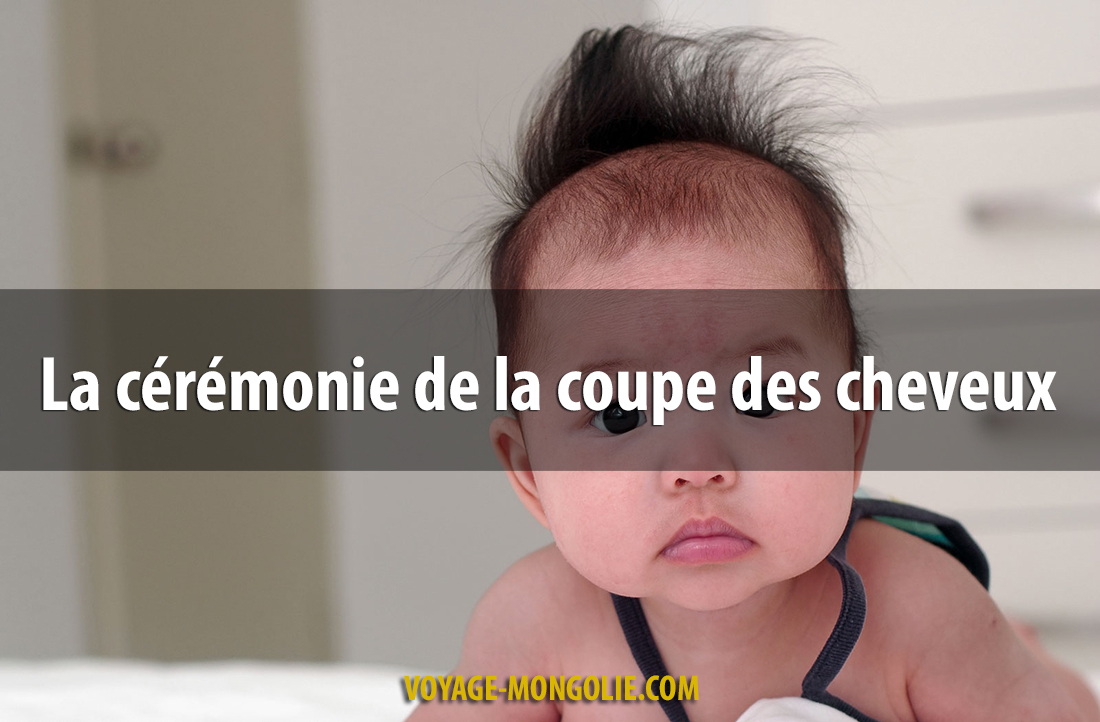
Your daughter is 2 or 4 years old, your son 3 or 5 years old, you'll need to go through the hair-cutting ceremony that all Mongolian children experience. This ceremony has almost the same importance as our baptism. All family members and friends are invited, and each will cut a lock of hair (baby's hair, since this is the first time it's being cut). After cutting a lock of hair, the guest will give money to the child. At the end of the ceremony, the child will be shaved.
This ceremony symbolizes the child's entry into adulthood, wishing that this happens without anger or stress, but with intelligence.
My advice: This is a ceremony of utmost importance, and by accepting a Mongolian woman, you've of course accepted her customs and traditions. Try to negotiate if you have a little girl that she won't be completely shaved after the ceremony, but gets a nice short haircut instead. Some Mongolian families do this, so why not you.
Well, I hope this article didn't scare you, but instead made you smile, and if you have the opportunity, whether with someone from Mongolia or from any other culture, I hope it inspires you to take the leap. It's not always easy, but you'll rarely be bored, and I remain convinced that for children, it's a great blessing to have this dual culture.
To end on a positive note about Mongolian education, I would say that I've always been pleasantly surprised by the great respect that children and young adults have for their parents. Children rarely go out before coming of age, and never, for example, will they drink alcohol in front of their parents. Respect—in any case, it's a very strong value in Mongolia that I very much hope my children will inherit.