Bayanzurkh Black Mountain
Bayanzurkh Black Mountain
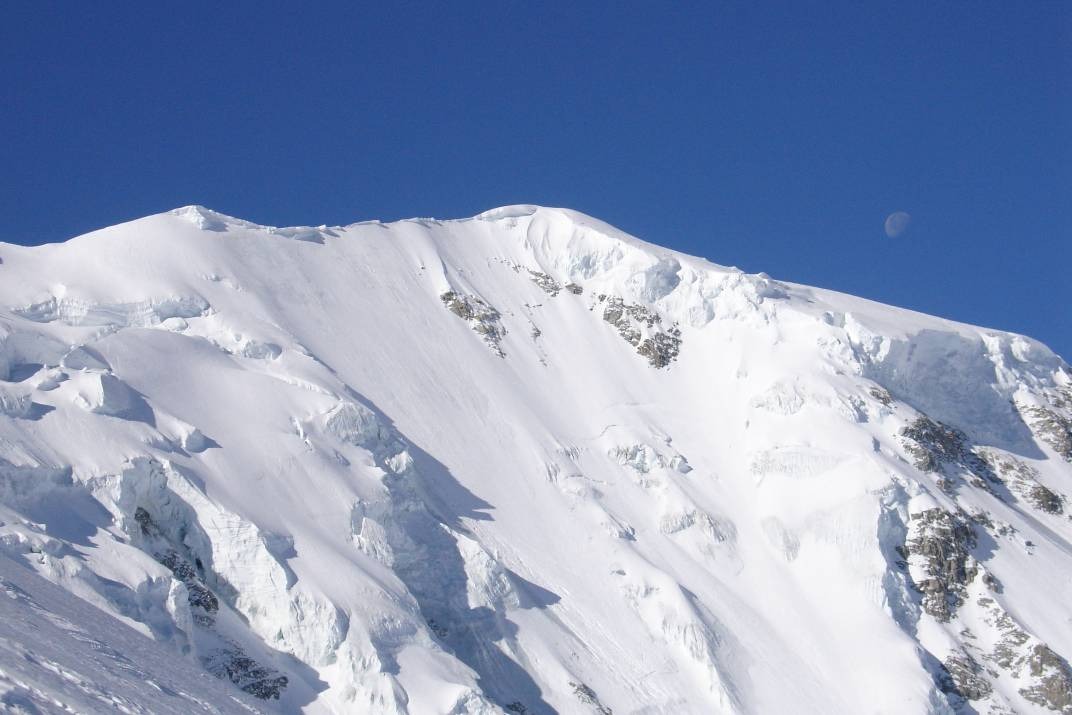
Located 27 km south of Sainshand, the black mountain Bayanzurkh, sanctified by the memory of Lama Jamiyandanzan, offers stupas, ovoos and sweeping views across the Gobi.
Bayanzurkh Black Mountain rises 27 km south of Sainshand, in Dornogobi Province. At an estimated altitude of around 1,031 metres, it is not among Mongolia's highest peaks, yet it holds a singular place in the spirituality of the Gobi: a burial site of a great lama, dotted with stupas and ovoos, it draws pilgrims and travellers seeking a cultural stop in the desert.
Why visit Bayanzurkh Mountain
Bayanzurkh combines three dimensions that make it a coherent stop on a circuit through Dornogobi. First, a spiritual dimension, rooted in the memory of Lama Jamiyandanzan, which makes it a venerated site among Mongols. Next, a panorama: a 360-degree view over the Sainshand region, its stretches of arid steppe and, on clear days, the line of the Trans-Siberian railway heading south towards China. Finally, a short and accessible climb, ideal as a complement to visits of the region's Buddhist sites.
History and religious significance
Locals once called it "the mountain of the tomb". The name refers to a specific fact: at its foot lies buried Jamiyandanzan, presented locally as one of the greatest lamas of the Gobi. His memory has remained vivid throughout the region: temples were also erected in his honour, and numerous stories passed down through generations tell that he still inhabits the mountain and continues to help Mongols who come to pay their respects.
From this foundation arose the sanctification of the place. Bayanzurkh is today a regular pilgrimage site: offerings are left here, worshippers circle the ritual cairns, prayers are spoken for travels, health or livestock. This spiritual dimension remains very much present, even for foreign visitors: the mountain is not visited as a mere viewpoint, but as a still-living sacred site.
What to see on site
Stupas and ovoos
Numerous stupas and ovoos are arranged around and on the mountain. The ovoos, these stone cairns crowned with branches and blue fabrics, mark points of ritual passage. Tradition dictates circling them three times clockwise, adding a stone each time. The stupas, more structured, recall the Buddhist anchoring of the place.
The panorama from the summit
From the heights, the view opens 360 degrees across the Sainshand region. On clear days, you can make out the town to the north, the tracks that cross the steppe and, as mentioned locally, the Trans-Siberian railway crossing this stretch of the Gobi towards the Chinese border.
The temples linked to Jamiyandanzan
Several religious buildings erected in memory of the lama complement the visit. They are not all grouped in the same place: a local guide is helpful in identifying them and understanding their role in the pilgrimage.
Practical information
- Duration of visit: allow 2 to 3 hours on site, including the climb.
- Difficulty: low to moderate; closed-toe shoes recommended, the terrain is rocky.
- Access: free, with no formal ticketing. A donation is sometimes requested by guardians of nearby temples.
- What to bring: water, hat, windbreaker. The Gobi is dry and exposed.
- Etiquette: do not move the stones of the ovoos, circle the stupas from the left, remain discreet during prayers.
When to visit Bayanzurkh
The Dornogobi region has an arid continental climate, with very cold and windy winters and hot summers. The most comfortable period runs from late May to early September. July and August offer the best lighting conditions for the panorama, but also the highest midday temperatures: favour early morning or late afternoon for the climb. Spring remains marked by sandstorms, and the shoulder seasons (May, September) offer a good compromise between visitor numbers and temperatures.
How to get there
Bayanzurkh is reached from Sainshand, capital of Dornogobi, accessible by train from Ulaanbaatar via the Trans-Siberian line (approximately one night's journey) or by road. From Sainshand, count 27 km south on track: a 4x4 vehicle with a local driver is the simplest solution, as signposting is limited. The visit fits naturally into a one to two-day loop including Khamariin Khiid Monastery and the Shambhala energy center, other major sites in the area.
What to see in the region
- Khambiin Khiid Monastery, a major spiritual site of the eastern Gobi.
- Gunj Temple, to further explore Mongolian Buddhist heritage.
- Gandantegchinlen Monastery in Ulaanbaatar, a classic starting point before heading to Dornogobi.
Plan your journey
Bayanzurkh naturally fits into an itinerary combining Ulaanbaatar, the eastern Gobi and the vast southern steppes. To build a coherent circuit around Sainshand and the spiritual sites of Dornogobi, explore our Mongolia travel programmes and adapt the stop to your pace.
Interested in this visit?
We can include it in your personalised itinerary.