Gunj Temple
Gunj Temple
A Buddhist sanctuary from 1740 dedicated to a Manchu princess, Gunj Temple lies hidden within Gorkhi-Terelj park, several days' horseback ride from Terelj.
The Gunjiin sum, literally "temple of the princess," sits at the heart of the Gorkhi-Terelj natural park, in the Baruunbuyan region, roughly 140 km northeast of Ulaanbaatar. Protected since 1961, this 18th-century Buddhist sanctuary is one of the rare Mongolian monasteries to have escaped Soviet destruction. Its state of partial ruin, remote isolation, and the legend surrounding it make it a singular waypoint for hikers and riders exploring the park.
Why visit Gunj Temple
Gunj Temple is not a monumental attraction: rather, it is a historical site in ruins, located far from any paved road. Its appeal rests on three rare elements:
- A cross-border love story between a Mongolian khan and a Manchu princess, at the origin of its founding.
- The exceptional status of a monastery spared from the religious purges of the 1930s.
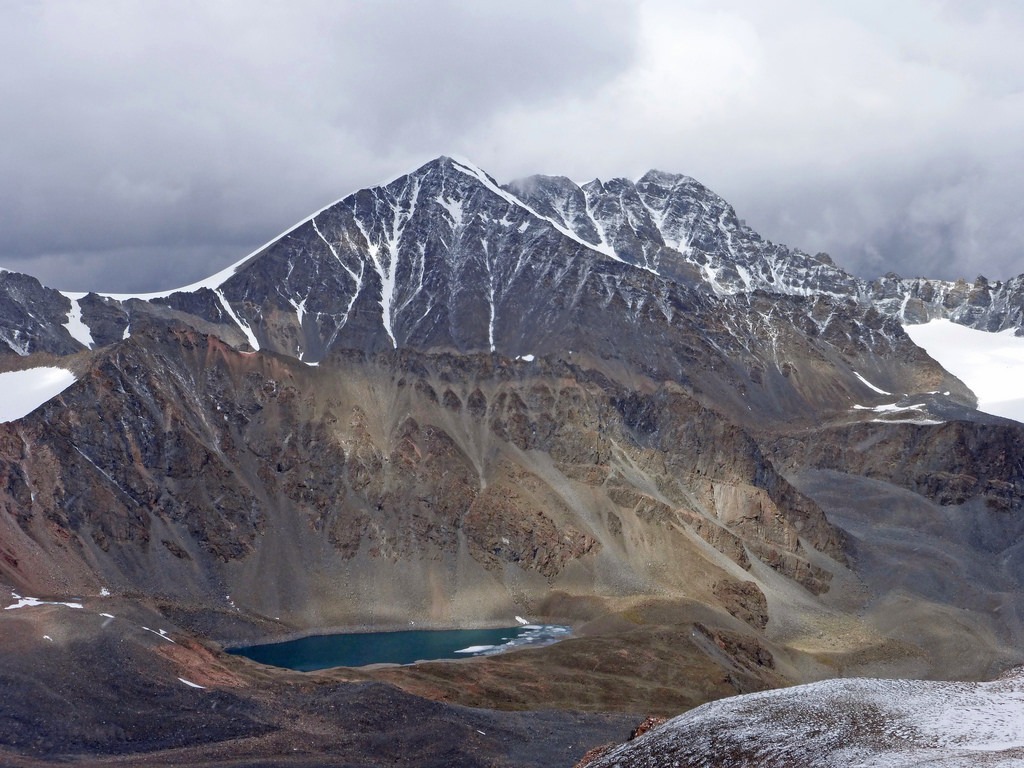
- A remarkable natural setting, in a remote valley of Gorkhi-Terelj park, accessible only by horseback or on foot.
A visit naturally fits into a multi-day itinerary, where the journey matters as much as the destination.
History of the temple
The temple's origins trace back to a political and romantic union between two worlds. At the turn of the 18th century, Mongolian khan Dondovdorj marries a Manchu princess, at a time when the Qing dynasty holds dominion over Outer Mongolia. According to local tradition, the princess dies by assassination. To honour her memory, Dondovdorj commissioned the construction of a temple and a marble funerary monument in 1740. The sanctuary was entrusted to a monastic community: Mongolian sources speak of 200 monks being sent to ensure religious services.
The site flourished for nearly two centuries and attracted a growing number of pilgrims. Unlike most Mongolian monasteries, which were razed during Soviet anti-religious persecutions in the 1930s, Gunj Temple was not deliberately destroyed. Its gradual ruin resulted from neglect, time, and vandalism. Today, the main temple and a few wall sections of the monastic complex remain, all in poor condition.
What remains to see on site
The site can be explored in under an hour, yet each element warrants attention:
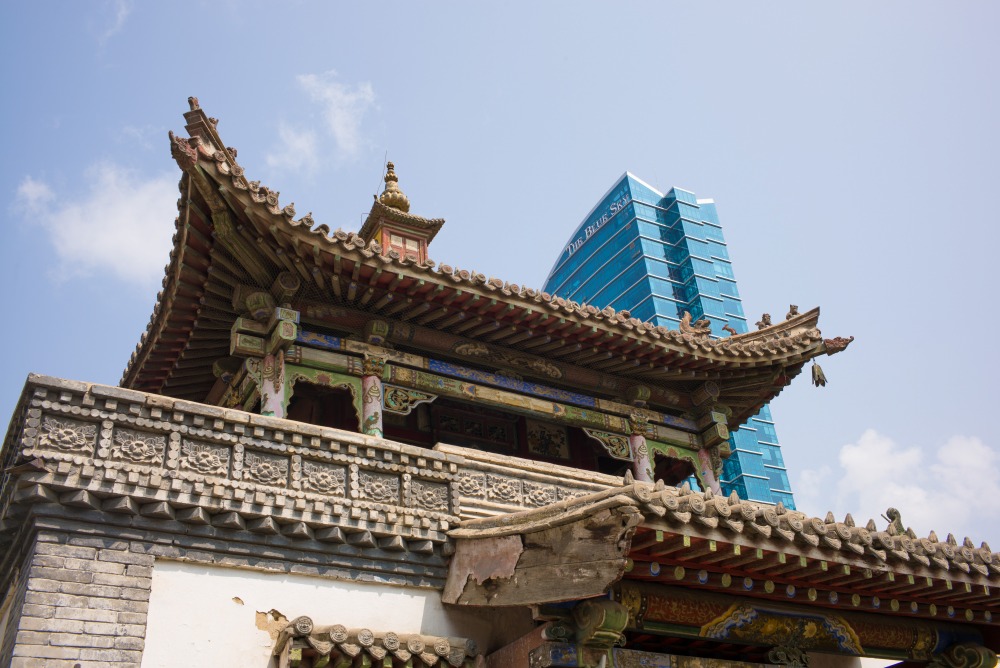
- The main temple: a still-standing structure whose architecture blends Sino-Manchu and Mongolian influences—a rare occurrence in Mongolia.
- Monastic ruins: foundations and collapsed walls, which give an idea of the original footprint of the complex.
- The marble funerary monument dedicated to the princess, of which a few fragments remain.
- The entrance to an underground passage: according to oral tradition, the passage was once equipped with a defensive system triggered by opening the door, which would release arrows at the intruder. This legend, often repeated by local guides, illustrates the secondary defensive function of the sanctuary.
How to get there
Gunj Monastery sits roughly 30 km as the crow flies north of Terelj village. No direct road leads to the site: you must be accompanied by an English-speaking local guide, who also handles logistics (horses, supplies, camp).
Two routes are possible:
- Through the northern mountains: shorter route but more physically demanding, with high-altitude passages.
- Through the Baruunbayan river valley: longer, but easier and more accessible.
Plan for approximately one day on horseback to reach the site (two days round trip) or two days on foot, making the trek four days round trip. Camping is standard practice, either in a herder's ger or under tent.
Practical information
- Recommended season: June through early September. Outside this window, snow and frost make access very difficult.
- Required fitness level: good physical condition for hiking or minimal horse-riding experience for the mounted version.
- Equipment: warm clothing (nights are cool even in summer), sleeping bag, water, full provisions.
- Guidance: an English-speaking guide is essential, to be arranged from Ulaanbaatar or directly with a ger camp in the park.
- Site respect: as the temple is in ruin and fragile, do not climb structures or displace stones.
More to discover in the region
Gunj Temple integrates well into a broader stay around Gorkhi-Terelj park and northern Mongolia:
- The Khagiin Khar Lake, another remote site accessible by horseback trek from Terelj.
- The Khambiin Khiid Monastery, for comparison with a restored and active monastic site.
- The Binder Monastery, located further east in Khentii country.
- The Gandantegchinlen Monastery in Ulaanbaatar, the country's principal Buddhist centre, to visit before or after the expedition.
Planning your trip
Gunj Temple is among those Mongolian sites that must be earned: a singular historical narrative, pristine natural surroundings, and demanding logistics. To incorporate this stop into a complete itinerary across the country, explore our Mongolia travel suggestions.
Interested in this visit?
We can include it in your personalised itinerary.