The Mongolian Camel, at the Heart of Culture and Conservation Efforts
Preferred to the horse for its strength and endurance, the camel has always accompanied Mongolian nomads across steppes and desert. While few wild camels remain today, they are the subject of significant conservation efforts.
Preferred to the horse for its strength and endurance, the camel has always accompanied Mongolian nomads across steppes and desert. While few wild camels remain today, they are the subject of significant conservation efforts. With the development of tourism and the urbanization of the territory, the camel has become for many Mongolians a way to reaffirm the unique identity of Mongolia's culture and landscapes.
A resilient animal
The camel is the quintessential desert animal, but not only. In Mongolia as in other countries, it was favored as a companion and aid during long journeys for centuries due to its unparalleled strength and endurance. For the Mongolian camel, known as the Bactrian camel, is capable of surviving in extreme conditions. In the Gobi Desert, amid snow, the camel can withstand freezing temperatures as low as -50°C.
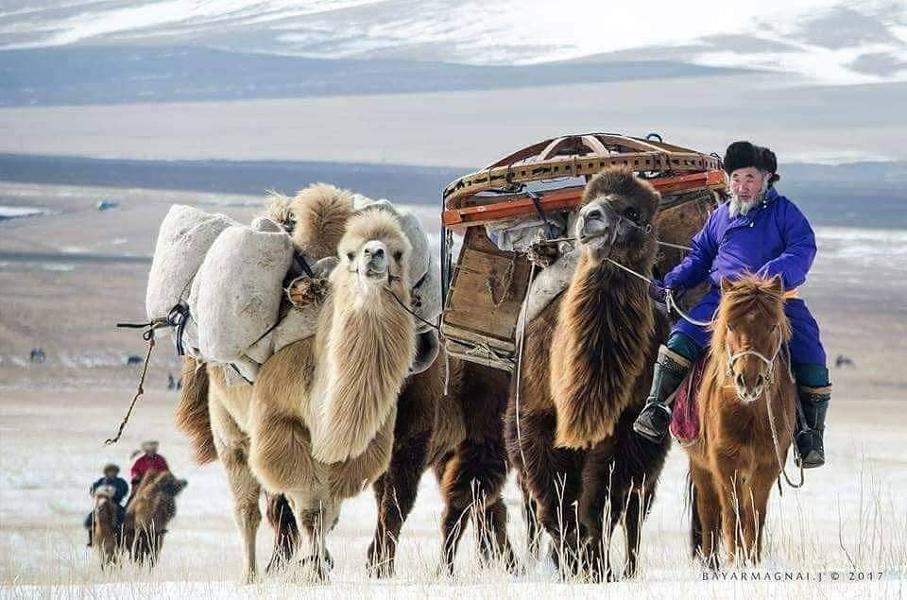
The two-humped Mongolian camel can travel nearly 50km per day while carrying loads of up to 250kg, allowing nomadic herders to easily transport their yurts and possessions from one plain to another. It is also valued for its wool, which is extremely warm and often lifesaving.
An endangered species
Unfortunately, the camel population in Mongolia has declined sharply, particularly due to changes in habitat and the lifestyles of Mongols. Numbering 549,000 in 1985, they had dwindled to approximately 200,000 by 2007. Since then, numerous conservation efforts have been undertaken in Mongolia – through the promotion of the camel as a symbol of nomadic culture, the intensification of herding, and the development of tourism and camel-related activities – and the results are promising, with the camel population having doubled in ten years.
Overall, two-humped camels represent only 6% of the species, all others being dromedaries. But in the Gobi Desert, there remain even a few wild camels, around 800, which have never been domesticated. These are classified as critically endangered species. It was the great Russian explorer Nikolai Przhevalsky who is believed to have discovered them first during an expedition in the Gobi Desert.
The camel in modern Mongolia
Even as the camel gradually loses its place alongside herders, often replaced by vehicles, it remains a defining element of Mongolian culture and identity today. Films, books, and festivals are organized in honor of the animal. The most well-known is surely the annual festival of 1000 camels held each winter, which features traditional games such as camel racing and camel polo. Travelers can also ride camels to cross the Gobi Desert and experience Mongolian life to the fullest.
To give the camel its rightful place back, Baigalmaa Norjmaa undertook an impressive adventure in 2017: to reach the United Kingdom by camel from Ulaanbaatar. Through this journey, she aims to promote Mongolian culture and call for the preservation of the camel, this incredibly resilient animal that is so important to humankind.
Marion Biremon