Traveling to Mongolia as a Vegetarian
Vegetarians, before embarking on a journey across the vast steppes of Mongolia, are often, and rightfully so, concerned about what they will find on their plate during their trip.
Vegetarians, before embarking on a journey across the vast steppes of Mongolia, are often, and rightfully so, concerned about what they will find on their plate during their trip. Here, then, is our little survival guide to enjoying a pleasant and worry-free journey as a vegetarian in Mongolia.
It is common knowledge that Mongols are great lovers of meat—you see it in the lamb and goat that feature in every traditional dish. Not a single meal without meat for our Mongolian friends, who believe vegetables are better suited to feeding their livestock, while humans should sustain themselves on meat!
So what do you do when the mere thought of eating meat upsets your stomach? Don't panic—while you unfortunately won't be able to share the same meal as the Mongols, it is nonetheless possible to maintain a vegetarian diet throughout your journey in Mongolia.
Being Vegetarian in Ulan Bator
Let's start with what's easiest: eating vegetarian in the capital. Something unimaginable a decade ago, numerous vegetarian restaurants have opened and are enjoying real success with young Mongolians seeking a new way of life. There are more than 30 establishments serving exclusively vegetarian dishes, notably those from the Loving Hut chain, which has opened 25 locations across the country, including 15 in the capital. Another popular restaurant is Luna Blanca, which has adapted certain traditional dishes to vegetarian style, where you can taste delicious soy-based Khuushuur. We should also mention the Vegan Lounge, quite popular as well. Beyond these exclusively vegetarian restaurants, you can naturally enjoy meat-free dishes at most of the capital's restaurants.
Being Vegetarian in the Steppes
Of course, once you leave the capital, the situation becomes somewhat more challenging.
The traditional culture of nomads is based on livestock herding, and it is this pastoral way of life that enabled Mongols to survive through the centuries. Indeed, the country's climatic conditions made agriculture virtually impossible to develop. Meat and dairy products have therefore traditionally formed the basis of the Mongolian diet. The older generation still believes that a meal should be as calorie and protein-rich as possible to withstand the cold, dry, and windy climate found in the steppes, and that meat and animal products are best suited to their living conditions.
With meat being suited to and readily available in the steppes, an entire dietary system developed around it.
During your travels, you will stay in three types of places, and depending on this, you will have different possibilities for dining.
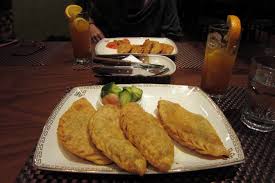
Vegetarian khuushuur
Ger camps certainly offer the simplest option for vegetarians. These steppes hotels all have a restaurant where you can order a meat-free meal. The travel agency through which you book will have informed the camp, should you have mentioned it, that you are vegetarian, and the camp will have prepared meals accordingly for you. It is worth noting that near Tsetserleg, a 100% vegetarian ger camp has opened. This is the Maidar San camp. In fact, all our groups dining in the Tsetserleg region will discover this camp starting this summer, as it is where we will have lunch, for a very healthy meal!
Eating with Nomads as a Vegetarian
During your journey in Mongolia, you will likely stay one or more days with a nomadic herding family, and very often it is the family who prepares your meal. If you are traveling with a guide, they will explain to the family that you don't eat meat or dairy products. The family will be surprised, but will accommodate you, and can prepare a meat-free meal for you. On the menu: fried rice with vegetables, fried dumplings (Khuushuur) with mashed potatoes. Variety won't be abundant, and you may need to choose to prepare your own meal. If you are traveling with an agency, it will likely have arranged a meal suited to your diet that your guide will prepare. If you are traveling independently, you should plan to bring your own food supplies.
Finally, you may end up camping. If you are alone, you will likely have brought necessary provisions according to your preferences. With organized tours, the agency will take care of your meals. It will normally have provisioned according to your requests. Very often tours are accompanied by a chef who will skillfully adapt to your dietary requirements.
The Horseback Mongolia agency has its own kitchens in Ulan Bator, where three chefs work preparing portions of meals. While we cook varied meat and vegetable dishes for all our tours to provide dietary variety for our clients during trips, we also prepare 100% vegetarian dishes, or gluten-free options, for example. All dishes are vacuum-sealed and frozen. However, the dishes can only be consumed during the first week of travel; for longer circuits, we restock when possible, or you will need to adapt to less varied meals, based on starches (pasta, rice) and canned goods (green beans, peas).
In conclusion, even though Mongolia is not a vegetarian country, it remains a destination where vegetarians can now travel without too much worry. However, the longer your circuit and the more remote the regions you visit, the more you will need to make concessions regarding the variety and refinement of your meals. The most difficult circuits to organize for vegetarians are long treks in autonomous, remote regions with no resupply options. Choosing a good agency experienced in arranging vegetarian meals will make your journey more pleasant. In this respect, Horseback Mongolia is the only agency in the country with its own kitchens and the ability to prepare elaborate vegetarian meals preserved under vacuum.
Safe travels!