Zaisan Hill
Zaisan Hill
South of Ulan Bator, Zaisan Hill is home to a Soviet memorial from 1971 and offers sweeping views over Mongolia's capital and the Tuul River.
South of Ulan Bator, Zaisan Hill welcomes a Soviet memorial erected in 1971 for the 50th anniversary of Mongolia's 1921 revolution. The site pays tribute to Soviet soldiers who fell during World War II and offers, from its summit, an unobstructed view of the capital and the Tuul River.
Why visit Zaisan Hill
Zaisan combines three interests in one place: a rare testament to Soviet iconography still intact in Central Asia, a panoramic vantage point over Ulan Bator, and a visual shortcut to Mongolia's 20th-century history. The circular mural that encircles the memorial is itself a pictorial account of the political and military ties between Mongolia and the USSR.
The site remains frequented by locals, notably newlyweds who come to lay flowers, making it a social gathering place far removed from mere memorial tourism.
History of the memorial
The memorial was built in 1971 on the occasion of the 50th anniversary of the Mongolian Revolution, in honour of Soviet soldiers killed during World War II. Its construction reflected the close alliance that united the Mongolian People's Republic with the Soviet Union, then the country's principal political, military and economic partner.
At the top of a concrete column stand side by side the hammer and sickle emblem and the soyombo, Mongolia's national emblem. This graphic association sums up the spirit of the monument: to celebrate a brotherhood in arms and a shared destiny, at least as it was presented at the time.
In 2003, the Tank Memorial, previously located between the city centre and Zaisan, was relocated to the foot of the hill to form a coherent ensemble with the main memorial.
What to see on site
The circular mural
A reinforced concrete mural runs across a large circular panel around the soldier statue. It illustrates the friendship between Soviet and Mongolian peoples through several historical scenes:
- Mongolia's declaration of independence in 1921, with Russian support;
- the defeat of the Japanese Kwantung Army at the Battle of Khalkhin Gol in 1939;
- victory over Nazi Germany in 1945;
- Soviet space exploration, a symbol of the USSR's technological power.
Taking time to walk around it in full allows you to grasp the narrative coherence intended by the commissioners.
The Tank Memorial
At the foot of the hill, the Tank Memorial features a Soviet tank financed by the Mongolian people during the war. A map traces its journey from its departure from Moscow in 1943 to its participation in the fall of Berlin in 1945. It is a concrete reminder of the war effort to which Mongolia contributed financially and materially.
The panorama over Ulan Bator
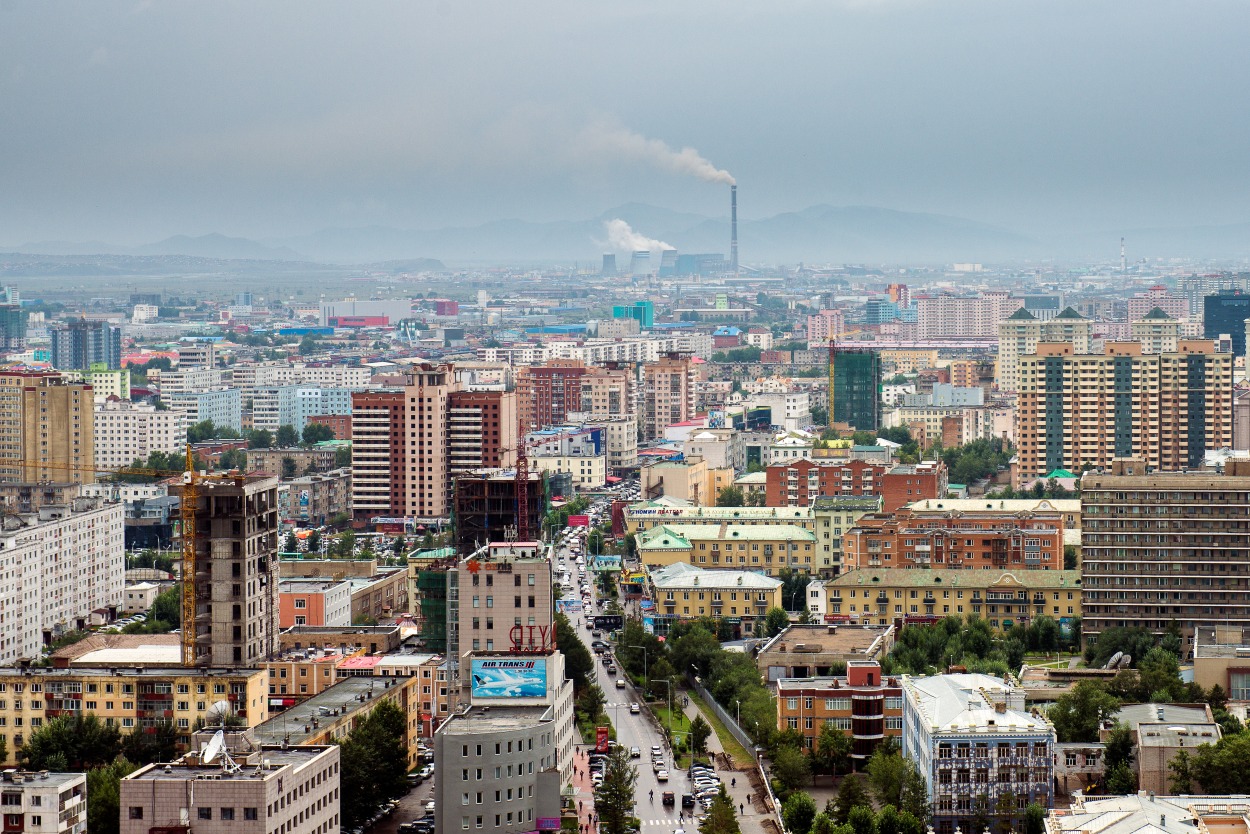
From the summit, the view encompasses Ulan Bator's conurbation, the Tuul River and surrounding hills. On clear days, you can clearly see the urban fabric between Soviet apartment blocks, recent skyscrapers and ger zones on the periphery.
Practical information
- Access: the hill is located south of the city, accessible by taxi in 15 to 20 minutes from the centre. Parking is available halfway up.
- Ascent: approximately 300 steps separate the car park from the summit. Allow a few minutes of effort depending on your pace; benches are available for rest.
- Admission: access to the site is free.
- Duration of visit: 45 minutes to 1.5 hours are sufficient to tour the memorial, read the mural and enjoy the panorama.
- Equipment: comfortable shoes, water, and a windbreaker: the summit is exposed.
When to visit
Since the visit is entirely outdoors, seasonality is a major factor. From late May to early September, conditions are most pleasant, with mild temperatures and often clear skies. In winter, Ulan Bator regularly drops below -25°C, making the climb difficult and the panorama often obscured by air pollution.
For the best panorama, choose late afternoon: low-angle light highlights the mural and the distant city. Avoid midday hours in summer if you're concerned about the sun, as the site offers little shade.
Nearby
A visit to Zaisan combines easily with other sites in the capital and its surroundings:
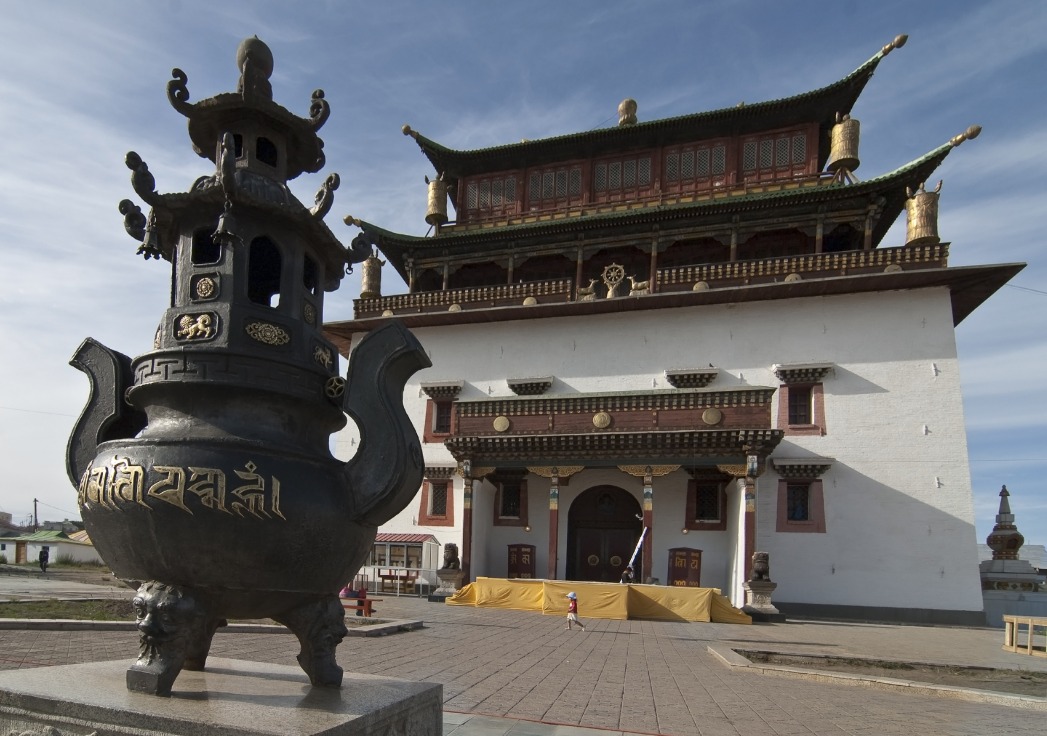
- Gandantegchinlen Monastery, the capital's main Buddhist centre;
- Gunj Temple, more discreet, in the north of the city;
- Khambiin Khiid Monastery, to extend your discovery of Mongolian Buddhism;
- Khagiin Khar Lake, a nature stop in Khan Khentii National Park, to include in a longer itinerary.
Plan your trip
Zaisan Hill fits naturally into an urban stopover in Ulan Bator, at the beginning or end of your circuit. To build a complete itinerary across Mongolia, consult our trips to Mongolia and adjust the time spent in the capital according to your interests.
Nearby
Interested in this visit?
We can include it in your personalised itinerary.