Choijin Lama Museum
Choijin Lama Museum
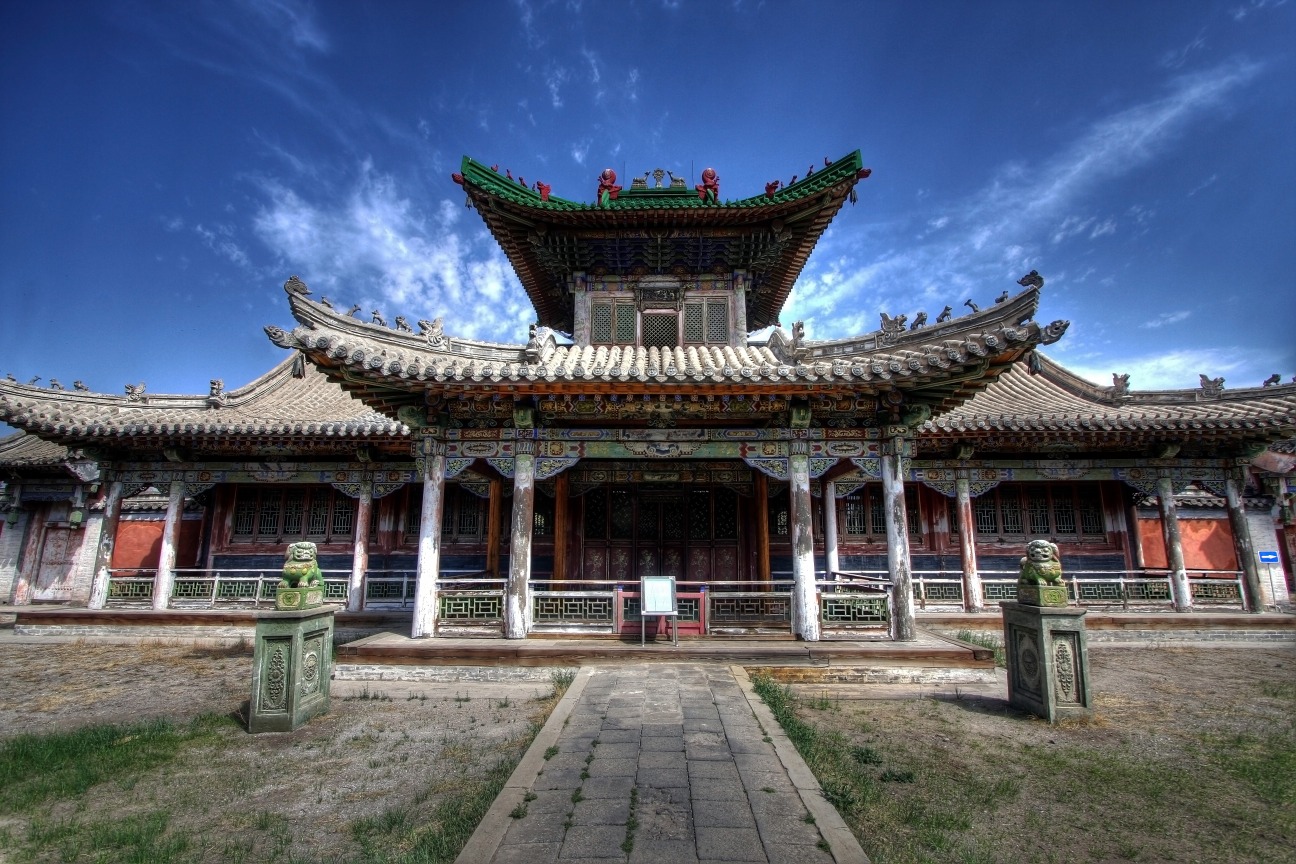
Five temples built between 1904 and 1908 in the heart of Ulaanbaatar, dedicated to the state oracle and brother of the 8th Bogd Khan, preserving Tsam masks and works by Zanabazar.
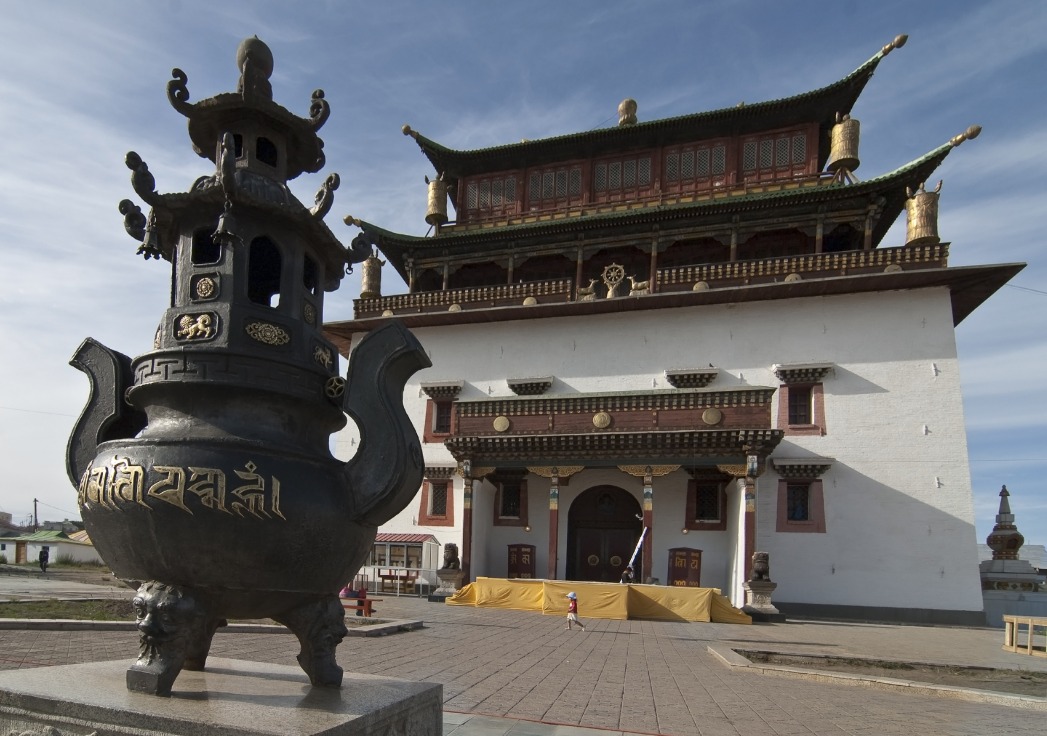
The Choijin Lama Museum, also known as the Museum of Religion, occupies a complex of five temples built between 1904 and 1908 in downtown Ulaanbaatar. Dedicated to Choijin Lama Luvsankhaidav, younger brother of the eighth Bogd Khan and state oracle, the complex escaped the destruction of Stalinist purges to become one of the rare preserved testaments to Mongolian Buddhist sacred art of the early twentieth century.
Why visit Choijin Lama Museum?
The site brings together three interests rarely found together in Ulaanbaatar. It first offers an intact glimpse of pre-1921 Mongolian religious architecture, blending Tibetan, Chinese, and local influences. It then houses a collection of works attributed to Zanabazar, the first Bogd Gegeen and a major figure in Buddhist sculpture of Central Asia. It finally preserves one of the country's most complete sets of masks for the Tsam dance, embroidered with coral. The visit is made on foot from Sukhbaatar Square, making it a convenient stop in the heart of the capital.
History of the complex
The temples were constructed between 1904 and 1908 for Choijin Lama Luvsankhaidav, state oracle and younger brother of the eighth Bogd Khan (Jebtsundamba Khutuktu VIII), the last theocratic ruler of Mongolia. The complex served both as a religious residence and a place for oracular ceremonies.
The site ceased to be used as a place of worship in 1938, when the purges carried out by the communist regime destroyed nearly all Mongolian monasteries and cost the lives of thousands of monks. Destined for demolition, it was saved and converted in 1942 into a museum meant to display "the feudal beliefs of the past." A restoration campaign was conducted in 1960-1961. Since then, the place has remained a museum, with no regular religious activities, which has contributed to the preservation of its original décor.
What to see in the five temples?
The main temple of Maharaja
Located at the entrance, it welcomes visitors with four monumental sculptures of the guardian kings of the cardinal points, two on each side, made of papier-mâché lacquered according to a traditional Mongolian technique. Inside stands a gilded eighteenth-century statue of Sakyamuni, the historical Buddha, flanked by his two disciples. To his right stands the statue of Choijin Lama Luvsankhaidav, to his left that of Baltung Choimba, teacher of the Bogd Khan, whose mummified remains are preserved within the sculpture itself.
One also admires scroll paintings (thangkas) and a remarkable set of Tsam masks. Behind the main hall, the gongkhang houses the oracle's throne as well as a tantric representation in yab-yum, depicting the mystical union of wisdom and method — a ritual image specific to Vajrayana Buddhism, not to be confused with an erotic motif.
The Zuu temple
Dedicated to Sakyamuni, it brings together papier-mâché sculptures of the Buddhas of the past, present, and future, accompanied by their two disciples. The walls bear representations of the 16 arhats, and the four protectors Makhranz are depicted sitting in cavities, in the manner of hermits in meditation, on either side of the door.
The Yadam temple
Set apart, surrounded by a brick wall, this temple served as a personal prayer place for Luvsankhaidav. It now preserves wooden and bronze statues of various deities, several of which are linked to Zanabazar's school.
The Amgalan temple
The "temple of peace" is dedicated to Zanabazar, the first Mongolian incarnation of Bogd Javzandamba (seventeenth century). Here one sees a self-portrait attributed to the master as well as a small stupa he reportedly brought back from Tibet. The walls display several works connected to his workshop: Ratnasambhava, Mintug, Maidari Mania, the Green Tara and the White Tara.
The Zankhan temple
The last building in the complex, it houses behind its display cases bronze statues of Yamantaka and other wrathful deities of the Vajrayana pantheon.
Practical information
- Duration of visit: allow 1 to 1.5 hours to tour all five temples without rushing.
- Entry fee: paid admission, moderate. Usual surcharge for photography inside.
- Opening hours: open during daytime, generally with a weekly closure mid-week; check on site or before departure.
- Good to know: English-speaking explanations are rare; a local guide or accompanied visit makes it easier to interpret the works.
How to get there
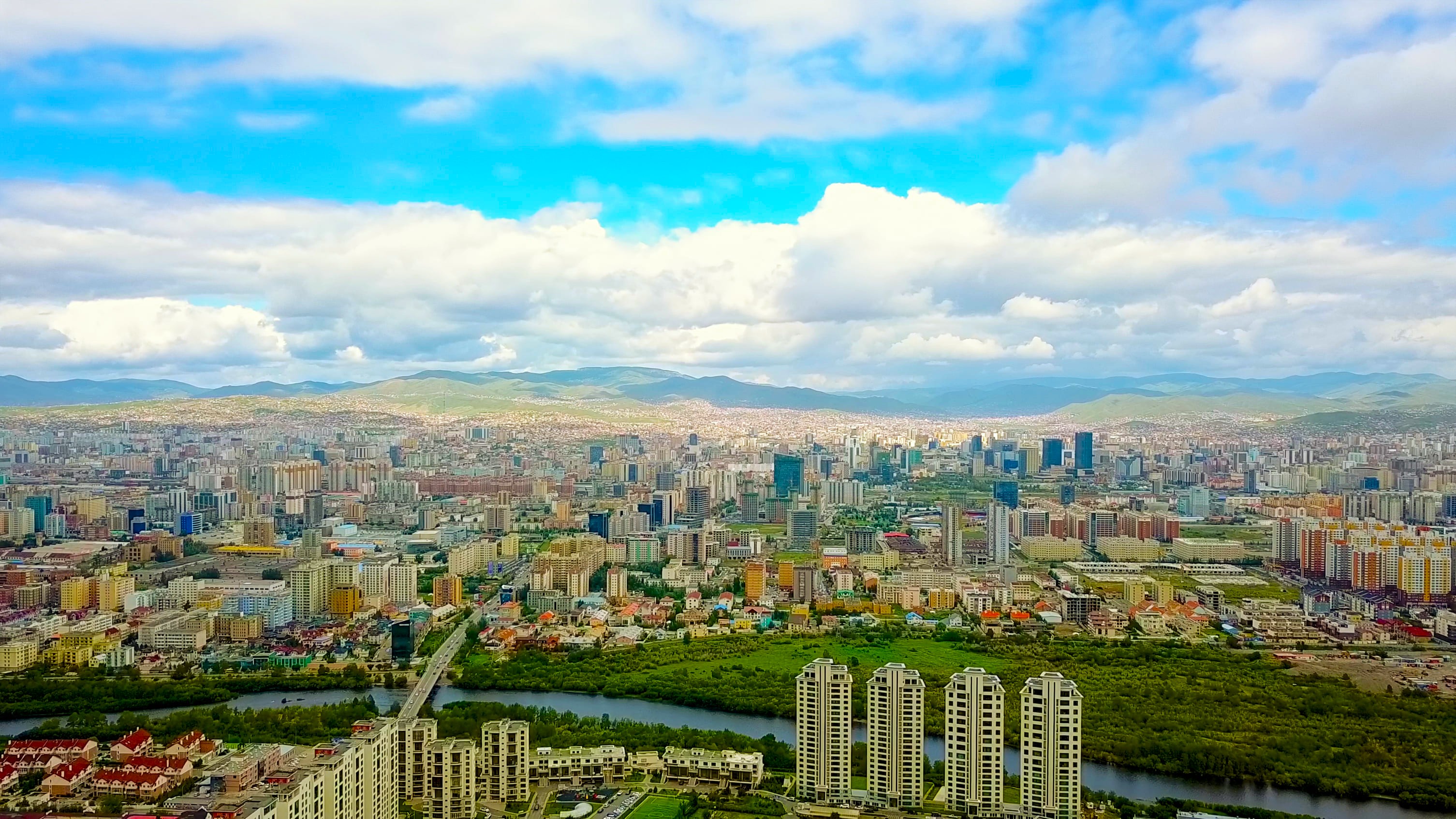
The museum is located about 300 meters south of Sukhbaatar Square, behind the modern towers of the business district, creating a striking contrast between the gilded roofs of the complex and glass facades. On foot from the square, it takes less than five minutes. By taxi, ask for "Choijin Lamiin Süm Muzei." No dedicated bus line is necessary, as the center is compact.
What to see nearby
The museum fits easily into a day of discovering Ulaanbaatar. About twenty minutes' walk to the northwest, the Gandantegchinlen monastery remains the country's main active Buddhist center and complements the visit well, showing living practice where Choijin Lama shows museum preservation. To extend the monastic theme, the Khambiin Khiid monastery and the Gunj temple offer other facets of Mongolian religious heritage.
Frequently asked questions
Frequently asked questions
No. The complex ceased all religious activity in 1938 and has functioned solely as a museum since 1942. No ceremonies are held there.
One hour is sufficient for a quick tour; allow 1.5 hours if you wish to observe in detail the Tsam masks, thangkas, and works from Zanabazar's school.
Yes, for an additional fee paid at the ticket office. Flash is generally prohibited to preserve the pigments.
Both sites date from the same era and relate to the family of the last Bogd Khan, but Choijin Lama is dedicated to his brother oracle and preserves a set of temples in situ, while the Winter Palace is a residence with personal collections.
Preparing your trip
Choijin Lama Museum naturally fits into an urban stop before heading out to explore the steppes, the Gobi Desert, or Lake Khövsgöl. To build a complete itinerary, consult our tailor-made trips to Mongolia.
Nearby
Interested in this visit?
We can include it in your personalised itinerary.