Mongolian Gift-Giving Traditions
Mongolian tradition recognizes two distinct categories of gifts: "open-mouth" and "closed-mouth" gifts. Open-mouth gifts are characterized by objects whose opening faces upward, such as bowls or bags. These gifts are highly valued as they symbolize prosperity.
26 Feb. 2015
There are two categories of gifts in Mongolian tradition: "open-mouth" and "closed-mouth" gifts. Open-mouth gifts are characterized by objects whose opening faces upward—such as bowls or bags. These are greatly appreciated as they symbolize prosperity.
Closed-mouth gifts are characterized by objects whose opening faces downward, such as hats or chandeliers. These are not commonly given, as they symbolize debt.
As noted by Bouzhigmaa, a book is highly valued as a gift in Mongolia. When the recipient receives it, they bring it to their forehead to symbolize the knowledge the gift will bring them.
According to tradition, the most significant gift a Mongolian could receive was the nine white gifts—eight white horses and one white camel. These were often accompanied by presents of gold, silver, silk, clothing, khadags, dairy products, and sweets.
Another tradition, rooted in nomadic customs, was the offering of the five domestic animals: the camel, yak, horse, sheep, and goat.
Different types of gifts are given depending on the occasion or the recipient. For example, at a wedding, the most common gifts are furniture and household items for the couple's new home.
During a child's first hair-cutting ceremony, guests typically give sweets, money, or toys.
When asking someone to perform work, it is customary to give them a gift, the value of which depends on the nature of the work.
There is also a gift-giving tradition when visiting a shaman for a ceremony. This falls within the framework of offerings used for the ceremony itself. These commonly include khadags, milk, money, alcohol, and food, depending on the specific ceremony.
When presenting a gift to a highly respected person, such as a monk, the gift is offered in a blue khadag. The silk scarf is held in both hands with the gift placed upon it. Khadags—blue silk scarves—are widely used as gifts throughout Mongolia.
When visiting a family, it is customary to thank them for their hospitality by presenting a gift. It is preferable to give this to the woman of the house at the end of the visit. If giving gifts to the family's children, it is better to give them to their mother first, allowing her to distribute them. For nomadic families, gifts of items difficult to obtain in the countryside are always appreciated—such as batteries, cigarettes, matches, sweets, or headlamps.
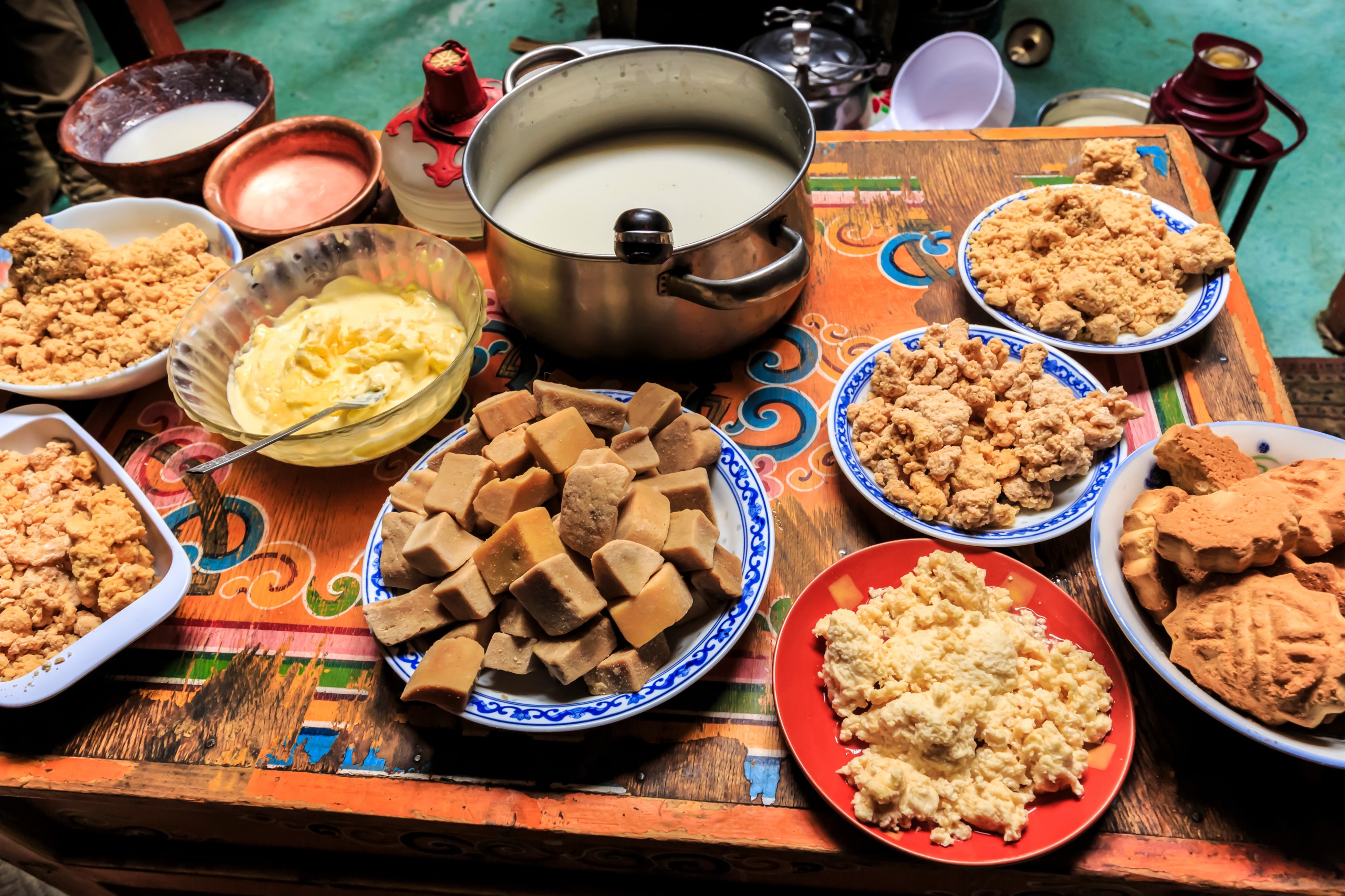
When Mongolians receive guests in their homes, an entire gift-giving ceremony takes place. They offer alcohol and food—often portions of mutton or pastries—and exchange snuff bottles, which can be considered a gift in itself. The monetary value of the gift is less important than the gesture of giving it. Finally, gifts are traditionally presented with the right hand while placing the left hand under the elbow, and the same gesture is made when receiving a gift.
Charlène Nomadays
SEO writer from Nomadays' earliest days, Charlène has evolved into content manager and head of communications, accompanying the adventure with passion and dedication from the start. After spending seven years across Asia—from China to Thailand, passing through Mongolia and South Korea—she has made travel her way of experiencing the world. A lover of language, nature, and human connection, she brings to her writing a thoughtful, engaged, and responsible vision of tourism. Each article is for her a bridge between curiosity, respect, and wonder.