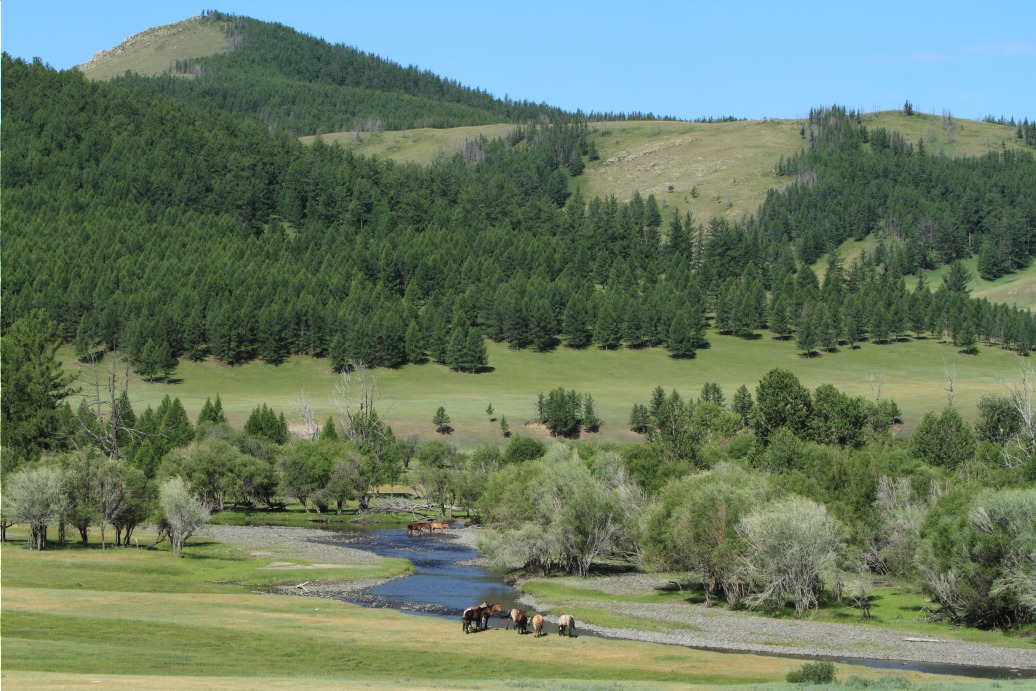
Badarkhundaga Lake
Badarkhundaga Lake
A sacred glacial lake nestled beneath the south face of Mount Otgontenger, Badarkhundaga is linked to the cult of Vajrapani and to official state offerings from Mongolia.
The Badarkhundaga Lake is a high-altitude glacial lake situated in Zavkhan Province, western Mongolia. Its name means "the alms bowl," referring to the begging bowl of Buddhist monks: its turquoise waters rest in a rocky cirque just beneath the south face of Mount Otgontenger, a sacred peak rising above 4,000 meters.
Why visit Badarkhundaga Lake
The site brings together three interests rarely combined in a single Mongolian expedition. First, it is a pristine high-mountain landscape, away from major tourist routes, where the freshwater lake stretches across approximately 400 meters long and 320 meters wide, framed by glacial walls and moraines. Second, it is a deeply sacred place for Mongols, linked to the cult of Vajrapani and to official state offerings. Third, it is a destination for travelers seeking authenticity, in a region where nomadic pastoralism remains the dominant activity.
The altitude, isolation, and religious status of the site make it a destination suited for independent or guided travelers prepared to navigate difficult access and a short opening season.
History and religious significance
For inhabitants of Zavkhan, Badarkhundaga is perceived as the alms bowl of Vajrapani, the protective deity of Tibetan Buddhism associated with strength and the defense of the Dharma. The lake is not a simple natural curiosity: it is a ritual object in its own right, nestled beneath the south face of a mountain itself considered to be the embodiment of this deity.
It was to the north of the sacred mountain of Otgontenger that official offerings of the Mongolian state were made to Vajrapani. Traditional offerings consisted of a white horse equipped with a saddle and silver bridle, or a silver cup decorated with nine precious stones. After 1821, these offerings became regularized: silver, gold, coral, pearls, and silver ingots were deposited each year at the lake, testifying to the site's importance in the sacred geography of the country.
This tradition experienced a long interruption during the socialist period, before pilgrimages and ceremonies resumed from the 1990s onward. Today, the site remains a place of prayer frequented by local residents and by pilgrims from further afield.
What to see on site
The lake and its glacial cirque
The lake occupies a basin carved by ancient glaciers from the Otgontenger massif. Its shores offer unobstructed views of the south face of the sacred mountain and of snow tongues that persist throughout much of the year. The color of the water, ranging from deep blue to aquamarine depending on the light, comes from glacial sediment in suspension.
The ovoos and ritual markers
Several ovoos—stone cairns topped with blue prayer flags—dot the shores of the lake and the passes leading to it. Pilgrims traditionally circle them three times clockwise, depositing a stone, milk, or coins.
The surrounding landscapes
Beyond the lake, the Otgontenger massif offers panoramas of high-altitude valleys, herds of yaks, and yurt camps set up for summer pasture. The fauna includes marmots, raptors, and more rarely ibex and argali on the rocky slopes.
When to go
The lake is accessible from mid-June to early September. Outside this window, snow blocks the trails and temperatures make camping difficult. July and August are the safest months to reach the site, with long days and mild daytime temperatures. Nights remain cool, sometimes near freezing even in mid-summer: plan for high-mountain equipped gear.
Pilgrimages concentrate in summer, in connection with ceremonies dedicated to Otgontenger. Check locally before departing if you wish to attend a ritual, or conversely to avoid peak crowding days.
How to get there
The lake is located in Zavkhan Province, approximately one thousand kilometers west of Ulaanbaatar. The most common route passes through the town of Uliastai, the provincial capital, then through the village of Tosontsengel or via trails leading to the base of Otgontenger.
- From Ulaanbaatar: allow several days of travel by 4x4, or an internal flight to Uliastai followed by a transfer by all-terrain vehicle.
- From Uliastai: the final section is conducted exclusively by 4x4, on unmarked trails. A local driver familiar with the region is essential.
- Final approach: the last part of the journey is on foot or horseback, as the lake is not accessible by vehicle to its shores.
Practical information
- Altitude: plan for acclimatization, the site is above 2,800 meters.
- Equipment: warm clothing and windproof jackets even in summer, good hiking boots, sun protection.
- Accommodation: no infrastructure on site. Tent camping or overnight stays in yurts with locals in the valleys below.
- Respecting the site: this is a sacred place. Avoid swimming, throwing anything in the water, or taking stones. Follow local customs around the ovoos.
- Connectivity: mobile coverage is very limited, plan for complete self-sufficiency for the duration of the excursion.
What to see nearby
Zavkhan region and central Mongolia offer several natural extensions to a stay around Badarkhundaga:
- Khagiin Khar Lake, another mountain lake in the Khentii massif.
- The Turkish monuments of Khöshöö Tsaidam, major archaeological remains of Central Asia.
- Gunj Temple, a remarkable religious stop.
- Gandantegchinlen Monastery, in Ulaanbaatar, the starting or ending point of most itineraries.
Planning your trip
Badarkhundaga Lake is part of an extended circuit that requires solid logistics and good knowledge of the terrain. To incorporate this sacred stage into a coherent itinerary in the central and western parts of the country, consult our suggestions for travel in Mongolia.
Interested in this visit?
We can include it in your personalised itinerary.