Sukhbaatar Square
Sukhbaatar Square
Political heart of Ulaanbaatar since 1921, Sukhbaatar Square — renamed Genghis Khan Square in 2013 — brings together Parliament, theatre, mausoleum and Blue Sky tower.
In the heart of Ulaanbaatar, Sukhbaatar Square — officially renamed Genghis Khan Square in 2013 — concentrates the essence of Mongolia's twentieth-century political memory and reveals, within a few hundred metres, the country's passage from the 1921 revolution to contemporary Mongolia.
Why visit Sukhbaatar Square
This is where Mongolia's independence was decided and where the demonstrations unfolded that precipitated the end of communist rule. Beyond its historical weight, the square functions as an urban vantage point: it brings together Parliament, the national opera and ballet theatre, the Palace of Culture, several financial institutions and Blue Sky tower. In a single location, you read the stratification of the capital, from the revolutionary mausoleum to the skyscraper inaugurated in 2009.
The atmosphere varies depending on the time of day and season. The square occasionally hosts gatherings, official ceremonies and concerts, but remains mostly quiet. In summer, photographers offer their services and it is possible to rent tandem bicycles to tour the square.
History of the square
1921: the proclamation of independence
In July 1921, Damdin Sukhbaatar, nicknamed the "hero of the revolution", proclaims from this square Mongolia's independence from the Chinese. The central square of Ulaanbaatar then takes his name. On the base of the equestrian statue erected in his honour are engraved the words he is said to have spoken:
"If we, all of the people, unite in a common effort and in a common will, there will be nothing in the world that we cannot achieve, that we cannot learn or that we may fail to do."
1989: demonstrations for democracy
The square was the site of the first demonstrations in 1989, which led to the fall of communism in Mongolia. Sukhbaatar, who died in 1923, would not witness this second revolution unfold at the foot of his statue.
2006–2008: renovation for the 800 years
On the occasion of the 800th anniversary of the creation of the Mongol Empire, in 2006, the square was entirely renovated. The equestrian statue was covered in bronze through a joint effort by Mongolian and North Korean sculptors, completed on 26 November 2008, the anniversary of the declaration of the Republic.
2013: the return of Genghis Khan
On 15 July 2013, the government officially renames the place "Genghis Khan Square". In common usage, both names continue to coexist.
What to see around the square
The equestrian statue of Sukhbaatar
At the centre of the square, the statue depicts Sukhbaatar on horseback. It is the usual landmark for meetings and the main photographic subject of the site.
Parliament and the Genghis Khan statue
To the north, the Parliament building was constructed facing south, like a yurt. Renovated in 2006 — facades repainted, glass frontage added — it is preceded by a large seated statue of Genghis Khan, flanked by Mongolian horsemen. It is the most photographed monument on the square.
The mausoleum
Facing Parliament stands a mausoleum dating from the aftermath of the 1921 revolution, which contains the remains of Sukhbaatar. According to several sources, those of Marshal Choibalsan may also rest there, though the information remains disputed.
Palace of Culture and opera theatre
To the northeast, the Palace of Culture houses the national gallery of modern art and several other cultural institutions. To the southeast, the pink building is the national opera and ballet theatre, which programmes a regular season throughout the year.
Golomt Bank, stock exchange and city hall
In the northwest corner, the bright yellow building is that of Golomt Bank. Behind it stands the national history museum. South of the bank, the first tower is that of the Mongolian stock exchange, the second is city hall.
Blue Sky tower
Facing the square stands Blue Sky tower: 25 storeys, 105 metres, Ulaanbaatar's tallest building, whose curved sail silhouette is said to be inspired by a tower in Dubai. Inaugurated in 2009, it houses a luxury hotel, offices, restaurants and apartments.
Practical information
- Access: in the heart of Ulaanbaatar's central district, accessible on foot from most city centre hotels or by taxi.
- Duration of visit: allow 30 minutes to 1 hour to walk around the square and photograph the monuments, longer if you combine it with the national history museum or a performance at the opera theatre.
- Admission: free access.
- Best time: late afternoon for light on the northern facades, or in the evening when buildings are lit up.
- Photography tip: step back towards Blue Sky tower to frame the Sukhbaatar statue with Parliament in the background.
Nearby
The square is a good starting point for exploring central Ulaanbaatar on foot. If you extend your stay to the rest of the country, several sites naturally extend the visit:
- The Turkish memorials of Khöshöö Tsaidam, to trace the pre-Mongol roots of the steppes.
- Binder monastery, in the region of Genghis Khan's origin.
- Taïkhar rock, a legendary site in Arkhangaï.
Frequently asked questions
Frequently asked questions
Officially, it was renamed Genghis Khan Square on 15 July 2013. In practice, both locals and guides still commonly use the name Sukhbaatar, which it bore for nearly a century.
Thirty minutes is enough to tour the square and observe the main monuments. Allow half a day if you combine it with the national history museum and the modern art gallery at the Palace of Culture.
The building is generally closed to the public. It can be observed from the square, facing Parliament.
Parliament to the north, the mausoleum facing it, the Palace of Culture to the northeast, the opera and ballet theatre to the southeast, Golomt Bank and the national history museum to the northwest, the Mongolian stock exchange and city hall to the southwest, Blue Sky tower facing the square.
In summer, photographers offer their services and it is possible to rent tandem bicycles to tour the square. The square also regularly hosts official ceremonies, gatherings and concerts.
Planning your trip
Sukhbaatar Square is the most natural urban anchor point for a trip to Mongolia, before heading to the steppes, the Gobi or the monasteries in the north. To plan an itinerary combining Ulaanbaatar and the rest of the country, explore our tailor-made trips in Mongolia.
Nearby
Also discover
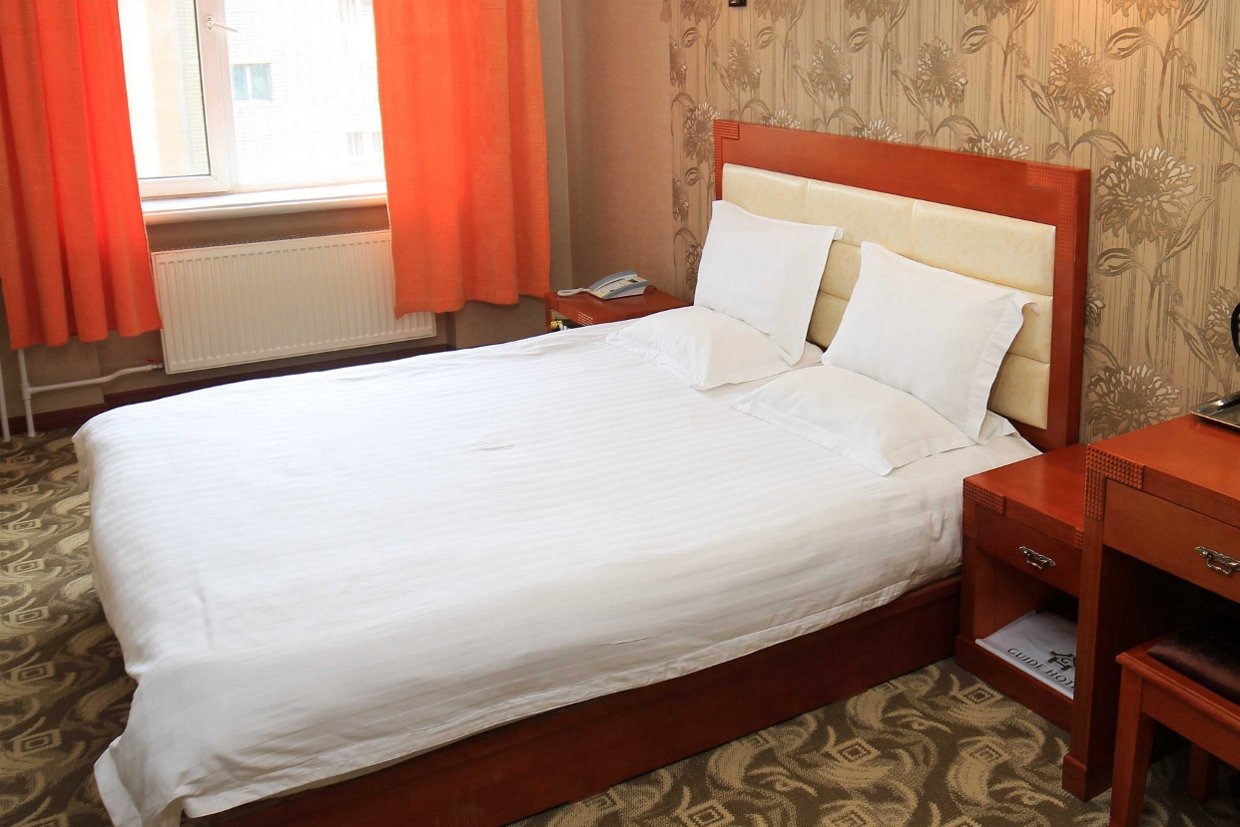
2-star hotel in Ulaanbaatar
Dream, Guide and Kharaa: three functional 2-star hotels in central Ulaanbaatar, selected for their location, peaceful atmosphere and value for money.

3-star hotels in Ulaanbaatar
A comfortable urban stopover before or after a circuit in Mongolia: our 3-star hotels in Ulaanbaatar, in the heart of the city, within walking distance of Sukhbaatar Square.
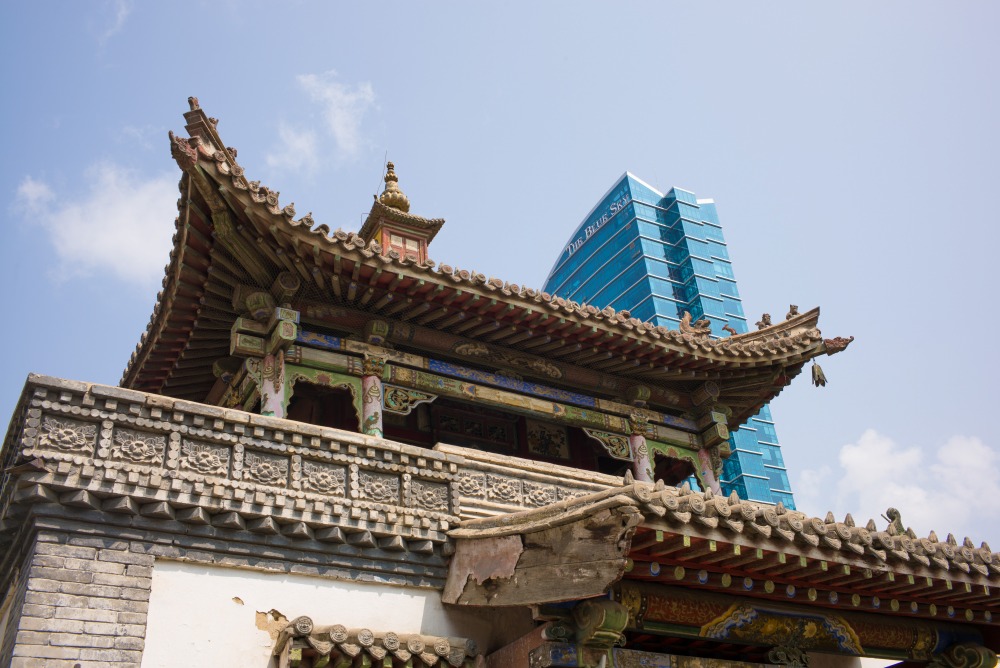
Choijin Lama Museum
Five temples built between 1904 and 1908 in the heart of Ulaanbaatar, dedicated to the state oracle and brother of the 8th Bogd Khan, preserving Tsam masks and works by Zanabazar.

Hotel Continental
Classic 3-star hotel in central Ulaanbaatar, just a short walk from Genghis Khan Square and Choijin Lama Monastery.
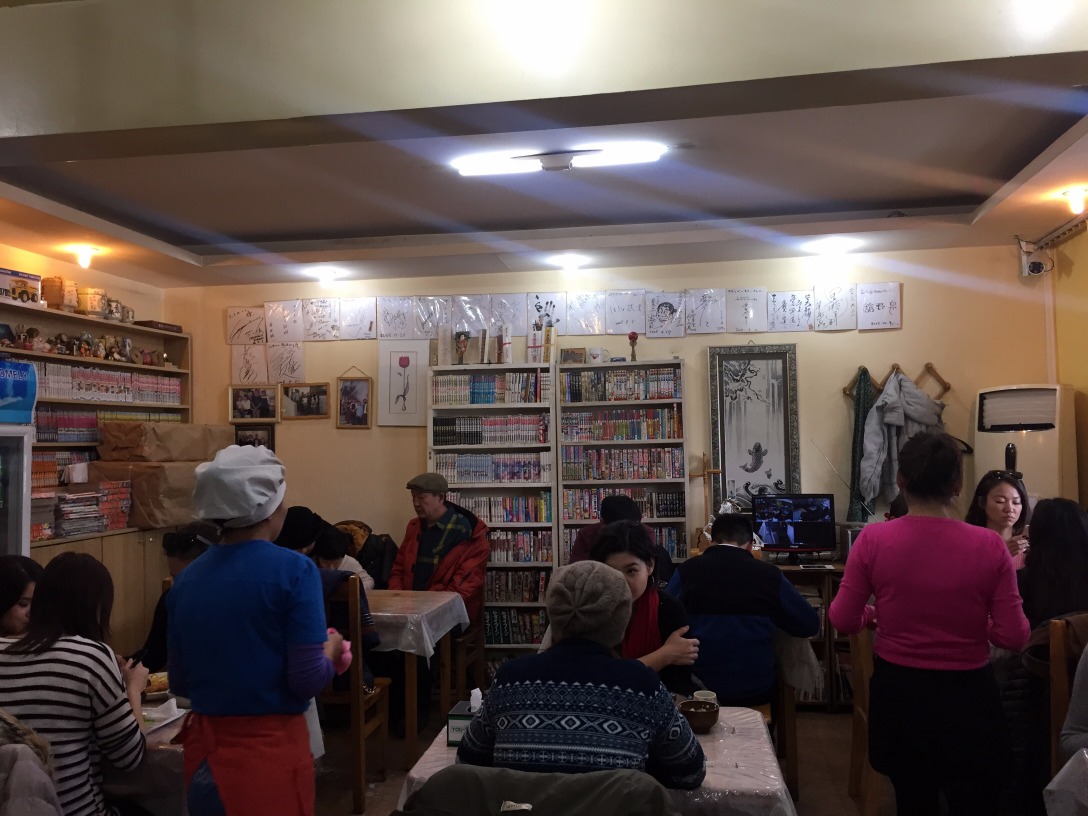
Sakura Bakery
Looking for variety? Something truly original? Why not discover Sakura Bakery. The Japanese touch of the capital—unassuming from the outside, yet warm and welcoming once you step through the door—will make you forget where you are. Despite its compact space, the venue immerses you in manga culture, with walls lined with these charming publications.
Zaya guest house
Family-run guest house in Ulaanbaatar since 1995, managed by Zaya. Two central locations on Peace Avenue, 10 minutes from museums and theatres.

Hotel J
3-star hotel in the heart of Ulaanbaatar, close to the Memorial Museum and Genghis Khan Square. 42 rooms, restaurant with a view, English-speaking staff.
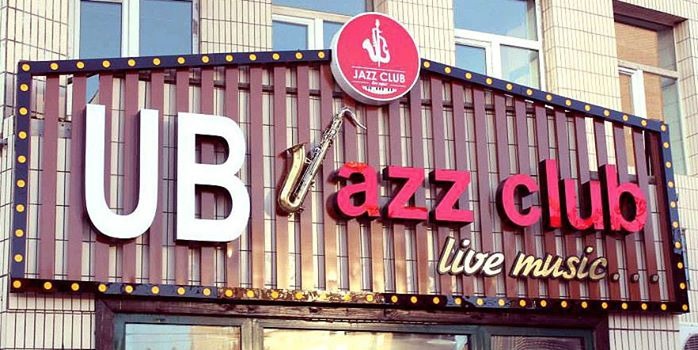
UB Jazz Club
For those seeking an evening filled with musical notes, this club lives up to its name by regularly hosting Jazz and Blues concerts. Functioning as both a restaurant and club, you'll be able to appreciate the artists performing on stage.
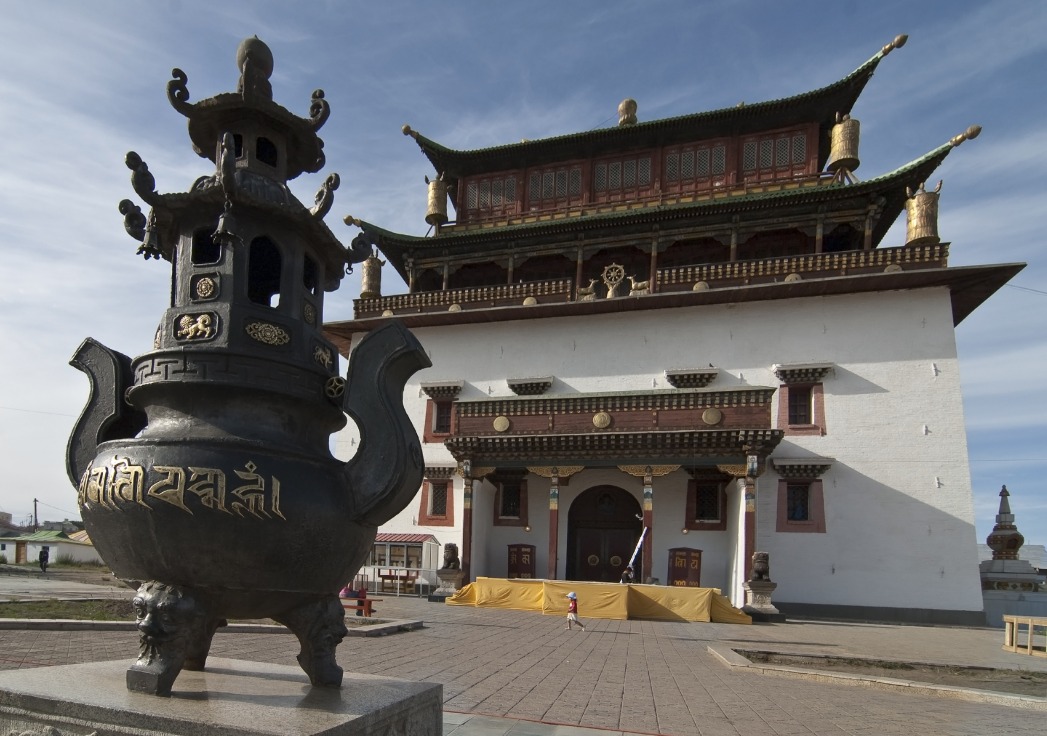
Gandantegchinlen Monastery
Heart of Mongolian Buddhism in Ulaanbaatar, Gandantegchinlen houses the 26.5m statue of Megjid-Janraiseg, ten active datsan colleges and 900 monks.
The Bull Hot Pot
Eat varied, balanced meals, and why not try something different?
Interested in this visit?
We can include it in your personalised itinerary.